THE ADVENTURE COLLECTIVE® · Independent discovery and booking for outdoor travel

Spend a day moving through Cappadocia’s sculpted valleys, ancient cave churches and riverside pottery workshops. This small-group tour from Göreme pairs short walks with cultural stops—ideal for travelers who want geology, history and hands-on craft in one outing.
Spend a day moving through Cappadocia’s sculpted valleys, ancient cave churches and riverside pottery workshops. This small-group tour from Göreme pairs short walks with cultural stops—ideal for travelers who want geology, history and hands-on craft in one outing.
You step out of the minivan and the land seems to be thinking in stone. Rounded spires and fluted columns of pale tuff rise like a deliberate thought — fairy chimneys shaped by wind, water and time — and the air is dry and bright at roughly 1,200 meters above sea level. On this full-day circuit from Göreme, a small-group guide moves the story along: Devrent Valley’s playful silhouettes, the sun-warmed pottery town of Avanos, the mushroom-capped pillars of Paşabağ, and the caves and frescoed chapels of the Göreme Open-Air Museum.
Verified experiences and guided adventures in the surrounding area.
Operated by Funny Tourism · Göreme, Nevşehir
You step out of the minivan and the land seems to be thinking in stone. Rounded spires and fluted columns of pale tuff rise like a deliberate thought — fairy chimneys shaped by wind, water and time — and the air is dry and bright at roughly 1,200 meters above sea level. On this full-day circuit from Göreme, a small-group guide moves the story along: Devrent Valley’s playful silhouettes, the sun-warmed pottery town of Avanos, the mushroom-capped pillars of Paşabağ, and the caves and frescoed chapels of the Göreme Open-Air Museum.
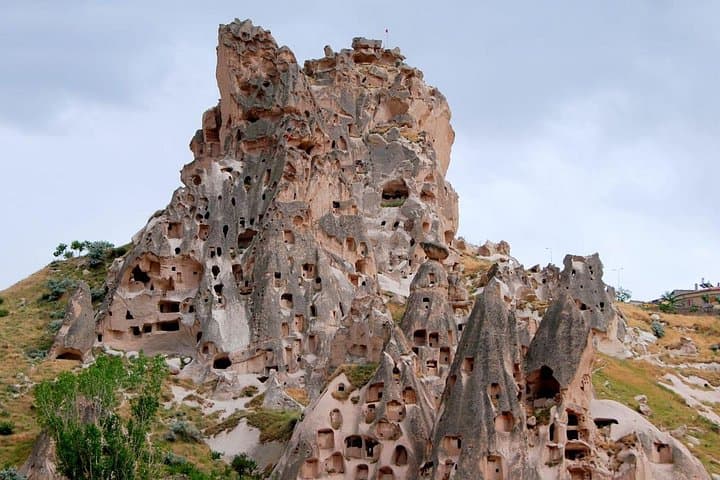
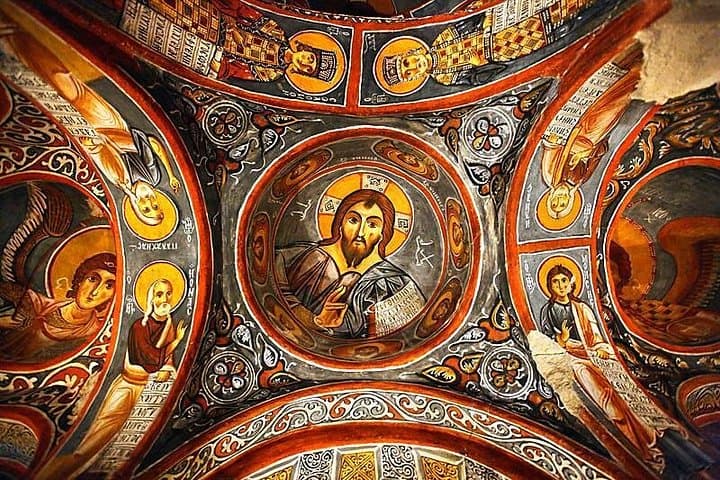
Cappadocia’s geography is volcanic autobiography. Millions of years ago, eruptions left a blanket of ash that solidified into soft tuff; rivers and seasonal floods then began an unhurried chisel, carving conical spires and cave networks through which people have lived and worshipped since the Hittites and later Christians used the rock for shelter and sanctuaries. The Göreme Open-Air Museum preserves 10th–13th-century monastic cells and churches where frescoes—still surprisingly vivid—map Byzantium’s rural outreach. Uçhisar Castle, a natural citadel, reads like a community stacked into stone; from its ridge a panorama opens across orchards and the moonscape of eroded valleys.
Culturally, the tour threads living crafts into the geological story: Avanos still turns red clay pulled from the Kızılırmak river, an uninterrupted craft tradition with roots in ancient Anatolia. Guides will point out where cave dwellings were adapted into boutique hotels and where modern life meets centuries-old forms.
Practicalities matter on a day like this. Expect 6–8 hours door-to-door with hotel pickup and drop-off by air-conditioned minivan; groups are capped at around 10 people. Walking sections are short—20–60 minutes in valley loops—but on uneven, dusty tuff with occasional loose gravel and steps carved into rock. Bring sturdy walking shoes, at least 1–1.5 liters of water, sunscreen and a hat; layers are helpful because mornings and evenings can be sharp while midday heats up.
Timing is flexible: sunrise ballooning draws early crowds, so the landscape changes character through the day—soft pastels at dawn, stark relief at noon, golden cast in late afternoon. The tour usually includes lunch and entrance to Göreme Open-Air Museum. For photographers, aim for sunrise or late afternoon at Uçhisar and Paşabağ; for ceramic shopping and a quieter cultural exchange, linger in Avanos near the river.
This is a geology lesson you can walk through, and a cultural one you taste and touch—an economical, panoramic introduction to a strange, storied landscape.
Yes—admission to the Göreme Open-Air Museum is included on this tour.
Walking sections are generally short—20–60 minute valley strolls on uneven terrain with occasional steps; overall activity is moderate.
Balloon flights are separate experiences at dawn; this full-day tour typically visits viewpoints later in the day rather than coordinating with balloon schedules.
Yes—hotel pickup and drop-off in Göreme is provided, usually 30–60 minutes before the tour start time as reconfirmed by the operator.
Lunch is included; vegetarian options are available if requested at booking.
Children can join but must be accompanied by an adult; infants are required to sit on an adult’s lap during transportation.
Funny Tourism operates guided outdoor trips and adventures with an emphasis on safety, stewardship, and memorable experiences.
You step out of the minivan and the land seems to be thinking in stone. Rounded spires and fluted columns of pale tuff rise like a deliberate thought — fairy chimneys shaped by wind, water and time — and the air is dry and bright at roughly 1,200 meters above sea level. On this full-day circuit from Göreme, a small-group guide moves the story along: Devrent Valley’s playful silhouettes, the sun-warmed pottery town of Avanos, the mushroom-capped pillars of Paşabağ, and the caves and frescoed chapels of the Göreme Open-Air Museum.
You step out of the minivan and the land seems to be thinking in stone. Rounded spires and fluted columns of pale tuff rise like a deliberate thought — fairy chimneys shaped by wind, water and time — and the air is dry and bright at roughly 1,200 meters above sea level. On this full-day circuit from Göreme, a small-group guide moves the story along: Devrent Valley’s playful silhouettes, the sun-warmed pottery town of Avanos, the mushroom-capped pillars of Paşabağ, and the caves and frescoed chapels of the Göreme Open-Air Museum.
Cappadocia’s geography is volcanic autobiography. Millions of years ago, eruptions left a blanket of ash that solidified into soft tuff; rivers and seasonal floods then began an unhurried chisel, carving conical spires and cave networks through which people have lived and worshipped since the Hittites and later Christians used the rock for shelter and sanctuaries. The Göreme Open-Air Museum preserves 10th–13th-century monastic cells and churches where frescoes—still surprisingly vivid—map Byzantium’s rural outreach. Uçhisar Castle, a natural citadel, reads like a community stacked into stone; from its ridge a panorama opens across orchards and the moonscape of eroded valleys.
Culturally, the tour threads living crafts into the geological story: Avanos still turns red clay pulled from the Kızılırmak river, an uninterrupted craft tradition with roots in ancient Anatolia. Guides will point out where cave dwellings were adapted into boutique hotels and where modern life meets centuries-old forms.
Practicalities matter on a day like this. Expect 6–8 hours door-to-door with hotel pickup and drop-off by air-conditioned minivan; groups are capped at around 10 people. Walking sections are short—20–60 minutes in valley loops—but on uneven, dusty tuff with occasional loose gravel and steps carved into rock. Bring sturdy walking shoes, at least 1–1.5 liters of water, sunscreen and a hat; layers are helpful because mornings and evenings can be sharp while midday heats up.
Timing is flexible: sunrise ballooning draws early crowds, so the landscape changes character through the day—soft pastels at dawn, stark relief at noon, golden cast in late afternoon. The tour usually includes lunch and entrance to Göreme Open-Air Museum. For photographers, aim for sunrise or late afternoon at Uçhisar and Paşabağ; for ceramic shopping and a quieter cultural exchange, linger in Avanos near the river.
This is a geology lesson you can walk through, and a cultural one you taste and touch—an economical, panoramic introduction to a strange, storied landscape.