THE ADVENTURE COLLECTIVE® · Independent discovery and booking for outdoor travel

Spend 48 hours moving through Cappadocia’s lunar-like valleys, underground refuges and pottery towns. This concise two-day itinerary covers the region’s geology, history and best practical tips for first-time visitors.
Spend 48 hours moving through Cappadocia’s lunar-like valleys, underground refuges and pottery towns. This concise two-day itinerary covers the region’s geology, history and best practical tips for first-time visitors.
You arrive before dawn: volcanic rock takes on quicksilver tones as the first light sketches the fairy chimneys and carved caves. The road from Side unspools through Anatolian fields, and by late morning you’re threading lanes where pigeons perch on ancient stone dovecotes and cliffs cleave into otherworldly shapes.
Verified experiences and guided adventures in the surrounding area.
Operated by Köprülü Turistik Işl.Eml.Inş.Tarım taş.Pet.Turz ve Tic Ltd.Şti. · Göreme, Nevşehir
You arrive before dawn: volcanic rock takes on quicksilver tones as the first light sketches the fairy chimneys and carved caves. The road from Side unspools through Anatolian fields, and by late morning you’re threading lanes where pigeons perch on ancient stone dovecotes and cliffs cleave into otherworldly shapes.
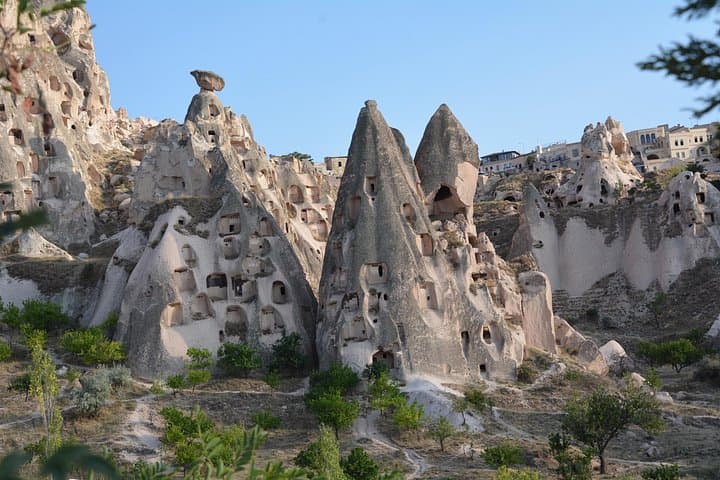
Cappadocia’s landscape is the result of ash and lava from three extinct volcanoes that compacted into soft tuff, later sculpted by wind and rain into cones, columns and hollow dwellings. Humans have worked this geology for millennia — Hittites, early Christians and Byzantine monks carved churches, storage rooms and whole underground cities as refuge from invaders. Towns like Avanos still spin pottery on techniques that date back to Hittite times; Uçhisar’s fortress watchtower reads like a cliffside chronicle of local life.
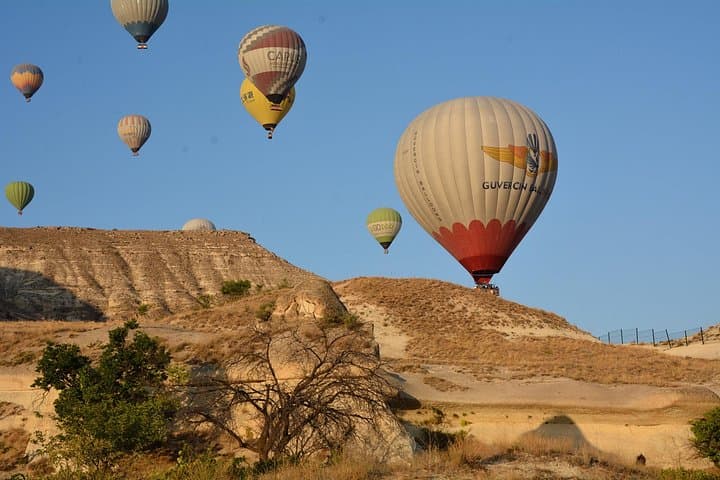
Expect short hikes, stairs and narrow passages rather than technical climbing: you’ll explore a caravanserai, an underground city, the three beauties at Ürgüp, and a climbable citadel at Uçhisar. Photographic opportunities come fast — sunrise balloon silhouettes, river curves at Avanos, and the sculpted ridgelines in every direction.
Practical guidance: pack sturdy shoes and a warm layer (nights and mornings are chilly year-round), bring cash for pottery demonstrations and tips, and plan for early starts if you hope to see balloons. Wear sun protection and comfortable clothing for stairs and uneven floors. If you have mobility limits, ask about accessible options; some cave sites have steep steps. With basic prep, two days here deliver concentrated geology, history and craft in a landscape that still surprises.
Most 2-day tours do not include balloon flights; they are operated by independent companies and booked separately due to weather dependence.
Underground cities have low ceilings and narrow passages—people with severe claustrophobia or mobility issues may find sections challenging; check ahead for alternative routes.
Turkey uses the Turkish Lira (TRY); Turkish is the local language though tourism areas commonly have English-speaking staff — bring some cash for small vendors.
A local guide adds context at sites and handles logistics; the listed tour includes a guide and transport, which is helpful for maximizing short visits.
Köprülü Turistik Işl.Eml.Inş.Tarım taş.Pet.Turz ve Tic Ltd.Şti. operates guided outdoor trips and adventures with an emphasis on safety, stewardship, and memorable experiences.


You arrive before dawn: volcanic rock takes on quicksilver tones as the first light sketches the fairy chimneys and carved caves. The road from Side unspools through Anatolian fields, and by late morning you’re threading lanes where pigeons perch on ancient stone dovecotes and cliffs cleave into otherworldly shapes.
You arrive before dawn: volcanic rock takes on quicksilver tones as the first light sketches the fairy chimneys and carved caves. The road from Side unspools through Anatolian fields, and by late morning you’re threading lanes where pigeons perch on ancient stone dovecotes and cliffs cleave into otherworldly shapes.
Cappadocia’s landscape is the result of ash and lava from three extinct volcanoes that compacted into soft tuff, later sculpted by wind and rain into cones, columns and hollow dwellings. Humans have worked this geology for millennia — Hittites, early Christians and Byzantine monks carved churches, storage rooms and whole underground cities as refuge from invaders. Towns like Avanos still spin pottery on techniques that date back to Hittite times; Uçhisar’s fortress watchtower reads like a cliffside chronicle of local life.
Expect short hikes, stairs and narrow passages rather than technical climbing: you’ll explore a caravanserai, an underground city, the three beauties at Ürgüp, and a climbable citadel at Uçhisar. Photographic opportunities come fast — sunrise balloon silhouettes, river curves at Avanos, and the sculpted ridgelines in every direction.
Practical guidance: pack sturdy shoes and a warm layer (nights and mornings are chilly year-round), bring cash for pottery demonstrations and tips, and plan for early starts if you hope to see balloons. Wear sun protection and comfortable clothing for stairs and uneven floors. If you have mobility limits, ask about accessible options; some cave sites have steep steps. With basic prep, two days here deliver concentrated geology, history and craft in a landscape that still surprises.