THE ADVENTURE COLLECTIVE® · Independent discovery and booking for outdoor travel

Spend 48 focused hours moving between Cappadocia’s underground cities, wind-carved valleys and pottery towns. This private two-day tour balances short hikes, cultural sites and regional geology for a compact introduction to the region.
Spend 48 focused hours moving between Cappadocia’s underground cities, wind-carved valleys and pottery towns. This private two-day tour balances short hikes, cultural sites and regional geology for a compact introduction to the region.
Morning light paints the tuff pillars gold as you step from a minivan onto wind-sanded ground; the air tastes faintly of dust and wild thyme. Over two compact days this private itinerary stitches together the region’s most striking contrasts—subterranean towns dug deep into volcanic rock and open valleys where erosion keeps shaping the land.
Verified experiences and guided adventures in the surrounding area.
Operated by TRAVELIUM · Göreme, Nevşehir Province
Morning light paints the tuff pillars gold as you step from a minivan onto wind-sanded ground; the air tastes faintly of dust and wild thyme. Over two compact days this private itinerary stitches together the region’s most striking contrasts—subterranean towns dug deep into volcanic rock and open valleys where erosion keeps shaping the land.
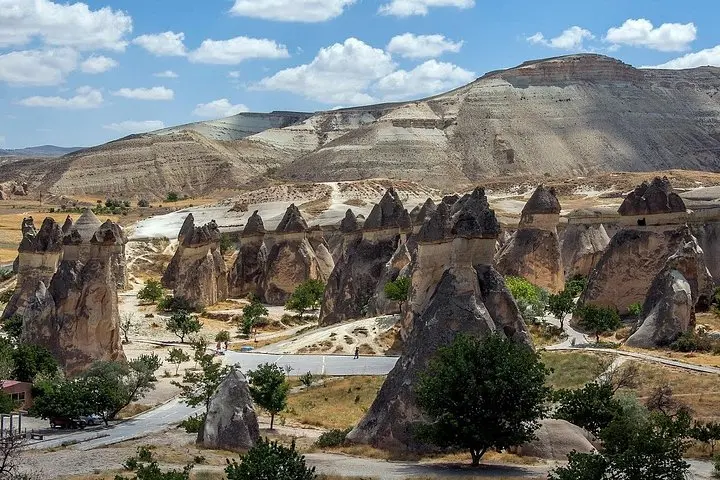
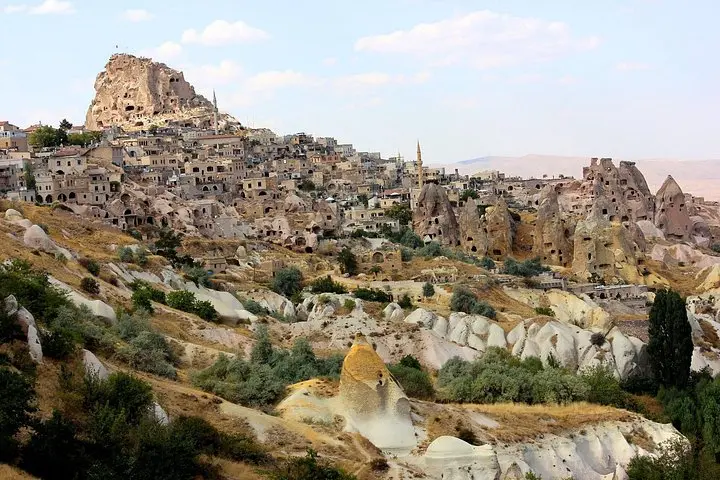
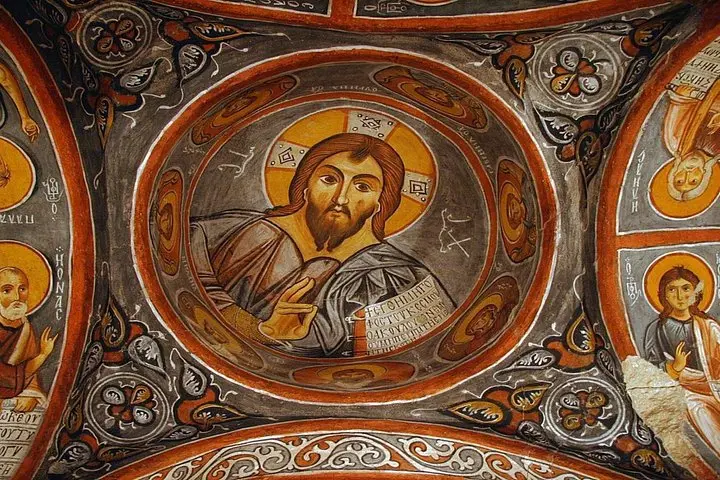
Begin below ground at Derinkuyu, where rooms, stables and ventilation shafts descend like a small buried village built to survive invasions. Surface chapters follow: the river-turned-mudbank in Avanos that has fed a pottery tradition since Hittite times; the hollowed churches and fresco fragments of Ihlara and Göreme; and the wind-sculpted fairy chimneys of Zelve and Uçhisar, where vantage points reward short climbs with broad panoramas.
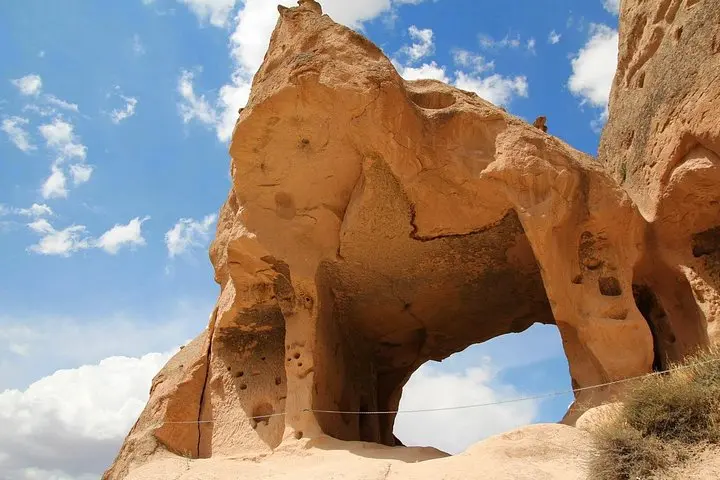
Geology is straightforward here: soft volcanic tuff erodes unevenly, allowing people to carve living quarters and sanctuaries. Byzantine monks left carved chapels and inscriptions; later communities adapted the cave system for shelter and craft. Local culture still centers on pottery, narrow-town workshops and family-run guesthouses.
Practical guidance: expect a mix of short hikes and stairs — bring a headlamp for darker passages, comfortable footwear with grip, and a light daypack. Mornings are best for photos and cooler walking; midday when the sun hangs heavy is ideal for museum or workshop stops. Passport is required for domestic flights used in transfers. Moderate fitness, steady shoes and layered clothing keep the days pleasant. Two days here feels brisk but complete: you leave with carved stone memories, a potter’s fingerprint, and a clear sense of how people and landscape shaped each other.
Yes—domestic flights used for transfers require a valid passport on travel day.
The itinerary lists museum and site visits but confirm with the operator whether admissions are included or paid locally.
Expect a mix of short valley walks and many stair sections in caves and citadels; the tour recommends moderate fitness and no heavy technical hiking.
This listing is for a private multi-day tour; a minimum of two persons is required for departure.
TRAVELIUM operates guided outdoor trips and adventures with an emphasis on safety, stewardship, and memorable experiences.
Morning light paints the tuff pillars gold as you step from a minivan onto wind-sanded ground; the air tastes faintly of dust and wild thyme. Over two compact days this private itinerary stitches together the region’s most striking contrasts—subterranean towns dug deep into volcanic rock and open valleys where erosion keeps shaping the land.
Morning light paints the tuff pillars gold as you step from a minivan onto wind-sanded ground; the air tastes faintly of dust and wild thyme. Over two compact days this private itinerary stitches together the region’s most striking contrasts—subterranean towns dug deep into volcanic rock and open valleys where erosion keeps shaping the land.
Begin below ground at Derinkuyu, where rooms, stables and ventilation shafts descend like a small buried village built to survive invasions. Surface chapters follow: the river-turned-mudbank in Avanos that has fed a pottery tradition since Hittite times; the hollowed churches and fresco fragments of Ihlara and Göreme; and the wind-sculpted fairy chimneys of Zelve and Uçhisar, where vantage points reward short climbs with broad panoramas.
Geology is straightforward here: soft volcanic tuff erodes unevenly, allowing people to carve living quarters and sanctuaries. Byzantine monks left carved chapels and inscriptions; later communities adapted the cave system for shelter and craft. Local culture still centers on pottery, narrow-town workshops and family-run guesthouses.
Practical guidance: expect a mix of short hikes and stairs — bring a headlamp for darker passages, comfortable footwear with grip, and a light daypack. Mornings are best for photos and cooler walking; midday when the sun hangs heavy is ideal for museum or workshop stops. Passport is required for domestic flights used in transfers. Moderate fitness, steady shoes and layered clothing keep the days pleasant. Two days here feels brisk but complete: you leave with carved stone memories, a potter’s fingerprint, and a clear sense of how people and landscape shaped each other.