THE ADVENTURE COLLECTIVE® · Independent discovery and booking for outdoor travel

A private, full-day circuit of Cappadocia’s Red Route delivers volcano-formed chimneys, ancient rock churches and Avanos potters in one efficient itinerary. Perfect for first-time visitors who want geology, history and local craft in a single day.
A private, full-day circuit of Cappadocia’s Red Route delivers volcano-formed chimneys, ancient rock churches and Avanos potters in one efficient itinerary. Perfect for first-time visitors who want geology, history and local craft in a single day.
You step out of the minivan and the land seems to rearrange itself—soft volcanic pillars rise like columns of an unfinished city, wind-etched and patient. A low sun throws long shadows across Pasabag’s clustered fairy chimneys and the guide’s voice folds into the dry air, naming formations, pointing out frescoes carved into cool rock. The day on the Red Route moves with a rhythm: short drives between sites, 20–90 minute walks at each stop, and a steady stream of geological surprises.
Verified experiences and guided adventures in the surrounding area.
Operated by Visit to Ephesus · Göreme, Nevşehir Province
You step out of the minivan and the land seems to rearrange itself—soft volcanic pillars rise like columns of an unfinished city, wind-etched and patient. A low sun throws long shadows across Pasabag’s clustered fairy chimneys and the guide’s voice folds into the dry air, naming formations, pointing out frescoes carved into cool rock. The day on the Red Route moves with a rhythm: short drives between sites, 20–90 minute walks at each stop, and a steady stream of geological surprises.
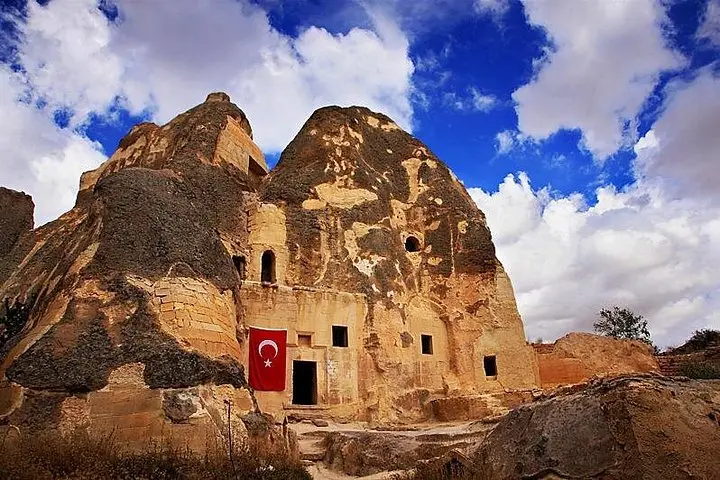
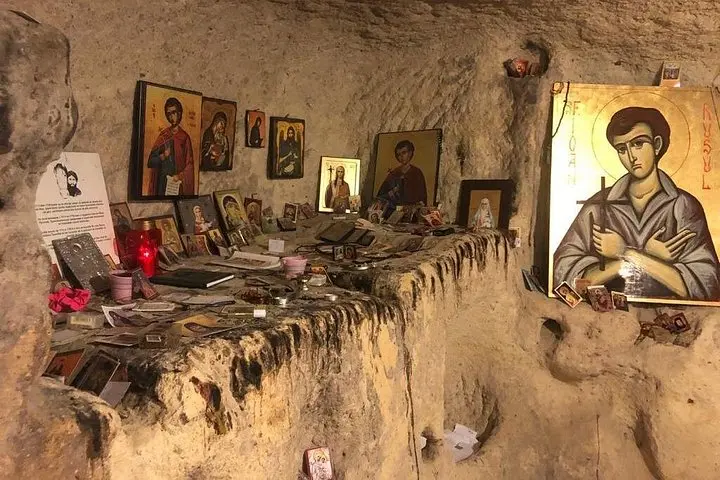
Cappadocia’s landscape was written in fire and water. Millennia ago, eruptions from Mount Erciyes and Hasandağ blanketed the region with tuff, a soft volcanic rock that erosion later sculpted into valleys, cones and the mushroom-capped chimneys you now walk among. The Göreme Open-Air Museum preserves Byzantine churches tucked in this stone—faded pigments and carved altars that tell of communities who hollowed homes, chapels and monasteries into cliffs when the region was a crossroads of trade and religion.
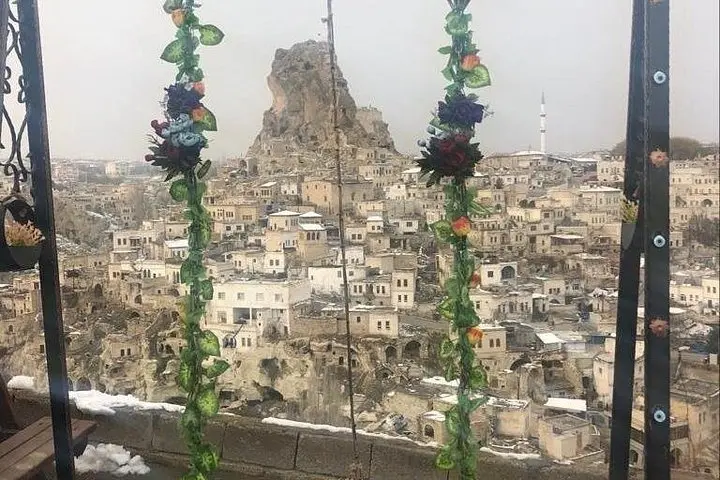
Culture in Cappadocia is tactile: potters in Avanos still throw red clay on a kick wheel fed by the Kızılırmak River; local families live in cave houses with modern comforts. Uçhisar’s castle looms as a vantage point—once a medieval watchpost, now a panorama that keeps an eye on passing caravans of travelers and hot-air balloons.
Practical details make this tour work. It’s a private, skip-the-line circuit that runs about 7 hours (420 minutes) with hotel pickup across Cappadocia. Expect several short, uneven walks—most stops involve 1–2 km of walking on dusty trails and stone steps; the Goreme Open-Air Museum includes narrow staircases and low doorways. Elevation in the region sits around 1,200–1,350 m, so mornings feel crisp and afternoons dry. The tour includes bottled water, an air-conditioned minivan and a professional guide; entrance fees to the museum are typically paid separately unless specified.
Plan for sun and dust: sturdy walking shoes, a hat and sunscreen are non-negotiable. Mornings reward photographers—the soft light adds depth to the chimneys—while late afternoon cools enough for relaxed exploration. If you want to avoid crowds, ask for an earlier pickup; the private format gives flexibility for shorter or longer stays at favorite stops.
For first-time visitors this is an efficient primer: geology, Byzantine history, pottery craft and a panoramic Uçhisar lookout compressed into one decisive day. Move deliberately, keep water on hand, and let the landscape do the guiding—Cappadocia’s stone will change the pace of your walk and the angle of your thinking about what ‘natural architecture’ can be.
The tour lasts about 7 hours with short drives and multiple 20–90 minute walking stops; pace is relaxed but includes uneven terrain.
Admission is often separate—confirm at booking; the tour guarantees skip-the-line access for faster entry when included.
Yes—hotel pickup and drop-off are offered across Cappadocia; you’ll confirm a pickup point when booking.
Children are welcome but must be accompanied by an adult; uneven paths and low doorways can be challenging for very young kids.
Yes—the itinerary includes stops in Avanos and near major viewpoints where cafes and restrooms are available.
Tipping is customary in Turkey; a modest tip for good service is appreciated—roughly 10% of the tour cost split between guide and driver.
Visit to Ephesus operates guided outdoor trips and adventures with an emphasis on safety, stewardship, and memorable experiences.
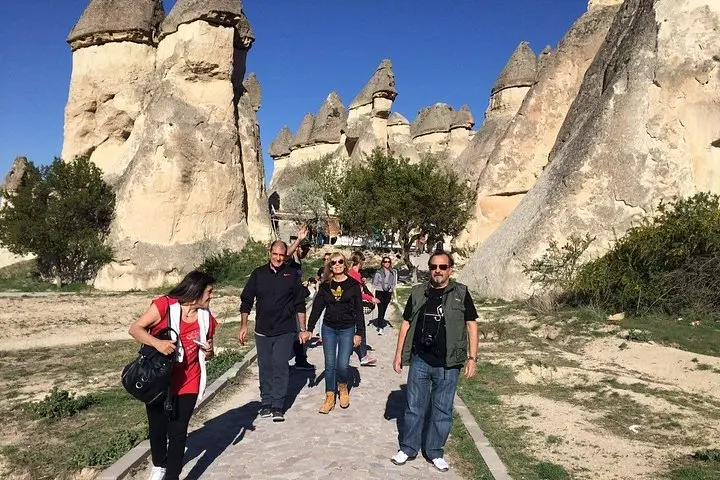
You step out of the minivan and the land seems to rearrange itself—soft volcanic pillars rise like columns of an unfinished city, wind-etched and patient. A low sun throws long shadows across Pasabag’s clustered fairy chimneys and the guide’s voice folds into the dry air, naming formations, pointing out frescoes carved into cool rock. The day on the Red Route moves with a rhythm: short drives between sites, 20–90 minute walks at each stop, and a steady stream of geological surprises.
You step out of the minivan and the land seems to rearrange itself—soft volcanic pillars rise like columns of an unfinished city, wind-etched and patient. A low sun throws long shadows across Pasabag’s clustered fairy chimneys and the guide’s voice folds into the dry air, naming formations, pointing out frescoes carved into cool rock. The day on the Red Route moves with a rhythm: short drives between sites, 20–90 minute walks at each stop, and a steady stream of geological surprises.
Cappadocia’s landscape was written in fire and water. Millennia ago, eruptions from Mount Erciyes and Hasandağ blanketed the region with tuff, a soft volcanic rock that erosion later sculpted into valleys, cones and the mushroom-capped chimneys you now walk among. The Göreme Open-Air Museum preserves Byzantine churches tucked in this stone—faded pigments and carved altars that tell of communities who hollowed homes, chapels and monasteries into cliffs when the region was a crossroads of trade and religion.
Culture in Cappadocia is tactile: potters in Avanos still throw red clay on a kick wheel fed by the Kızılırmak River; local families live in cave houses with modern comforts. Uçhisar’s castle looms as a vantage point—once a medieval watchpost, now a panorama that keeps an eye on passing caravans of travelers and hot-air balloons.
Practical details make this tour work. It’s a private, skip-the-line circuit that runs about 7 hours (420 minutes) with hotel pickup across Cappadocia. Expect several short, uneven walks—most stops involve 1–2 km of walking on dusty trails and stone steps; the Goreme Open-Air Museum includes narrow staircases and low doorways. Elevation in the region sits around 1,200–1,350 m, so mornings feel crisp and afternoons dry. The tour includes bottled water, an air-conditioned minivan and a professional guide; entrance fees to the museum are typically paid separately unless specified.
Plan for sun and dust: sturdy walking shoes, a hat and sunscreen are non-negotiable. Mornings reward photographers—the soft light adds depth to the chimneys—while late afternoon cools enough for relaxed exploration. If you want to avoid crowds, ask for an earlier pickup; the private format gives flexibility for shorter or longer stays at favorite stops.
For first-time visitors this is an efficient primer: geology, Byzantine history, pottery craft and a panoramic Uçhisar lookout compressed into one decisive day. Move deliberately, keep water on hand, and let the landscape do the guiding—Cappadocia’s stone will change the pace of your walk and the angle of your thinking about what ‘natural architecture’ can be.