THE ADVENTURE COLLECTIVE® · Independent discovery and booking for outdoor travel

Move through Cappadocia’s fairy chimneys, cave churches, and an underground city in one private, full-day minivan tour. This itinerary condenses geology, Byzantine frescoes, and living pottery traditions into a focused, flexible day from Göreme.
Move through Cappadocia’s fairy chimneys, cave churches, and an underground city in one private, full-day minivan tour. This itinerary condenses geology, Byzantine frescoes, and living pottery traditions into a focused, flexible day from Göreme.
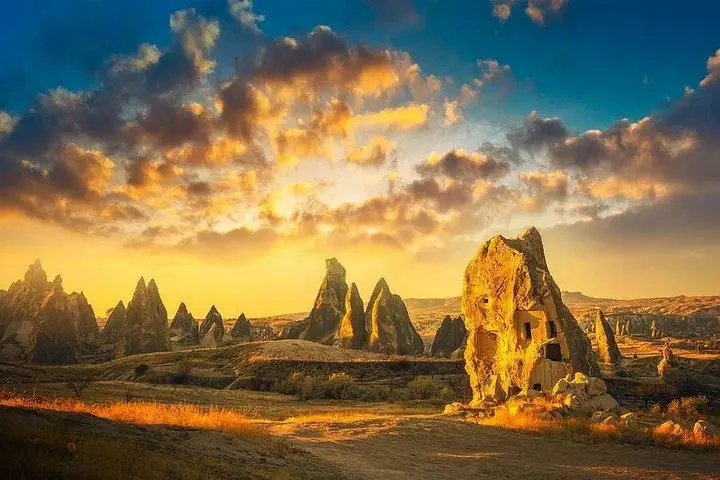
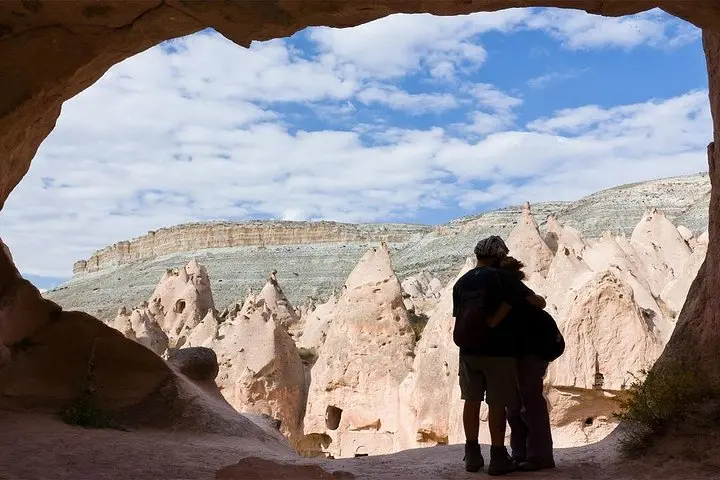
A diesel minivan hums away from a sleepy Göreme hotel at first light and the landscape opens like a film—ridges and cones of soft stone rising, their faces scored by centuries of wind and winter. Your private guide points to a field of chimneys ahead; some look like spires, others like stacked pillars—rock that refuses to sit still. Over the next 4–6 hours you move through that geology and history in concentrated form: Devrent’s whimsical shapes, Paşabağ’s capped pillars, the frescoed caves of the Göreme Open-Air Museum, and the cool, narrow passages of Kaymakli underground city.
Verified experiences and guided adventures in the surrounding area.
Operated by Turco Travel Usa · Göreme, Nevşehir
A diesel minivan hums away from a sleepy Göreme hotel at first light and the landscape opens like a film—ridges and cones of soft stone rising, their faces scored by centuries of wind and winter. Your private guide points to a field of chimneys ahead; some look like spires, others like stacked pillars—rock that refuses to sit still. Over the next 4–6 hours you move through that geology and history in concentrated form: Devrent’s whimsical shapes, Paşabağ’s capped pillars, the frescoed caves of the Göreme Open-Air Museum, and the cool, narrow passages of Kaymakli underground city.
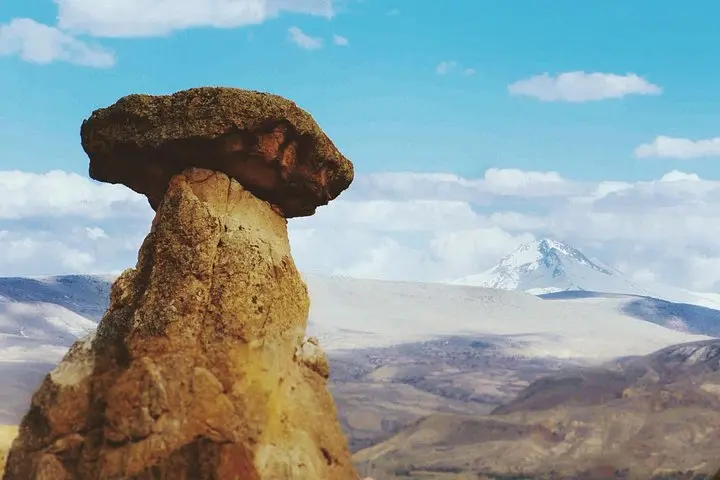
This is Cappadocia in compression. The region’s story is written in volcanic tuff laid down millions of years ago by eruptions from Mount Erciyes and Hasan Dağı; softer layers eroded away to leave the harder “hats” that protect the columns beneath. Human hands followed the geology—hollowing homes, churches, and wine cellars into the rock from Hittite times through the Byzantine period. Avanos, on the Kızılırmak River, adds an artisanal chapter: potters still pull red-clay vessels the same way their ancestors did, a local craft shaped by the river’s sediments.
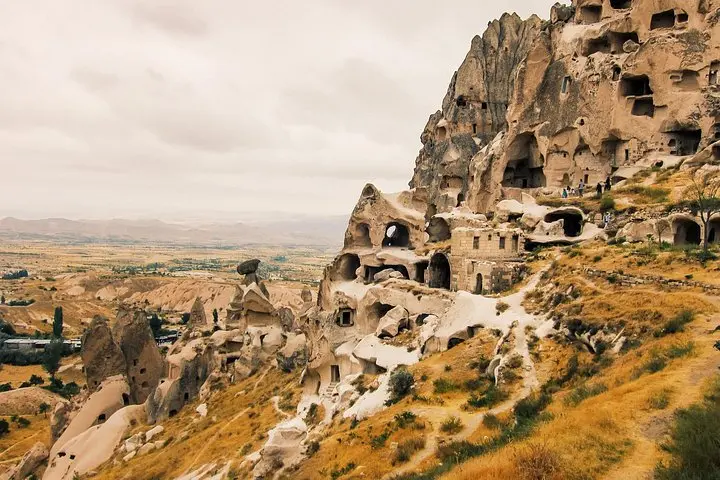
Culturally, the area is a crossroads. Early Christians carved monastic complexes here to escape persecution, turning caves into chapels whose frescoes survive as fragile color. Underground cities like Kaymakli speak to a different kind of survival—ingenious ventilation shafts, rolling stone doors, and compact living spaces designed to shelter thousands in crisis.
Practical edge: this private tour is designed for travelers who want a full-day snapshot without the logistics. Expect several short stops—30 minutes at many highlights—so timing is brisk. Wear good walking shoes; the soft tuff becomes slick where rain has settled. Bring cash for small-shop pottery pieces and water for the hikeier viewpoints. Photography is rewarding at dawn and late afternoon when the carved rock warms to rose and gold, but the light shifts quickly.
For visitors with limited mobility, note that many sites have steps, narrow passages, and uneven ground—especially the underground city, where ceilings are low. Your private guide can tailor the route and spend more time at your priorities, and pickup from most Cappadocia hotels is typically included.
If you want something quieter, ask to lengthen the Rose Valley stop and skip busier overlooks. Leave no trace: the soft tuff erodes easily, so stick to paths, don’t climb fragile formations, and support local businesses—buy a plate from an Avanos potter rather than a mass-produced trinket. In a single day, Cappadocia moves from surface to subterranean, from geology to human history, always pulling you forward—the landscape daring you to look closer.
No—hot-air balloon flights are separate experiences and not part of the private minivan tour.
Admission fees (for places like the Göreme Open-Air Museum) are generally not included—check the tour description or ask the operator before booking.
Yes—most operators include free hotel pickup from Cappadocia hotels; confirm your exact pickup point when booking.
The tour runs approximately 4–6 hours depending on traffic, group size, and how long you choose to spend at each stop.
Children can visit but should be supervised—tunnels are low and narrow, and some stairways are steep.
The tour usually runs in light rain; however, certain stops may be shortened for safety—confirm cancellation and refund policies when booking (full refund typically if canceled 24 hours prior).
Turco Travel Usa operates guided outdoor trips and adventures with an emphasis on safety, stewardship, and memorable experiences.
A diesel minivan hums away from a sleepy Göreme hotel at first light and the landscape opens like a film—ridges and cones of soft stone rising, their faces scored by centuries of wind and winter. Your private guide points to a field of chimneys ahead; some look like spires, others like stacked pillars—rock that refuses to sit still. Over the next 4–6 hours you move through that geology and history in concentrated form: Devrent’s whimsical shapes, Paşabağ’s capped pillars, the frescoed caves of the Göreme Open-Air Museum, and the cool, narrow passages of Kaymakli underground city.
A diesel minivan hums away from a sleepy Göreme hotel at first light and the landscape opens like a film—ridges and cones of soft stone rising, their faces scored by centuries of wind and winter. Your private guide points to a field of chimneys ahead; some look like spires, others like stacked pillars—rock that refuses to sit still. Over the next 4–6 hours you move through that geology and history in concentrated form: Devrent’s whimsical shapes, Paşabağ’s capped pillars, the frescoed caves of the Göreme Open-Air Museum, and the cool, narrow passages of Kaymakli underground city.
This is Cappadocia in compression. The region’s story is written in volcanic tuff laid down millions of years ago by eruptions from Mount Erciyes and Hasan Dağı; softer layers eroded away to leave the harder “hats” that protect the columns beneath. Human hands followed the geology—hollowing homes, churches, and wine cellars into the rock from Hittite times through the Byzantine period. Avanos, on the Kızılırmak River, adds an artisanal chapter: potters still pull red-clay vessels the same way their ancestors did, a local craft shaped by the river’s sediments.
Culturally, the area is a crossroads. Early Christians carved monastic complexes here to escape persecution, turning caves into chapels whose frescoes survive as fragile color. Underground cities like Kaymakli speak to a different kind of survival—ingenious ventilation shafts, rolling stone doors, and compact living spaces designed to shelter thousands in crisis.
Practical edge: this private tour is designed for travelers who want a full-day snapshot without the logistics. Expect several short stops—30 minutes at many highlights—so timing is brisk. Wear good walking shoes; the soft tuff becomes slick where rain has settled. Bring cash for small-shop pottery pieces and water for the hikeier viewpoints. Photography is rewarding at dawn and late afternoon when the carved rock warms to rose and gold, but the light shifts quickly.
For visitors with limited mobility, note that many sites have steps, narrow passages, and uneven ground—especially the underground city, where ceilings are low. Your private guide can tailor the route and spend more time at your priorities, and pickup from most Cappadocia hotels is typically included.
If you want something quieter, ask to lengthen the Rose Valley stop and skip busier overlooks. Leave no trace: the soft tuff erodes easily, so stick to paths, don’t climb fragile formations, and support local businesses—buy a plate from an Avanos potter rather than a mass-produced trinket. In a single day, Cappadocia moves from surface to subterranean, from geology to human history, always pulling you forward—the landscape daring you to look closer.