THE ADVENTURE COLLECTIVE® · Independent discovery and booking for outdoor travel

Walk among the sculpted cones and hollowed cave churches of Cappadocia with a licensed local guide. This private 8‑hour tour mixes valley hikes, traditional food, and cultural stops for a grounded, immersive day in central Turkey.
Walk among the sculpted cones and hollowed cave churches of Cappadocia with a licensed local guide. This private 8‑hour tour mixes valley hikes, traditional food, and cultural stops for a grounded, immersive day in central Turkey.
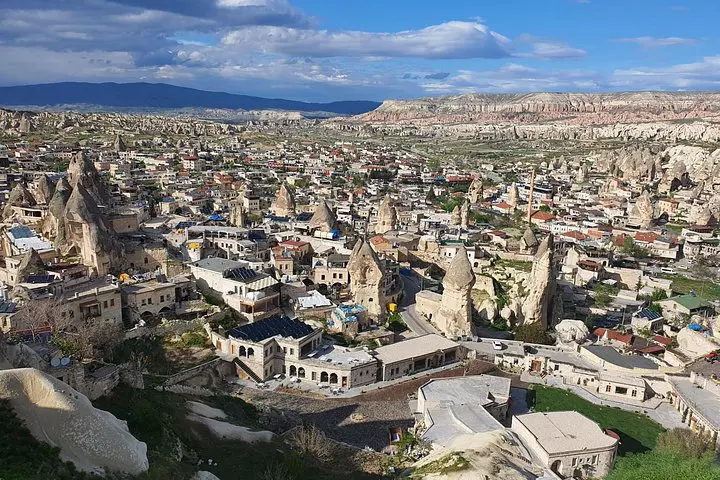
You arrive before dawn and the landscape already feels deliberate—pale cones, ridged spires and honeycombed rock rehearse their angles in the cold light. A local guide meets the van in Göreme, exchanges nods over steaming Turkish tea, and leads the group down a narrow trail cut into volcanic tuff where the earth seems to have been sculpted by wind and time.
Verified experiences and guided adventures in the surrounding area.
Operated by Cappadocia Tour Guide · Göreme, Nevşehir
You arrive before dawn and the landscape already feels deliberate—pale cones, ridged spires and honeycombed rock rehearse their angles in the cold light. A local guide meets the van in Göreme, exchanges nods over steaming Turkish tea, and leads the group down a narrow trail cut into volcanic tuff where the earth seems to have been sculpted by wind and time.
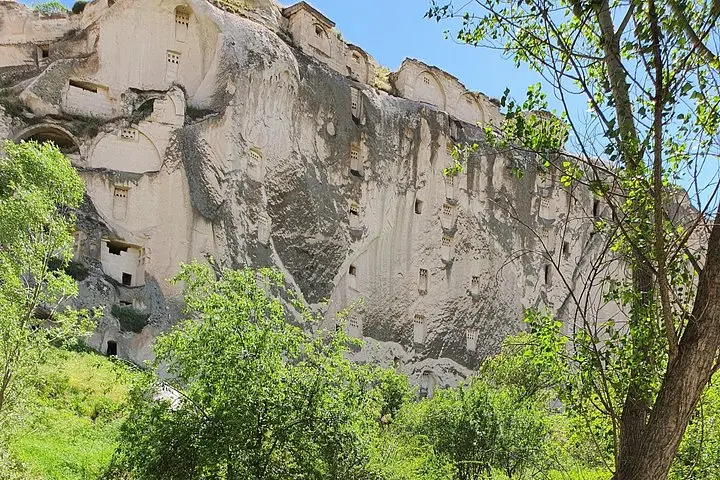
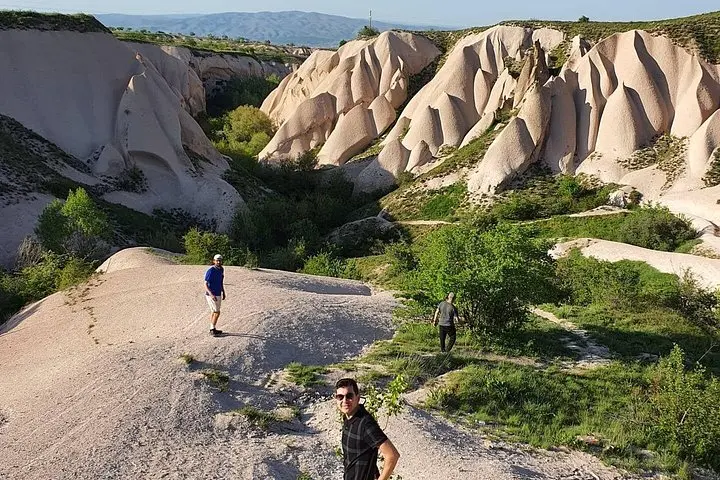
The day unfolds as a walk through deep geologic history: easily paced hikes through Rose Valley and Pigeon Valley where the trail weaves between fairy chimneys and hollowed cave houses. Expect 6–10 km of walking on dirt and compacted tuff, with short steep pitches and roughly 150–300 m cumulative elevation gain depending on route choices. The guide opens a rock-cut door to a small, frescoed chapel—a quiet counterpoint to the wide crags—and explains the Byzantine monks who carved these refuges in the 9th–13th centuries.
Cappadocia’s palette is volcanic: ash and lapilli that solidified into soft tuff, then eroded into the cones and pillars that define the region. That same softness enabled centuries of human adaptation—entire neighborhoods and underground cities were carved out of the stone. Between stops the guide offers insight into local life: how pottery from Avanos still follows age-old techniques, the role of pigeons in fertilizing vineyards, and why the region’s cuisine favors slow-simmered lamb, mezes, and oven-baked gözleme.
Cultural rhythms are part of the itinerary: a family-run café for a traditional lunch, a chance to watch artisans shaping clay, and unhurried explanations of religious and social customs that shaped the valleys. The tour is private, so routes and pacing are flexible—hikers can linger at panoramic overlooks or move on for cooler mid-day shade.
Practical guidance: plan on an 8-hour day with private, air-conditioned transport between points. Early starts beat heat and crowds; bring sturdy shoes with good traction for uneven steps and switchbacks. Carry at least 1.5–2 liters of water, sunscreen, and a light insulating layer—temperatures swing across the day at 1,200–1,400 m elevation. The guide can arrange hotel pickup or airport transfers for an additional fee; book at least 24 hours in advance if you need specialized logistics.
For travelers wanting texture: ask to visit a less-trafficked chapel, request a cooking demonstration, or extend a stop in a working pottery studio. The landscape will ask for measured steps and curiosity—the rocks don’t hurry, but they will reveal stories if you do.
Expect roughly 6–10 km of walking across valleys and viewpoints; total time on foot depends on how many sites you choose to linger at.
The tour is private and flexible but includes uneven trails and stairs; parts are wheelchair inaccessible despite vehicle accessibility options—contact the operator to discuss routes and accommodations.
Many itineraries include a visit to cave churches similar to those in Göreme Open Air Museum; confirm specific POIs when booking if you want that stop included.
Traditional lunch can be included or arranged at local restaurants on request; inform your guide of dietary needs when booking.
No special permits are needed for valley hikes, but standard travel insurance covering outdoor activity is recommended.
Yes—hotel pickup is available and airport transfer can be arranged for an extra fee (quoted locally; example: 75€ one way).
Cappadocia Tour Guide operates guided outdoor trips and adventures with an emphasis on safety, stewardship, and memorable experiences.
You arrive before dawn and the landscape already feels deliberate—pale cones, ridged spires and honeycombed rock rehearse their angles in the cold light. A local guide meets the van in Göreme, exchanges nods over steaming Turkish tea, and leads the group down a narrow trail cut into volcanic tuff where the earth seems to have been sculpted by wind and time.
You arrive before dawn and the landscape already feels deliberate—pale cones, ridged spires and honeycombed rock rehearse their angles in the cold light. A local guide meets the van in Göreme, exchanges nods over steaming Turkish tea, and leads the group down a narrow trail cut into volcanic tuff where the earth seems to have been sculpted by wind and time.
The day unfolds as a walk through deep geologic history: easily paced hikes through Rose Valley and Pigeon Valley where the trail weaves between fairy chimneys and hollowed cave houses. Expect 6–10 km of walking on dirt and compacted tuff, with short steep pitches and roughly 150–300 m cumulative elevation gain depending on route choices. The guide opens a rock-cut door to a small, frescoed chapel—a quiet counterpoint to the wide crags—and explains the Byzantine monks who carved these refuges in the 9th–13th centuries.
Cappadocia’s palette is volcanic: ash and lapilli that solidified into soft tuff, then eroded into the cones and pillars that define the region. That same softness enabled centuries of human adaptation—entire neighborhoods and underground cities were carved out of the stone. Between stops the guide offers insight into local life: how pottery from Avanos still follows age-old techniques, the role of pigeons in fertilizing vineyards, and why the region’s cuisine favors slow-simmered lamb, mezes, and oven-baked gözleme.
Cultural rhythms are part of the itinerary: a family-run café for a traditional lunch, a chance to watch artisans shaping clay, and unhurried explanations of religious and social customs that shaped the valleys. The tour is private, so routes and pacing are flexible—hikers can linger at panoramic overlooks or move on for cooler mid-day shade.
Practical guidance: plan on an 8-hour day with private, air-conditioned transport between points. Early starts beat heat and crowds; bring sturdy shoes with good traction for uneven steps and switchbacks. Carry at least 1.5–2 liters of water, sunscreen, and a light insulating layer—temperatures swing across the day at 1,200–1,400 m elevation. The guide can arrange hotel pickup or airport transfers for an additional fee; book at least 24 hours in advance if you need specialized logistics.
For travelers wanting texture: ask to visit a less-trafficked chapel, request a cooking demonstration, or extend a stop in a working pottery studio. The landscape will ask for measured steps and curiosity—the rocks don’t hurry, but they will reveal stories if you do.