THE ADVENTURE COLLECTIVE® · Independent discovery and booking for outdoor travel

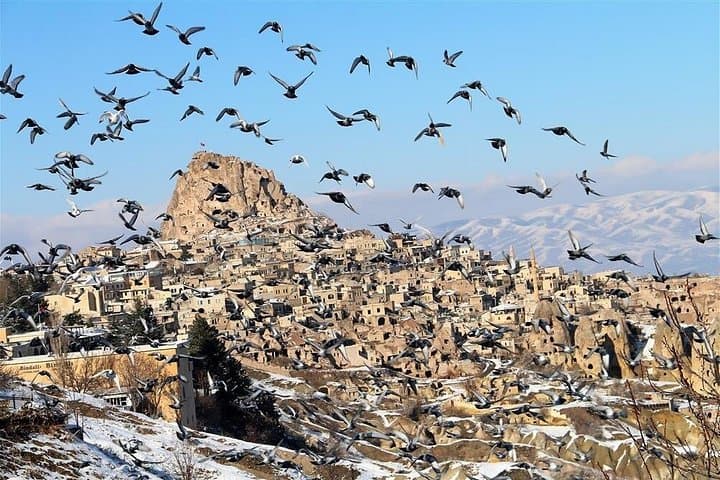
Spend a concentrated day on Cappadocia’s Red Route—Private North Tour—to see Göreme Open-Air Museum, Paşabağ’s extraordinary fairy chimneys, Uçhisar’s sky-high vantage and Avanos pottery. This private, guided loop blends geology, early Christian cave churches and hands-on craft with practical transport and lunch included.
Spend a concentrated day on Cappadocia’s Red Route—Private North Tour—to see Göreme Open-Air Museum, Paşabağ’s extraordinary fairy chimneys, Uçhisar’s sky-high vantage and Avanos pottery. This private, guided loop blends geology, early Christian cave churches and hands-on craft with practical transport and lunch included.
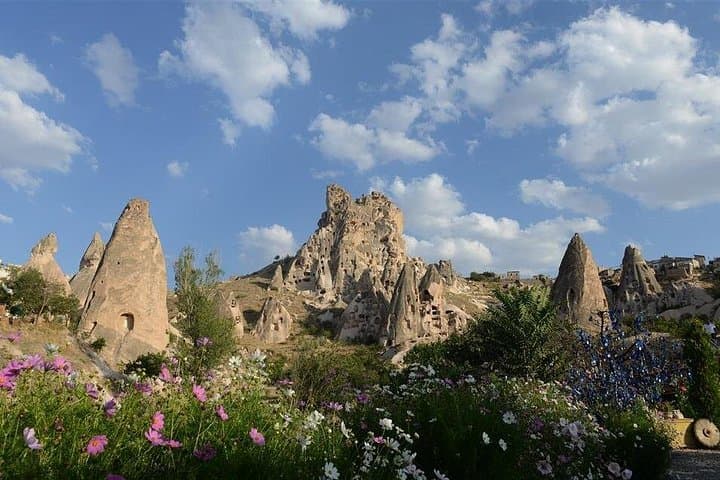
On the cracked dawn skyline above Göreme, stone towers and domes catch the first light like a city that grew out of a kiln. A private minivan eases onto the plateau and the guide gestures toward a landscape that reads like a field guide to erosion: mushroom-shaped fairy chimneys, honeycombed rock faces and narrow valleys cut into soft volcanic tuff.
Verified experiences and guided adventures in the surrounding area.
Operated by RIVENDELL TRAVEL · Göreme, Nevşehir
On the cracked dawn skyline above Göreme, stone towers and domes catch the first light like a city that grew out of a kiln. A private minivan eases onto the plateau and the guide gestures toward a landscape that reads like a field guide to erosion: mushroom-shaped fairy chimneys, honeycombed rock faces and narrow valleys cut into soft volcanic tuff.
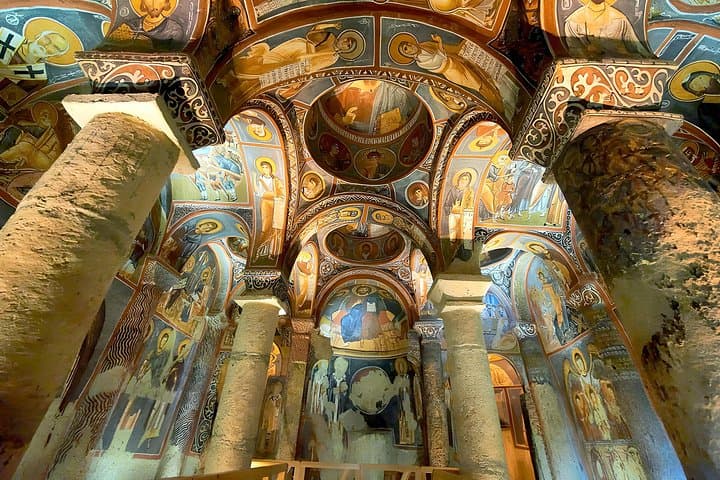
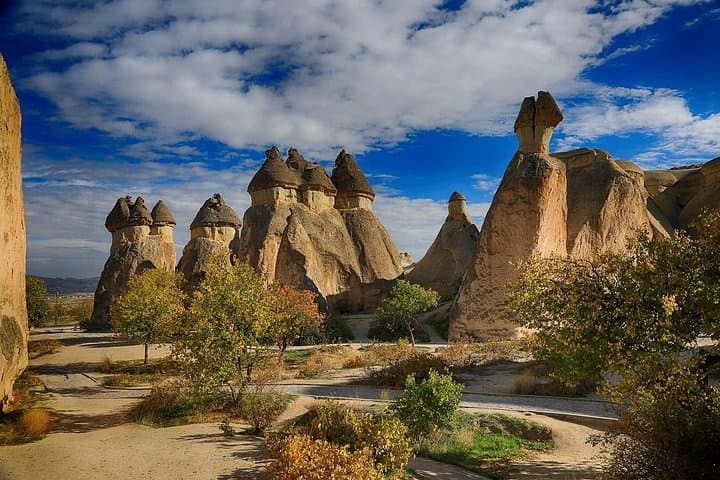
The North or “Red” route is compact but dense—an afternoon of geology, monastic history and living craft. The Göreme Open-Air Museum opens as a cluster of cave churches from the 4th to 13th centuries, their ochre frescoes still narrating liturgy and daily life despite centuries of wind and human hands. Nearby, Çavuşin preserves older village houses and a carved church dedicated to St. John; Paşabağ’s double- and triple-headed chimneys stand like ancient rooflines resisting the sky.
Geology here is the author. Millennia of lava from nearby Erciyes and Hasan volcanoes laid down thick ash, which compacted into soft tuff. Rain and wind have been the sculptors ever since, daring columns and cones to stand while softer sections wash away. Human hands have simply joined the conversation—cutting rooms, altars and living spaces into the rock to create a hybrid architecture where nature and culture share a wall.
Avanos, on the Kızılırmak’s banks, introduces a different craft: pottery. Clay from the riverbed is kneaded and thrown on a wheel powered once by foot and still by hand. The town’s workshops are a practical counterpoint to the silent churches; here you can sit at a wheel and make something you can actually take home.
Practicalities anchor the romance: a typical private Red Tour runs about 5–6 hours and covers several short walks—expect paved paths with uneven stone, a few steep staircases inside cave sites and panoramic viewpoints with modest elevation changes. The region sits around 1,200–1,350 meters above sea level, so the thin air is noticeable to sensitive travelers.
Bring sturdy shoes, sun protection and a light layer for morning or late afternoon chills. The itinerary usually includes lunch and private transport, and most sites require modest entrance fees—cash or card depending on the spot. Mornings and late afternoons yield the best light for photos and cooler temperatures for walking; midday can be hot in summer.
A private guide transforms these stops from pretty postcards into a connected story—pointing out carving techniques, reading fresco iconography and arranging a pottery demonstration. For travelers short on time, the Red Tour is an efficient way to feel Cappadocia: a landscape that keeps changing shape and a human history that kept pace with it.
The tour runs about 5–6 hours, including transport, guide time and a sit-down lunch.
Private transport is included; pickup from most Göreme hotels is standard and pickup time is confirmed after booking.
Some admissions on the itinerary are included; check your booking details and bring cash for any additional sites or donations.
Yes; the tour is rated physically easy and many sites are stroller-accessible, though cave stairs may be restrictive for very young children.
Yes—most private tours include a pottery demonstration, and many workshops invite guests to try the wheel for a fee.
Early morning and late afternoon provide the warmest light and fewer crowds for photography.
RIVENDELL TRAVEL operates guided outdoor trips and adventures with an emphasis on safety, stewardship, and memorable experiences.
On the cracked dawn skyline above Göreme, stone towers and domes catch the first light like a city that grew out of a kiln. A private minivan eases onto the plateau and the guide gestures toward a landscape that reads like a field guide to erosion: mushroom-shaped fairy chimneys, honeycombed rock faces and narrow valleys cut into soft volcanic tuff.
On the cracked dawn skyline above Göreme, stone towers and domes catch the first light like a city that grew out of a kiln. A private minivan eases onto the plateau and the guide gestures toward a landscape that reads like a field guide to erosion: mushroom-shaped fairy chimneys, honeycombed rock faces and narrow valleys cut into soft volcanic tuff.
The North or “Red” route is compact but dense—an afternoon of geology, monastic history and living craft. The Göreme Open-Air Museum opens as a cluster of cave churches from the 4th to 13th centuries, their ochre frescoes still narrating liturgy and daily life despite centuries of wind and human hands. Nearby, Çavuşin preserves older village houses and a carved church dedicated to St. John; Paşabağ’s double- and triple-headed chimneys stand like ancient rooflines resisting the sky.
Geology here is the author. Millennia of lava from nearby Erciyes and Hasan volcanoes laid down thick ash, which compacted into soft tuff. Rain and wind have been the sculptors ever since, daring columns and cones to stand while softer sections wash away. Human hands have simply joined the conversation—cutting rooms, altars and living spaces into the rock to create a hybrid architecture where nature and culture share a wall.
Avanos, on the Kızılırmak’s banks, introduces a different craft: pottery. Clay from the riverbed is kneaded and thrown on a wheel powered once by foot and still by hand. The town’s workshops are a practical counterpoint to the silent churches; here you can sit at a wheel and make something you can actually take home.
Practicalities anchor the romance: a typical private Red Tour runs about 5–6 hours and covers several short walks—expect paved paths with uneven stone, a few steep staircases inside cave sites and panoramic viewpoints with modest elevation changes. The region sits around 1,200–1,350 meters above sea level, so the thin air is noticeable to sensitive travelers.
Bring sturdy shoes, sun protection and a light layer for morning or late afternoon chills. The itinerary usually includes lunch and private transport, and most sites require modest entrance fees—cash or card depending on the spot. Mornings and late afternoons yield the best light for photos and cooler temperatures for walking; midday can be hot in summer.
A private guide transforms these stops from pretty postcards into a connected story—pointing out carving techniques, reading fresco iconography and arranging a pottery demonstration. For travelers short on time, the Red Tour is an efficient way to feel Cappadocia: a landscape that keeps changing shape and a human history that kept pace with it.