THE ADVENTURE COLLECTIVE® · Independent discovery and booking for outdoor travel

Spend a full day moving through Cappadocia’s most iconic landscapes on an all-inclusive Red Tour: Uchisar’s lookout, the mushroom chimneys of Paşabağ, the cave churches of Zelve and hands-on pottery in Avanos. This guide outlines what to expect, why the geology and history matter, and how to prepare.
Spend a full day moving through Cappadocia’s most iconic landscapes on an all-inclusive Red Tour: Uchisar’s lookout, the mushroom chimneys of Paşabağ, the cave churches of Zelve and hands-on pottery in Avanos. This guide outlines what to expect, why the geology and history matter, and how to prepare.
You step onto the minibus as the valley warms under a late-morning sun and the driver eases away from Göreme. Windows frame an uncanny landscape: cones, spires and domes of rock that seem to have been left by an absent-minded sculptor. The guide's voice—calm, practiced—maps the day ahead. First stop is Uchisar Castle, where a short climb rewards you with a panorama that lays out Cappadocia like a relief map: ridges, orchards and the ribbon of the Kızılırmak River tracing the plain.
Verified experiences and guided adventures in the surrounding area.
Operated by Endocia Travel · Göreme, Nevşehir
You step onto the minibus as the valley warms under a late-morning sun and the driver eases away from Göreme. Windows frame an uncanny landscape: cones, spires and domes of rock that seem to have been left by an absent-minded sculptor. The guide's voice—calm, practiced—maps the day ahead. First stop is Uchisar Castle, where a short climb rewards you with a panorama that lays out Cappadocia like a relief map: ridges, orchards and the ribbon of the Kızılırmak River tracing the plain.
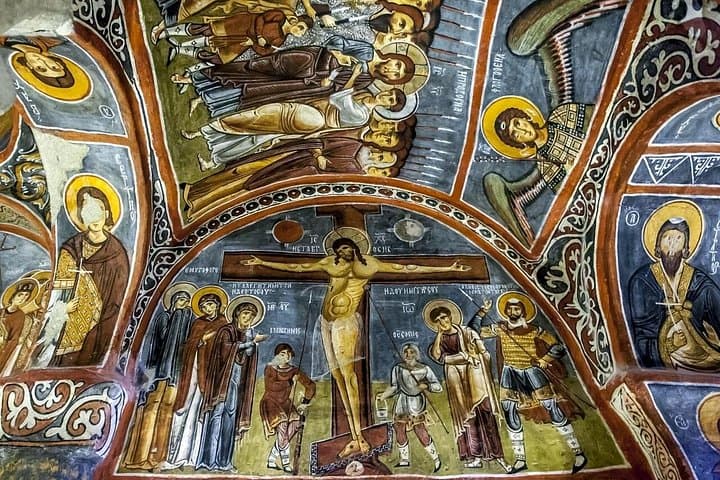
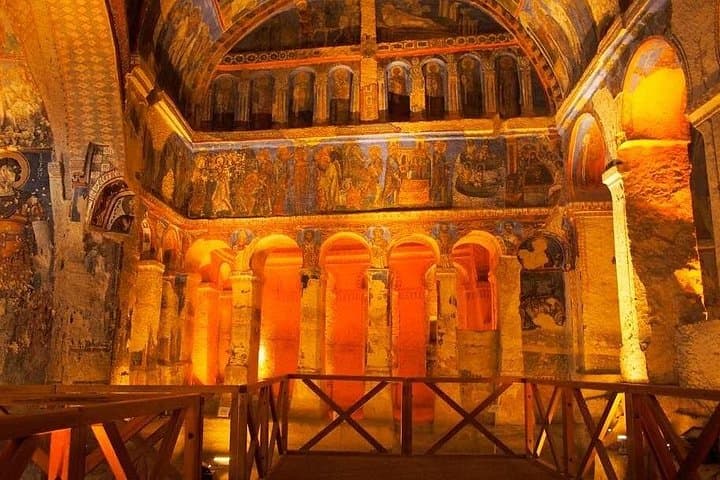
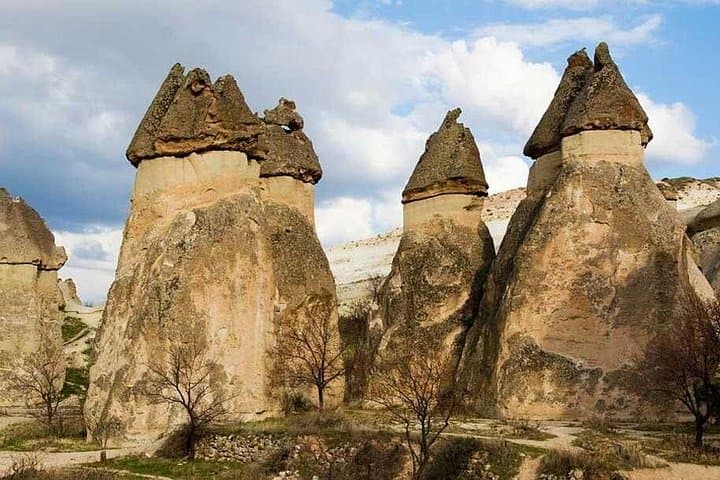
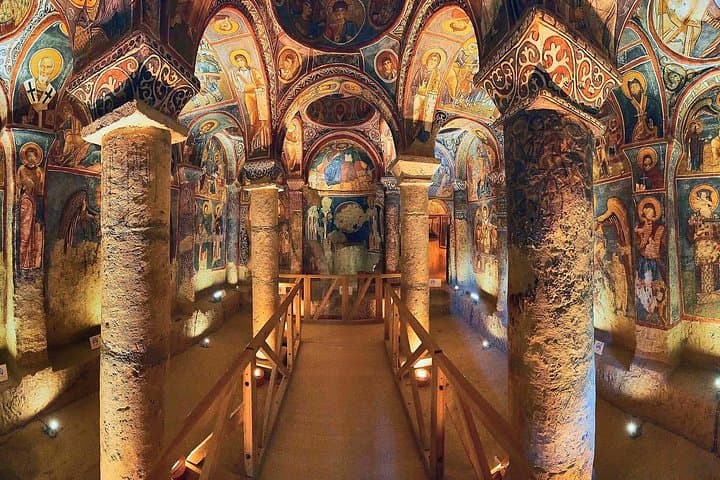
This route, known locally as the Red Tour, stitches together geology, faith and craft. Millennia ago volcanic ash compacted into tuff; water, wind and frost then teased it into the fairy chimneys you now walk among. Christians carved cells, churches and frescoed sanctuaries into the soft stone in the early medieval period, turning raw geology into refuge and ritual. In Zelve and Paşabağ you can still find niches and hermitages where monks once retreated from the world.
Avanos interrupts the lunar terrain with the color of human hands: the red clay the Kızılırmak brings has made the town a pottery center since Hittite times. Watching a master at the wheel is as instructive as any museum placard—then you try it yourself, fingers learning the same rhythms that shaped domestic wares for generations.
Practicalities: the tour runs about seven hours, with hotel pickup and drop-off included and lunch and museum entries covered. Each stop includes roughly 45–60 minutes on foot—expect short walks across uneven, dusty paths; most are 1–2 kilometers of easy strolling with occasional steps and low rises. The tour is shared (max ~15 people) and uses a comfortable coach for inter-site transfers, so you cover more ground than an independent walker could in a day.
Timing matters for photos and crowds. Morning light softens the tuff; by midday shadows flatten and buses arrive in numbers. If hot-air balloons are aloft at sunrise, you'll spot them like slow, colorful punctuation above the valleys. The region is semi-arid: bring sun protection and water even in cooler months.
Health notes: the tour is accessible to most travelers but not recommended for those with serious back or heart problems due to some uneven terrain and steps. Wear grippy shoes and a light jacket—the wind can be sharp where the landscape opens.
By day's end you'll have walked through carved history, touched rock formations that seem to dare you to name them, and shaped a lump of red clay into something that holds a trace of this place. It's a curated crash course in what makes Cappadocia distinct: raw geology shaped by time, human stories cut into stone, and a craft that keeps the region's traditions turning.
Yes; the tour includes hotel pickup and drop-off in Göreme and nearby towns—confirm your pickup point when booking.
Yes; the tour price covers museum entries and a set lunch at a local restaurant.
No; balloon flights are a separate early-morning activity and are not part of the Red Tour itinerary.
Infants and small children can ride in strollers, but some sites have uneven ground; parents should be prepared to carry or support toddlers on short climbs.
Turkish lira is standard locally, but many vendors accept cards; tipping guides and drivers 10–15% or a few Euros is customary for good service.
Yes; restrooms are available at most stops and at the lunch venue, though some are basic—carry hand sanitizer and toilet paper just in case.
Endocia Travel operates guided outdoor trips and adventures with an emphasis on safety, stewardship, and memorable experiences.
You step onto the minibus as the valley warms under a late-morning sun and the driver eases away from Göreme. Windows frame an uncanny landscape: cones, spires and domes of rock that seem to have been left by an absent-minded sculptor. The guide's voice—calm, practiced—maps the day ahead. First stop is Uchisar Castle, where a short climb rewards you with a panorama that lays out Cappadocia like a relief map: ridges, orchards and the ribbon of the Kızılırmak River tracing the plain.
You step onto the minibus as the valley warms under a late-morning sun and the driver eases away from Göreme. Windows frame an uncanny landscape: cones, spires and domes of rock that seem to have been left by an absent-minded sculptor. The guide's voice—calm, practiced—maps the day ahead. First stop is Uchisar Castle, where a short climb rewards you with a panorama that lays out Cappadocia like a relief map: ridges, orchards and the ribbon of the Kızılırmak River tracing the plain.
This route, known locally as the Red Tour, stitches together geology, faith and craft. Millennia ago volcanic ash compacted into tuff; water, wind and frost then teased it into the fairy chimneys you now walk among. Christians carved cells, churches and frescoed sanctuaries into the soft stone in the early medieval period, turning raw geology into refuge and ritual. In Zelve and Paşabağ you can still find niches and hermitages where monks once retreated from the world.
Avanos interrupts the lunar terrain with the color of human hands: the red clay the Kızılırmak brings has made the town a pottery center since Hittite times. Watching a master at the wheel is as instructive as any museum placard—then you try it yourself, fingers learning the same rhythms that shaped domestic wares for generations.
Practicalities: the tour runs about seven hours, with hotel pickup and drop-off included and lunch and museum entries covered. Each stop includes roughly 45–60 minutes on foot—expect short walks across uneven, dusty paths; most are 1–2 kilometers of easy strolling with occasional steps and low rises. The tour is shared (max ~15 people) and uses a comfortable coach for inter-site transfers, so you cover more ground than an independent walker could in a day.
Timing matters for photos and crowds. Morning light softens the tuff; by midday shadows flatten and buses arrive in numbers. If hot-air balloons are aloft at sunrise, you'll spot them like slow, colorful punctuation above the valleys. The region is semi-arid: bring sun protection and water even in cooler months.
Health notes: the tour is accessible to most travelers but not recommended for those with serious back or heart problems due to some uneven terrain and steps. Wear grippy shoes and a light jacket—the wind can be sharp where the landscape opens.
By day's end you'll have walked through carved history, touched rock formations that seem to dare you to name them, and shaped a lump of red clay into something that holds a trace of this place. It's a curated crash course in what makes Cappadocia distinct: raw geology shaped by time, human stories cut into stone, and a craft that keeps the region's traditions turning.