THE ADVENTURE COLLECTIVE® · Independent discovery and booking for outdoor travel

Spend a compact, illuminating day traversing Cappadocia’s star attractions: Göreme Open-Air Museum, Pasabag’s fairy chimneys, Devrent’s rock zoo and Avanos pottery. This guided Red Tour bundles skip-the-line entry, a local lunch and hands-on pottery for a practical introduction to the region’s geology and living culture.
Spend a compact, illuminating day traversing Cappadocia’s star attractions: Göreme Open-Air Museum, Pasabag’s fairy chimneys, Devrent’s rock zoo and Avanos pottery. This guided Red Tour bundles skip-the-line entry, a local lunch and hands-on pottery for a practical introduction to the region’s geology and living culture.
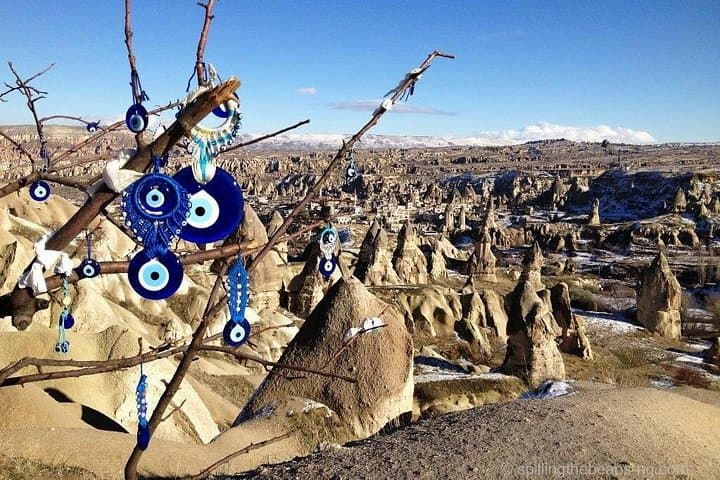
You step out of the minibus into a high Anatolian plain where the wind seems to have a hand in the architecture. The valley air is thin—Göreme sits at about 1,200 m—and it carries dust from volcanic tuff that, over millennia, a patient sky and flowing winter meltwaters have carved into chimneys, cones and caves. This is the Red Tour: a compact, seven-hour circuit that stitches together the region’s most iconic rock-work: the painted caverns of the Göreme Open-Air Museum, the capped pillars of Pasabag, Devrent’s animal-like silhouettes and Avanos, where pots are still spun by the same red clay washed down from Erciyes and Hasan volcanoes.
Verified experiences and guided adventures in the surrounding area.
Operated by Tour Altinkum Travel · Göreme, Nevşehir Province
You step out of the minibus into a high Anatolian plain where the wind seems to have a hand in the architecture. The valley air is thin—Göreme sits at about 1,200 m—and it carries dust from volcanic tuff that, over millennia, a patient sky and flowing winter meltwaters have carved into chimneys, cones and caves. This is the Red Tour: a compact, seven-hour circuit that stitches together the region’s most iconic rock-work: the painted caverns of the Göreme Open-Air Museum, the capped pillars of Pasabag, Devrent’s animal-like silhouettes and Avanos, where pots are still spun by the same red clay washed down from Erciyes and Hasan volcanoes.
History sits in the walls here. From the 4th century onward, early Christians hollowed the soft tuff to create cells, churches and monasteries, then painted them—bright Byzantine frescoes that survive under dripstone roofs. Geologically, Cappadocia is a story of eruption and erosion: layers of ash compacted to tuff, topped by harder basalt that serves as the chimneys’ protective hats. Culturally the area is a crossroads—Seljuk, Ottoman and earlier Anatolian traditions meet in simple village life and the artisanal pottery of Avanos, a craft passed down through apprenticeships.
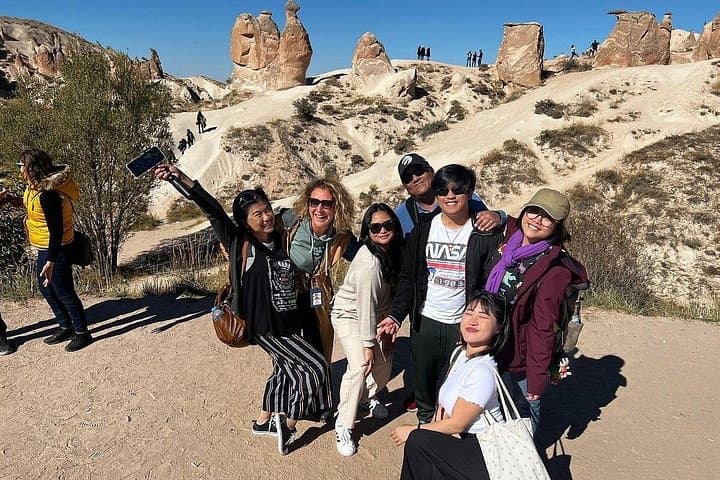
On the tour you’ll walk short loops rather than long hikes: expect 1–2 km of on-foot exploration at Göreme Open-Air Museum (stairs and narrow cave passages), a gentle 1 km loop at Pasabag among mushroom-shaped spires, and a ramble through Devrent’s sculpted ridgeline. Your guide holds skip-the-line tickets so you move through the busy sites with less waiting; a local restaurant lunch is included, and there’s a hands-on pottery demo in Avanos where you can try the wheel.
Practical edge: bring sturdy trail shoes with decent grip—cave floors and small stairs are uneven and sometimes damp. Layer your clothing: mornings can be cool and windy but afternoons warm quickly. Hydrate—there are cafés but limited potable water points on the route. Photography rules vary inside frescoed churches (no flash recommended). If mobility is limited, note that some cave churches require steps and low passages.
Timing matters: start times vary by pickup windows; traffic can add minutes between stops. For culture and context, listen to your guide when they explain the fresco symbolism and pottery techniques—these short explanations are windows into centuries of daily life. Leave room for a slow cup of tea in Avanos and, if you can, book the tour early in your trip—hot-air balloons rise over the same ridgelines at dawn and make for a fuller sense of why this landscape draws travelers back again.
Yes—skip-the-line entry tickets for included sites are provided and handled by your guide.
The tour runs about 7 hours with short walks at each stop—most on-foot sections are 1–2 km and relatively easy.
Yes—a typical Turkish lunch at a local restaurant is included in the tour price.
Children can join; kids 8 and under enter free but bring passports for verification.
Some sites have stairs and narrow cave passages; while pick-up is vehicle-accessible, certain cave churches are not suitable for wheelchairs.
Contact the local provider by phone or WhatsApp to reconfirm the pickup time; pickups generally occur 30–60 minutes before the listed start time.
Tour Altinkum Travel operates guided outdoor trips and adventures with an emphasis on safety, stewardship, and memorable experiences.
You step out of the minibus into a high Anatolian plain where the wind seems to have a hand in the architecture. The valley air is thin—Göreme sits at about 1,200 m—and it carries dust from volcanic tuff that, over millennia, a patient sky and flowing winter meltwaters have carved into chimneys, cones and caves. This is the Red Tour: a compact, seven-hour circuit that stitches together the region’s most iconic rock-work: the painted caverns of the Göreme Open-Air Museum, the capped pillars of Pasabag, Devrent’s animal-like silhouettes and Avanos, where pots are still spun by the same red clay washed down from Erciyes and Hasan volcanoes.
You step out of the minibus into a high Anatolian plain where the wind seems to have a hand in the architecture. The valley air is thin—Göreme sits at about 1,200 m—and it carries dust from volcanic tuff that, over millennia, a patient sky and flowing winter meltwaters have carved into chimneys, cones and caves. This is the Red Tour: a compact, seven-hour circuit that stitches together the region’s most iconic rock-work: the painted caverns of the Göreme Open-Air Museum, the capped pillars of Pasabag, Devrent’s animal-like silhouettes and Avanos, where pots are still spun by the same red clay washed down from Erciyes and Hasan volcanoes.
History sits in the walls here. From the 4th century onward, early Christians hollowed the soft tuff to create cells, churches and monasteries, then painted them—bright Byzantine frescoes that survive under dripstone roofs. Geologically, Cappadocia is a story of eruption and erosion: layers of ash compacted to tuff, topped by harder basalt that serves as the chimneys’ protective hats. Culturally the area is a crossroads—Seljuk, Ottoman and earlier Anatolian traditions meet in simple village life and the artisanal pottery of Avanos, a craft passed down through apprenticeships.
On the tour you’ll walk short loops rather than long hikes: expect 1–2 km of on-foot exploration at Göreme Open-Air Museum (stairs and narrow cave passages), a gentle 1 km loop at Pasabag among mushroom-shaped spires, and a ramble through Devrent’s sculpted ridgeline. Your guide holds skip-the-line tickets so you move through the busy sites with less waiting; a local restaurant lunch is included, and there’s a hands-on pottery demo in Avanos where you can try the wheel.
Practical edge: bring sturdy trail shoes with decent grip—cave floors and small stairs are uneven and sometimes damp. Layer your clothing: mornings can be cool and windy but afternoons warm quickly. Hydrate—there are cafés but limited potable water points on the route. Photography rules vary inside frescoed churches (no flash recommended). If mobility is limited, note that some cave churches require steps and low passages.
Timing matters: start times vary by pickup windows; traffic can add minutes between stops. For culture and context, listen to your guide when they explain the fresco symbolism and pottery techniques—these short explanations are windows into centuries of daily life. Leave room for a slow cup of tea in Avanos and, if you can, book the tour early in your trip—hot-air balloons rise over the same ridgelines at dawn and make for a fuller sense of why this landscape draws travelers back again.