THE ADVENTURE COLLECTIVE® · Independent discovery and booking for outdoor travel

Spend a full day tracing Cappadocia’s volcanic past, cave churches and living pottery traditions on the Red Tour. This guided loop through Zelve, Avanos, Pasabag and panoramic Göreme balances geology, culture and easy exploration.
Spend a full day tracing Cappadocia’s volcanic past, cave churches and living pottery traditions on the Red Tour. This guided loop through Zelve, Avanos, Pasabag and panoramic Göreme balances geology, culture and easy exploration.
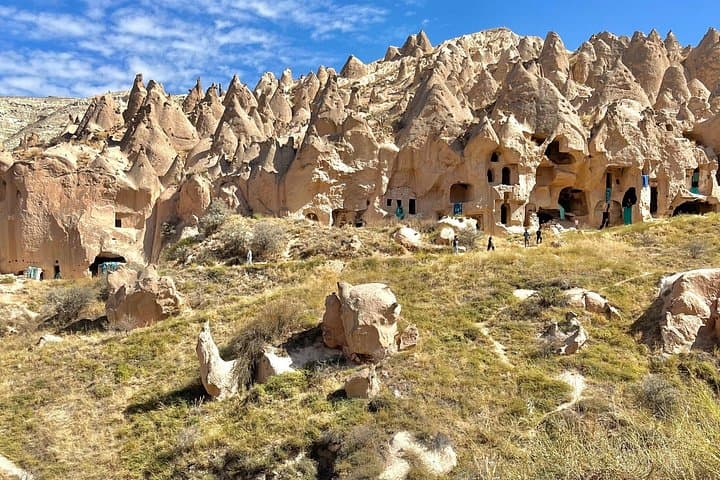
The bus pulls away from a sleepy Göreme hotel and the landscape opens like a page of geological history: ochre fields slope into mushroom-shaped pillars, narrow valleys cut by time, and small stone houses folded into cliffs. On the Cappadocia Red Tour, an English-speaking guide moves between these scenes like a translator—explaining layers of volcano ash turned to tuff, pointing out the carved churches, and timing stops so the light flatters every fairytale chimney.
Verified experiences and guided adventures in the surrounding area.
Operated by Crossroads Travel- (iLKE SEY TURZM TIC LTD) · Göreme, Nevşehir
The bus pulls away from a sleepy Göreme hotel and the landscape opens like a page of geological history: ochre fields slope into mushroom-shaped pillars, narrow valleys cut by time, and small stone houses folded into cliffs. On the Cappadocia Red Tour, an English-speaking guide moves between these scenes like a translator—explaining layers of volcano ash turned to tuff, pointing out the carved churches, and timing stops so the light flatters every fairytale chimney.
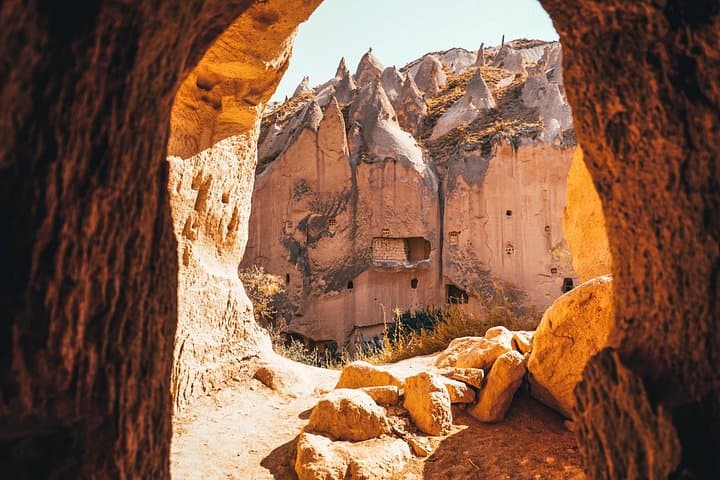
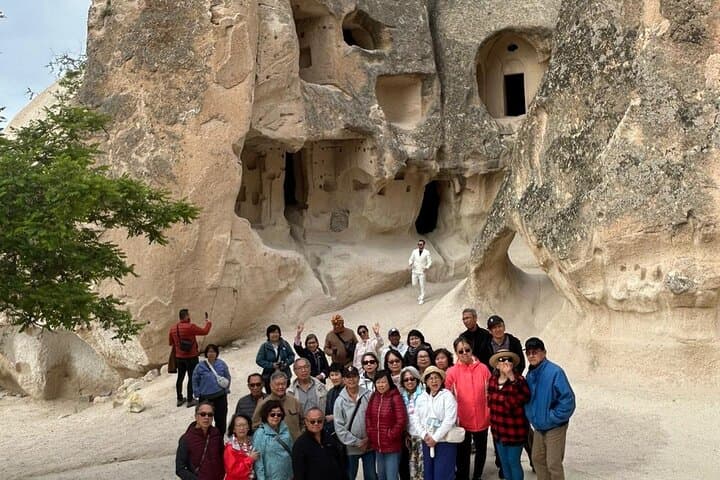
Cappadocia’s hoodoos began as volcanic deposits 9 to 3 million years ago. Over millennia wind and water shaved soft tuff while harder capstones remained, producing the region’s iconic conical silhouettes. Humans followed the geology: Hittites and later Byzantine Christians carved living spaces and sanctuaries into forgiving rock. The Zelve Open-Air Museum—one of the tour’s first stops—still shows the compact, cave-dwelling life of those early communities, with churches that hold faded frescoes and carved rooms that once sheltered entire families.
The tour threads through working towns as well as viewpoints. Avanos sits on the Kızılırmak, Turkey’s longest river, and its red clay pottery is both craft and cultural memory; workshops here let visitors watch, and sometimes try, techniques passed down for centuries. Pasabag, or Monk Valley, exposes fairy chimneys in theatrical clusters; some formations have interior hollows visitors can climb into, revealing how intimate and human this rocky architecture could be.
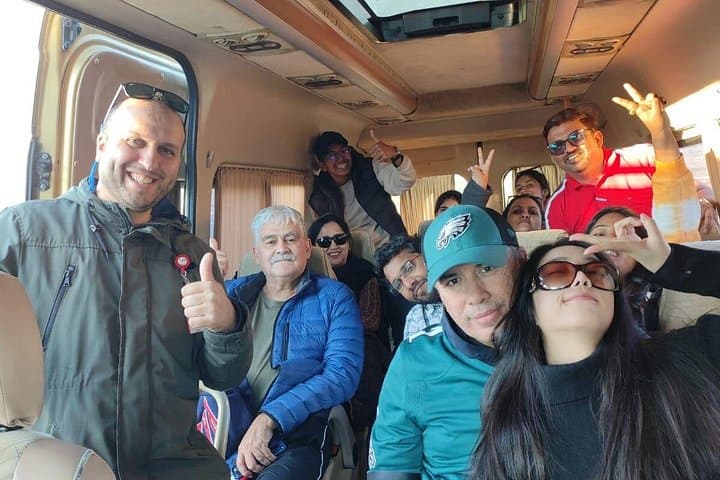
Practicalities are compact and clear. This is a full-day, approximately eight-hour outing in an air-conditioned vehicle with hotel pickup and drop-off from central Cappadocia hotels. Entrance fees for listed sites are included and lunch is provided at an Avanos buffet (drinks extra). Expect moderate activity: staircases, short uphill walks and uneven paths at viewpoints. The operator allows up to 14 travelers per shared tour, and the guide will manage time at each stop—navigating crowds and parking while explaining geology, local history and pottery techniques.
To get the most from the day, wear sturdy shoes with grip, pack a refillable water bottle, and bring a lightweight layered jacket—the region swings from warm sun in the valley to brisk wind on exposed panoramas. Cameras are essential: your guide will point out the best photo angles but arrive early at viewpoints to avoid midday crowds. Respect fragile surfaces in the open-air museums and support small businesses in Avanos with purchases rather than touching protected frescoes.
The Red Tour condenses Cappadocia’s complex story—natural and human—into a single, manageable day. It’s ideal for travelers who want geological context, hands-on craft exposure, and a measured pace that leaves space to notice the small details: the sheen on a freshly thrown pot, the chipped edge of a monk’s window, the way the valley light softens as the day ends.
The tour runs about 8 hours and visits Zelve Open-Air Museum, Göreme Panorama, Avanos (pottery), Pasabag (Monk Valley) and a lunch stop in Avanos.
Yes—entrance fees listed in the itinerary and an open-buffet lunch are included; drinks at lunch are extra.
Pickup and drop-off are provided from centrally located hotels in Cappadocia; confirm your pickup point when booking.
Infants must sit on an adult’s lap; the tour involves stairs and uneven paths so it is not recommended for travelers with serious mobility limitations.
Small daypacks are fine; large suitcases should remain at your hotel as vehicle storage is limited.
For a full refund cancel at least 24 hours before departure; cancellations within 24 hours are not refundable.
Crossroads Travel- (iLKE SEY TURZM TIC LTD) operates guided outdoor trips and adventures with an emphasis on safety, stewardship, and memorable experiences.
The bus pulls away from a sleepy Göreme hotel and the landscape opens like a page of geological history: ochre fields slope into mushroom-shaped pillars, narrow valleys cut by time, and small stone houses folded into cliffs. On the Cappadocia Red Tour, an English-speaking guide moves between these scenes like a translator—explaining layers of volcano ash turned to tuff, pointing out the carved churches, and timing stops so the light flatters every fairytale chimney.
The bus pulls away from a sleepy Göreme hotel and the landscape opens like a page of geological history: ochre fields slope into mushroom-shaped pillars, narrow valleys cut by time, and small stone houses folded into cliffs. On the Cappadocia Red Tour, an English-speaking guide moves between these scenes like a translator—explaining layers of volcano ash turned to tuff, pointing out the carved churches, and timing stops so the light flatters every fairytale chimney.
Cappadocia’s hoodoos began as volcanic deposits 9 to 3 million years ago. Over millennia wind and water shaved soft tuff while harder capstones remained, producing the region’s iconic conical silhouettes. Humans followed the geology: Hittites and later Byzantine Christians carved living spaces and sanctuaries into forgiving rock. The Zelve Open-Air Museum—one of the tour’s first stops—still shows the compact, cave-dwelling life of those early communities, with churches that hold faded frescoes and carved rooms that once sheltered entire families.
The tour threads through working towns as well as viewpoints. Avanos sits on the Kızılırmak, Turkey’s longest river, and its red clay pottery is both craft and cultural memory; workshops here let visitors watch, and sometimes try, techniques passed down for centuries. Pasabag, or Monk Valley, exposes fairy chimneys in theatrical clusters; some formations have interior hollows visitors can climb into, revealing how intimate and human this rocky architecture could be.
Practicalities are compact and clear. This is a full-day, approximately eight-hour outing in an air-conditioned vehicle with hotel pickup and drop-off from central Cappadocia hotels. Entrance fees for listed sites are included and lunch is provided at an Avanos buffet (drinks extra). Expect moderate activity: staircases, short uphill walks and uneven paths at viewpoints. The operator allows up to 14 travelers per shared tour, and the guide will manage time at each stop—navigating crowds and parking while explaining geology, local history and pottery techniques.
To get the most from the day, wear sturdy shoes with grip, pack a refillable water bottle, and bring a lightweight layered jacket—the region swings from warm sun in the valley to brisk wind on exposed panoramas. Cameras are essential: your guide will point out the best photo angles but arrive early at viewpoints to avoid midday crowds. Respect fragile surfaces in the open-air museums and support small businesses in Avanos with purchases rather than touching protected frescoes.
The Red Tour condenses Cappadocia’s complex story—natural and human—into a single, manageable day. It’s ideal for travelers who want geological context, hands-on craft exposure, and a measured pace that leaves space to notice the small details: the sheen on a freshly thrown pot, the chipped edge of a monk’s window, the way the valley light softens as the day ends.