THE ADVENTURE COLLECTIVE® · Independent discovery and booking for outdoor travel

Move through Cappadocia’s high rock castles, fairy chimneys and cave churches on a curated full-day circuit. This Red Tour blends geology, Byzantine history and living pottery craft with hotel transfers and an English-speaking guide.
Move through Cappadocia’s high rock castles, fairy chimneys and cave churches on a curated full-day circuit. This Red Tour blends geology, Byzantine history and living pottery craft with hotel transfers and an English-speaking guide.
The minibus hums away from Göreme before sunrise and the valley exhales into a wash of ochre and gold. On the Cappadocia Red Tour travelers move through a landscape that seems to rearrange itself every kilometer: pillars of tuff rise like overturned cups, cave dwellings peer from cliff faces, and the plateaus open to valleys that dare you to imagine new shapes. The day is paced for sight, not sprint—an hour at Uçhisar Castle, time among the mushroom-shaped fairy chimneys of Paşabağı, a pottery demo in Avanos, and a wander through the painted chapels of Zelve.
Verified experiences and guided adventures in the surrounding area.
Operated by Cappadocia Tours · Göreme, Nevşehir Province
The minibus hums away from Göreme before sunrise and the valley exhales into a wash of ochre and gold. On the Cappadocia Red Tour travelers move through a landscape that seems to rearrange itself every kilometer: pillars of tuff rise like overturned cups, cave dwellings peer from cliff faces, and the plateaus open to valleys that dare you to imagine new shapes. The day is paced for sight, not sprint—an hour at Uçhisar Castle, time among the mushroom-shaped fairy chimneys of Paşabağı, a pottery demo in Avanos, and a wander through the painted chapels of Zelve.
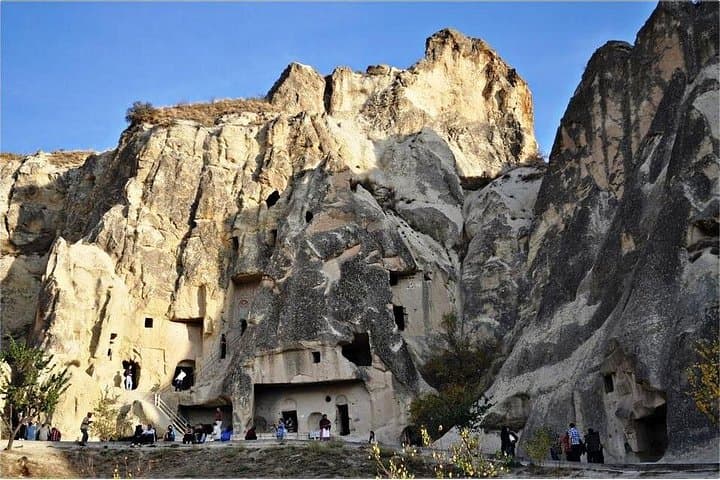
Geology here reads like a slow-motion drama. Millennia of volcanic ash compacted into soft tuff, then wind and water carved the formations travelers now call fairy chimneys. Early Christians and communities hollowed those rocks into homes and chapels; the frescoes in the cave churches at Zelve are a clear line to Cappadocia’s Byzantine past. Avanos still turns on techniques older than written history: clay from the Kızılırmak River was shaped by Hitites and refined by generations who followed.
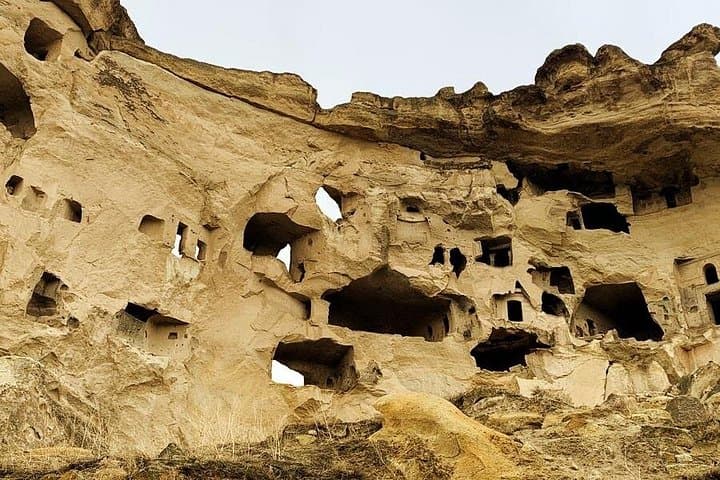
Culture arrives quietly. In Çavuşin, abandoned stone houses recall the 1924 population exchange; in Avanos, a family workshop demonstrates the continuity of craft. Guides on the Red Tour usually speak English and frame each stop with context—why a chapel faces east, how farmers used terraces, and where to find intact fresco fragments.
Practicalities matter: the tour runs about 6–7 hours with door-to-door pickup from most Göreme hotels. Transfers cover the distances between dispersed sites, so walking is limited to short loops—expect uneven paths, rock steps and brief scrambles up lookouts. Uçhisar involves a short climb to the castle viewpoint; Paşabağı and Devrent are mostly flat walks across packed dirt. Bring sun protection, comfortable shoes with grip, and a reusable water bottle. A light jacket is useful in mornings and late afternoons when the plateau wind pushes through.
Timing is everything. Mornings offer softer light and fewer crowds; midday is busy, when guides steer groups toward shaded cafes in Avanos for a buffet lunch. Cash is still king for small purchases—pottery demonstrations, tips, and local snacks.
For travelers who want curated exposure to Cappadocia’s geology, history and living crafts, the Red Tour is efficient and informative. It’s not a wilderness trek, but it does give you the layered story of the region: volcanic beginnings, carved human habitation, and an active craft culture that connects ancient earth to modern hands.
The tour lasts roughly 6–7 hours and includes hotel pickup, air-conditioned transport, an English-speaking professional guide, and a buffet lunch.
Admission fees to sites like Göreme Open Air Museum are not always included; check the booking details and bring cash for entrance if required.
Yes, the tour is family-friendly; infants must sit on an adult's lap and the route is suitable for strollers in some areas but expect uneven ground at many sites.
Walking is light to moderate—short loops at each stop typically range from a few hundred metres up to about 1 km, with some stairs and rocky paths.
Photography policies vary; flash is usually prohibited to protect frescoes, and guides will advise where photos are permitted.
Guides on this departure speak English; other language options may be available on request but should be confirmed at booking.
Cappadocia Tours operates guided outdoor trips and adventures with an emphasis on safety, stewardship, and memorable experiences.
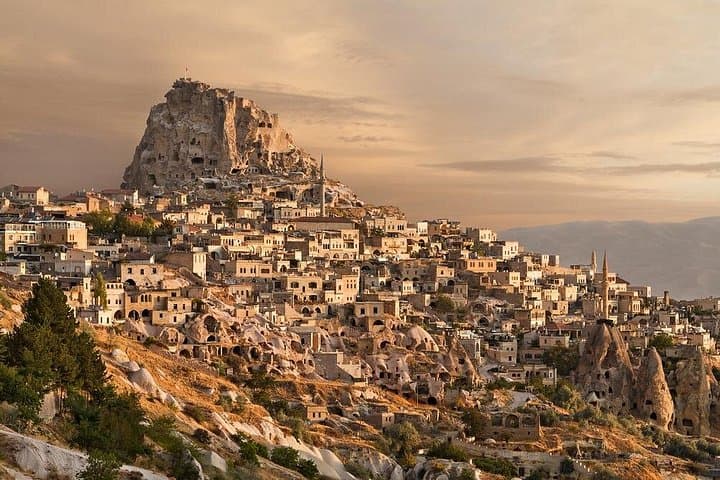
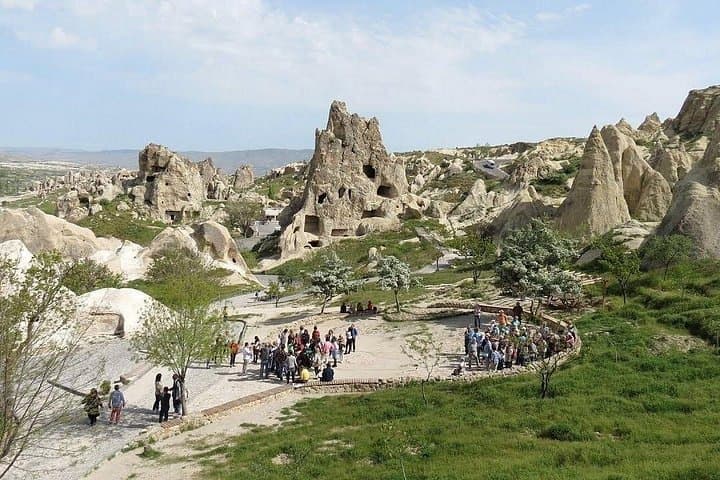
The minibus hums away from Göreme before sunrise and the valley exhales into a wash of ochre and gold. On the Cappadocia Red Tour travelers move through a landscape that seems to rearrange itself every kilometer: pillars of tuff rise like overturned cups, cave dwellings peer from cliff faces, and the plateaus open to valleys that dare you to imagine new shapes. The day is paced for sight, not sprint—an hour at Uçhisar Castle, time among the mushroom-shaped fairy chimneys of Paşabağı, a pottery demo in Avanos, and a wander through the painted chapels of Zelve.
The minibus hums away from Göreme before sunrise and the valley exhales into a wash of ochre and gold. On the Cappadocia Red Tour travelers move through a landscape that seems to rearrange itself every kilometer: pillars of tuff rise like overturned cups, cave dwellings peer from cliff faces, and the plateaus open to valleys that dare you to imagine new shapes. The day is paced for sight, not sprint—an hour at Uçhisar Castle, time among the mushroom-shaped fairy chimneys of Paşabağı, a pottery demo in Avanos, and a wander through the painted chapels of Zelve.
Geology here reads like a slow-motion drama. Millennia of volcanic ash compacted into soft tuff, then wind and water carved the formations travelers now call fairy chimneys. Early Christians and communities hollowed those rocks into homes and chapels; the frescoes in the cave churches at Zelve are a clear line to Cappadocia’s Byzantine past. Avanos still turns on techniques older than written history: clay from the Kızılırmak River was shaped by Hitites and refined by generations who followed.
Culture arrives quietly. In Çavuşin, abandoned stone houses recall the 1924 population exchange; in Avanos, a family workshop demonstrates the continuity of craft. Guides on the Red Tour usually speak English and frame each stop with context—why a chapel faces east, how farmers used terraces, and where to find intact fresco fragments.
Practicalities matter: the tour runs about 6–7 hours with door-to-door pickup from most Göreme hotels. Transfers cover the distances between dispersed sites, so walking is limited to short loops—expect uneven paths, rock steps and brief scrambles up lookouts. Uçhisar involves a short climb to the castle viewpoint; Paşabağı and Devrent are mostly flat walks across packed dirt. Bring sun protection, comfortable shoes with grip, and a reusable water bottle. A light jacket is useful in mornings and late afternoons when the plateau wind pushes through.
Timing is everything. Mornings offer softer light and fewer crowds; midday is busy, when guides steer groups toward shaded cafes in Avanos for a buffet lunch. Cash is still king for small purchases—pottery demonstrations, tips, and local snacks.
For travelers who want curated exposure to Cappadocia’s geology, history and living crafts, the Red Tour is efficient and informative. It’s not a wilderness trek, but it does give you the layered story of the region: volcanic beginnings, carved human habitation, and an active craft culture that connects ancient earth to modern hands.