THE ADVENTURE COLLECTIVE® · Independent discovery and booking for outdoor travel

Spend a full day exploring Cappadocia’s central wonders on the Red Tour—Uçhisar Castle, Göreme Open-Air Museum, Avanos pottery and Paşabağı’s fairy chimneys—complete with lunch and museum admissions. A focused, interpretive route ideal for first-time visitors who want geology, history and local craft rolled into one accessible day.
Spend a full day exploring Cappadocia’s central wonders on the Red Tour—Uçhisar Castle, Göreme Open-Air Museum, Avanos pottery and Paşabağı’s fairy chimneys—complete with lunch and museum admissions. A focused, interpretive route ideal for first-time visitors who want geology, history and local craft rolled into one accessible day.
You step out of the minibus and the land rearranges itself—soft beige cones, blunt-roofed chimneys and long ridgelines that look engineered by patience rather than force. The guide shuts the door, points toward Uçhisar Castle and, for a few hours, the narrative of Cappadocia becomes physical: millions of years of volcanic ash compressed into tuff, then carved by wind, rain and human hands into rooms, churches and winding alleys.
Verified experiences and guided adventures in the surrounding area.
Operated by Cappadocia Tours · Göreme, Nevşehir Province
You step out of the minibus and the land rearranges itself—soft beige cones, blunt-roofed chimneys and long ridgelines that look engineered by patience rather than force. The guide shuts the door, points toward Uçhisar Castle and, for a few hours, the narrative of Cappadocia becomes physical: millions of years of volcanic ash compressed into tuff, then carved by wind, rain and human hands into rooms, churches and winding alleys.
The Red Tour threads the central and northern pockets of Cappadocia in six to seven hours, moving from the lookout at Uçhisar—the region’s highest rock outcrop—to the holy pockets of Göreme Open-Air Museum, the abandoned Greek houses of Çavuşin and the clustered “fairy chimneys” of Paşabağı. Each stop is a layer: geological story first, then the human one. Göreme’s cave churches preserve 10th–11th-century frescoes that map Christian monastic life in pigment and prayer. Nearby Avanos, cradled by the Kızılırmak (Red) River, trades in clay-making traditions that predate the Roman era—watch a master potter and try the wheel in a subterranean workshop.
The itinerary balances explanation with exploration: guided history and geology at key viewpoints, then free time to wander narrow lanes, duck into cave chapels or climb stone terraces. Terrain is mostly easy walking—paved viewpoints and short dirt trails—but surfaces are uneven and steps inside cave complexes are narrow.
Practicalities matter on a full-day circuit. The tour runs 6–7 hours with hotel pickup (30 minutes before departure), lunch at a buffet in Avanos and admission fees handled by the operator. Groups are small—up to 15—traveling in air-conditioned vans with an English-speaking guide who leads the narrative and points out details camera frames might miss.
For planning: wear sturdy shoes for slick stone and loose gravel; carry a sun hat and water in summer and insulated layers in winter—temperatures swing fast in open landscapes. Photography rewards timing—early-light on Uçhisar and late-afternoon on the fairy chimneys give depth to the pale rock. If you want hands-on craft, bring cash for optional pottery purchases and tipping the workshop.
The Red Tour is a practical primer on Cappadocia: readable geology, concentrated history, and a few hours in the pockets where people once carved homes and chapels into the living rock. It’s not a wilderness trek but a cultural loop—compact, revealing, and easy to bolt onto a longer stay if the balloon-shutter at dawn still waits on your list.
Yes—entrance tickets for the museums listed in the itinerary are included in the tour price.
Yes—pickup from Göreme-area hotels is provided; expect pickup about 30 minutes before the tour departure time.
Moderate short walks and stair climbs at each site; trails are short but uneven—comfortable shoes recommended.
Infants can ride in strollers, but many cave sites have steps and narrow passages that are not stroller-friendly.
Yes—Avanos includes a family-run pottery workshop where you can watch demonstrations and try the potter’s wheel; small purchases are optional.
No—the Red Tour is a land-based day tour; hot-air balloon flights are separate, early-morning experiences requiring separate booking.
Cappadocia Tours operates guided outdoor trips and adventures with an emphasis on safety, stewardship, and memorable experiences.

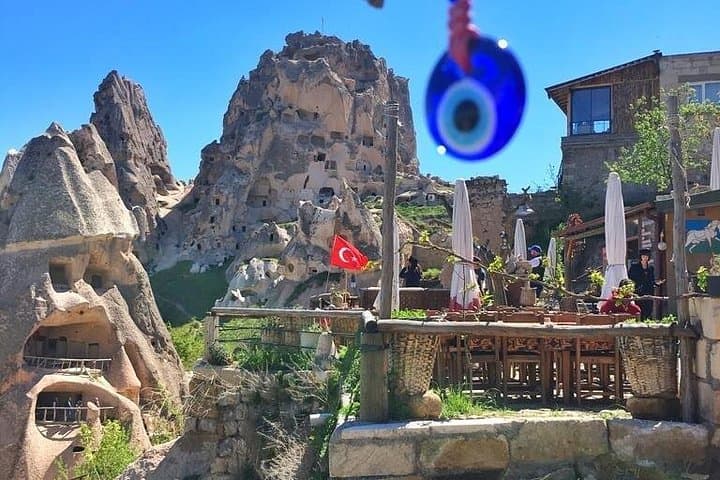


You step out of the minibus and the land rearranges itself—soft beige cones, blunt-roofed chimneys and long ridgelines that look engineered by patience rather than force. The guide shuts the door, points toward Uçhisar Castle and, for a few hours, the narrative of Cappadocia becomes physical: millions of years of volcanic ash compressed into tuff, then carved by wind, rain and human hands into rooms, churches and winding alleys.
You step out of the minibus and the land rearranges itself—soft beige cones, blunt-roofed chimneys and long ridgelines that look engineered by patience rather than force. The guide shuts the door, points toward Uçhisar Castle and, for a few hours, the narrative of Cappadocia becomes physical: millions of years of volcanic ash compressed into tuff, then carved by wind, rain and human hands into rooms, churches and winding alleys.
The Red Tour threads the central and northern pockets of Cappadocia in six to seven hours, moving from the lookout at Uçhisar—the region’s highest rock outcrop—to the holy pockets of Göreme Open-Air Museum, the abandoned Greek houses of Çavuşin and the clustered “fairy chimneys” of Paşabağı. Each stop is a layer: geological story first, then the human one. Göreme’s cave churches preserve 10th–11th-century frescoes that map Christian monastic life in pigment and prayer. Nearby Avanos, cradled by the Kızılırmak (Red) River, trades in clay-making traditions that predate the Roman era—watch a master potter and try the wheel in a subterranean workshop.
The itinerary balances explanation with exploration: guided history and geology at key viewpoints, then free time to wander narrow lanes, duck into cave chapels or climb stone terraces. Terrain is mostly easy walking—paved viewpoints and short dirt trails—but surfaces are uneven and steps inside cave complexes are narrow.
Practicalities matter on a full-day circuit. The tour runs 6–7 hours with hotel pickup (30 minutes before departure), lunch at a buffet in Avanos and admission fees handled by the operator. Groups are small—up to 15—traveling in air-conditioned vans with an English-speaking guide who leads the narrative and points out details camera frames might miss.
For planning: wear sturdy shoes for slick stone and loose gravel; carry a sun hat and water in summer and insulated layers in winter—temperatures swing fast in open landscapes. Photography rewards timing—early-light on Uçhisar and late-afternoon on the fairy chimneys give depth to the pale rock. If you want hands-on craft, bring cash for optional pottery purchases and tipping the workshop.
The Red Tour is a practical primer on Cappadocia: readable geology, concentrated history, and a few hours in the pockets where people once carved homes and chapels into the living rock. It’s not a wilderness trek but a cultural loop—compact, revealing, and easy to bolt onto a longer stay if the balloon-shutter at dawn still waits on your list.