THE ADVENTURE COLLECTIVE® · Independent discovery and booking for outdoor travel

Spend 5–6 hours tracing Cappadocia's most iconic landscapes on the Red Tour: Love Valley's chimneys, Uçhisar Castle's summit views, the cave-dwelling chapters of Zelve, Paşabağ's striking spires and a hands-on Avanos pottery demo — all with hotel pickup and buffet lunch.
Spend 5–6 hours tracing Cappadocia's most iconic landscapes on the Red Tour: Love Valley's chimneys, Uçhisar Castle's summit views, the cave-dwelling chapters of Zelve, Paşabağ's striking spires and a hands-on Avanos pottery demo — all with hotel pickup and buffet lunch.
You step onto the minibus before dawn and the valley already has a shape to it: ribs of volcanic rock folding into hoodoos and chimneys that catch the first light like a field of pale towers. The guide calls it the Red Tour — not for the color of buses but for the route through the region's red-tinged volcanic terrain — and by midmorning you're walking between conical spires in Love Valley, treading on ground that feels both ancient and freshly revealed.
Verified experiences and guided adventures in the surrounding area.
Operated by Trip Expert Travel Cappadocia · Göreme, Nevşehir
You step onto the minibus before dawn and the valley already has a shape to it: ribs of volcanic rock folding into hoodoos and chimneys that catch the first light like a field of pale towers. The guide calls it the Red Tour — not for the color of buses but for the route through the region's red-tinged volcanic terrain — and by midmorning you're walking between conical spires in Love Valley, treading on ground that feels both ancient and freshly revealed.
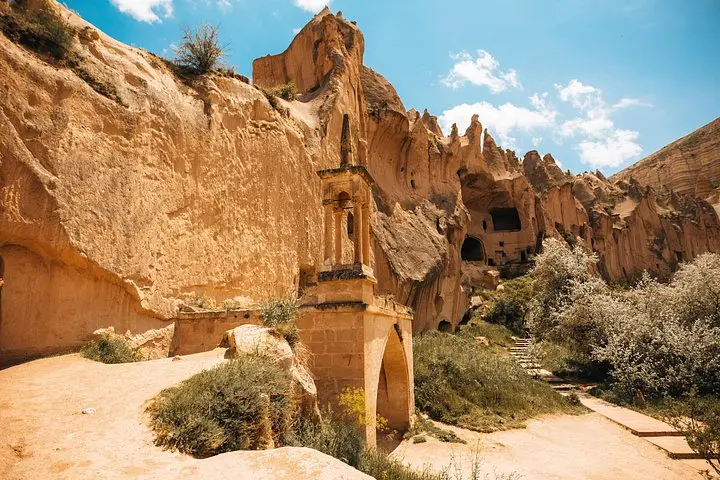
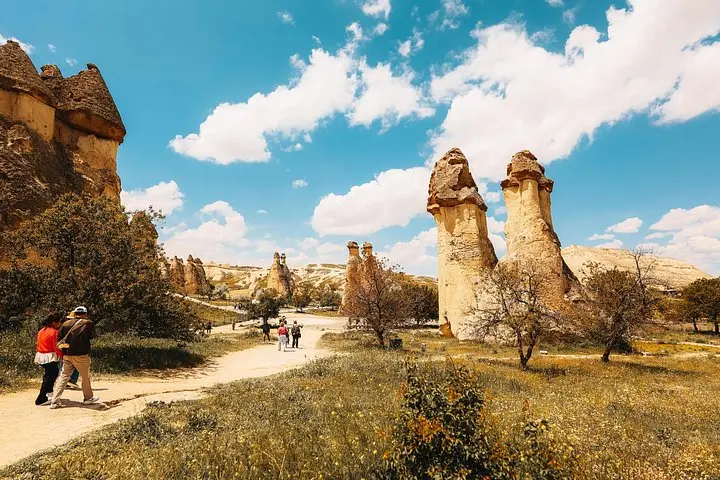
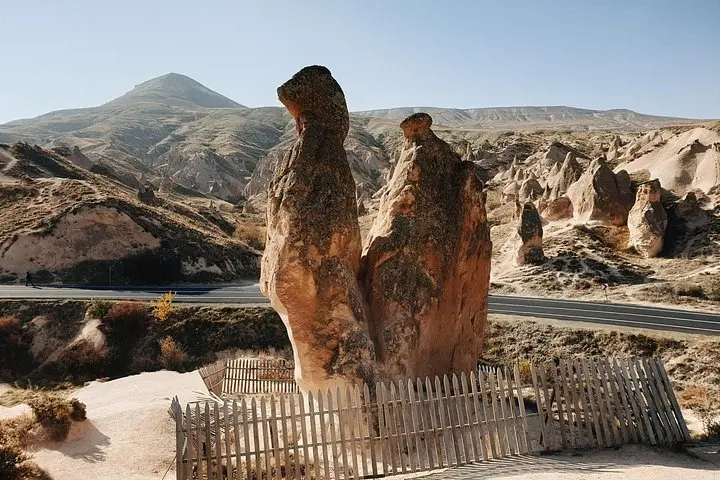
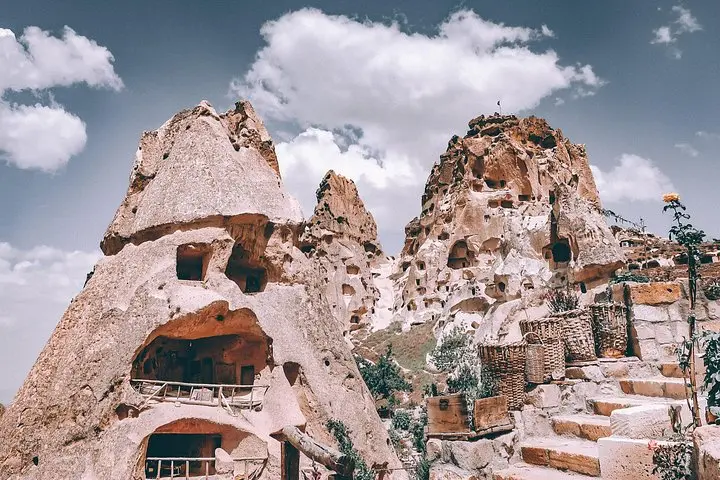
Cappadocia's landscape was carved from the tuff left by eruptions of Erciyes and Hasan volcanoes millions of years ago; softer deposits eroded away, leaving harder caps that create the fairy chimneys. Human history here is layered into the stone: Hittite trade routes gave way to Roman and Byzantine settlements, and early Christians hollowed out churches and monasteries to escape persecution. Sites on the Red Tour trace those human responses to geology — Uçhisar's hill fortress reads like a natural watchtower, Zelve's open-air museum shows multi-room cave dwellings, and Paşabağ's clustered chimneys illustrate how erosion keeps surprising us.
Culture is tactile: in Avanos you watch a potter shape clay taken from the Kızılırmak River with a practiced pressure — centuries of local craft still alive in a small workshop. Lunch is a buffet that gathers the day's travelers into a single table, and the pottery demonstration feels like a practical corollary to what you've seen in stone: the same raw materials, different human responses.
Practical guidance: the tour runs approximately 5–6 hours with hotel pickup in Göreme and surrounding towns. Walking is light to moderate — expect multiple short strolls across uneven but well-trodden paths (total walking under 3 km). Elevation changes are modest; Uçhisar requires a short climb to the summit viewpoint (steep, paved sections). Terrain includes packed dirt, loose gravel, and steps carved into rock, so stable footwear is important. The tour includes professional guide transport and entrance to several sites; bring cash for souvenirs and tips.
Timing matters: mornings and late afternoons thin crowds and soften light for photos; midday can be harsh and hot in summer. Respect the carved interiors — photography is often limited inside preserved churches. The region's fragile tuff requires careful foot traffic, so stick to marked paths and local guidance.
For travelers aiming to maximize the day, pair the Red Tour with an early-morning hot-air balloon ride (book separately) or a second-day hike through one of the adjacent canyons. The Red Tour is an efficient primer — a five-hour syllabus on how geology and people have shaped Cappadocia, served with practical logistics and a side of clay.
The tour runs roughly 5–6 hours, including transport, site visits and a buffet lunch.
Yes — the tour offers hotel pickup from Göreme and nearby towns; exact pickup time is confirmed after booking.
Admissions to several sites are included as noted in the itinerary, though verify specifics with the operator before travel.
Yes — the activity is rated easy with short walks; babies are not allowed, and travelers with serious heart conditions are advised against participation.
Photography rules vary; flash is often prohibited to protect frescoes and guides will advise on-site restrictions.
The buffet typically includes vegetarian options; if you have strict dietary needs, note them at booking so the operator can accommodate if possible.
Trip Expert Travel Cappadocia operates guided outdoor trips and adventures with an emphasis on safety, stewardship, and memorable experiences.
You step onto the minibus before dawn and the valley already has a shape to it: ribs of volcanic rock folding into hoodoos and chimneys that catch the first light like a field of pale towers. The guide calls it the Red Tour — not for the color of buses but for the route through the region's red-tinged volcanic terrain — and by midmorning you're walking between conical spires in Love Valley, treading on ground that feels both ancient and freshly revealed.
You step onto the minibus before dawn and the valley already has a shape to it: ribs of volcanic rock folding into hoodoos and chimneys that catch the first light like a field of pale towers. The guide calls it the Red Tour — not for the color of buses but for the route through the region's red-tinged volcanic terrain — and by midmorning you're walking between conical spires in Love Valley, treading on ground that feels both ancient and freshly revealed.
Cappadocia's landscape was carved from the tuff left by eruptions of Erciyes and Hasan volcanoes millions of years ago; softer deposits eroded away, leaving harder caps that create the fairy chimneys. Human history here is layered into the stone: Hittite trade routes gave way to Roman and Byzantine settlements, and early Christians hollowed out churches and monasteries to escape persecution. Sites on the Red Tour trace those human responses to geology — Uçhisar's hill fortress reads like a natural watchtower, Zelve's open-air museum shows multi-room cave dwellings, and Paşabağ's clustered chimneys illustrate how erosion keeps surprising us.
Culture is tactile: in Avanos you watch a potter shape clay taken from the Kızılırmak River with a practiced pressure — centuries of local craft still alive in a small workshop. Lunch is a buffet that gathers the day's travelers into a single table, and the pottery demonstration feels like a practical corollary to what you've seen in stone: the same raw materials, different human responses.
Practical guidance: the tour runs approximately 5–6 hours with hotel pickup in Göreme and surrounding towns. Walking is light to moderate — expect multiple short strolls across uneven but well-trodden paths (total walking under 3 km). Elevation changes are modest; Uçhisar requires a short climb to the summit viewpoint (steep, paved sections). Terrain includes packed dirt, loose gravel, and steps carved into rock, so stable footwear is important. The tour includes professional guide transport and entrance to several sites; bring cash for souvenirs and tips.
Timing matters: mornings and late afternoons thin crowds and soften light for photos; midday can be harsh and hot in summer. Respect the carved interiors — photography is often limited inside preserved churches. The region's fragile tuff requires careful foot traffic, so stick to marked paths and local guidance.
For travelers aiming to maximize the day, pair the Red Tour with an early-morning hot-air balloon ride (book separately) or a second-day hike through one of the adjacent canyons. The Red Tour is an efficient primer — a five-hour syllabus on how geology and people have shaped Cappadocia, served with practical logistics and a side of clay.