THE ADVENTURE COLLECTIVE® · Independent discovery and booking for outdoor travel
A compact, six-to-seven-hour circuit through northern Cappadocia that pairs skyward views from Uchisar with the frescoed caves of Göreme, otherworldly rock formations and a hands-on pottery stop. Ideal for travelers who want a high-value orientation to the region’s geology and history.
A compact, six-to-seven-hour circuit through northern Cappadocia that pairs skyward views from Uchisar with the frescoed caves of Göreme, otherworldly rock formations and a hands-on pottery stop. Ideal for travelers who want a high-value orientation to the region’s geology and history.
You step off the van on a low, wind-carved ridge and the land takes a breath — a sweep of ochre spires, mushroom-shaped chimneys and low-domed rock villages stretching toward the horizon. The guide folds out a simple map, but the landscape reads like an atlas of deep time: volcanic ash compressed, eroded and sculpted into shapes people keep trying to name.
Verified experiences and guided adventures in the surrounding area.
Operated by Excursion Market · Goreme, Nevsehir
You step off the van on a low, wind-carved ridge and the land takes a breath — a sweep of ochre spires, mushroom-shaped chimneys and low-domed rock villages stretching toward the horizon. The guide folds out a simple map, but the landscape reads like an atlas of deep time: volcanic ash compressed, eroded and sculpted into shapes people keep trying to name.
This is the Red Tour, a six-to-seven-hour loop across northern Cappadocia that stitches together Uchisar Castle’s rooftop views, the frescoed caverns of Göreme Open-Air Museum, the odd silhouettes of Devrent (Imagination) Valley, the monks’ chimneys at Paşabağı, and a working pottery studio where hands still throw pots the way they did for a millennium.
Geology here is straightforward and dramatic. Millions of years of eruptions from nearby Mount Erciyes and Hasan left tuff — soft, layered ash — which wind and water carved into pinnacles and ridges. Human history follows the curves: Byzantine Christians hollowed churches into the soft rock and left vivid frescoes; later, village life adapted by cutting stone houses and pigeonholes into cliffs. Cappadocia’s cultural layers are visible as much as readable.
The Red Tour is more a land-based reconnaissance than a long hike: expect short walks at each stop (2–4 km total on mostly compact dirt and paved paths), a handful of stairs inside churches and an ascent to Uchisar that gains roughly 100–150 meters. The terrain is stable but uneven in places; comfortable footwear matters.
Practical edge: the tour runs best in early spring and fall when light is crisp and crowds thin. Summer afternoons bake the tuff; winter brings a stark, quiet beauty but can close some trails. Photographers chase early- or late-day light: the chimneys throw long, dramatic shadows then.
Guides on these small-group departures blend geology with local lore — the monks who lived above Paşabağı, Ottoman-era pottery methods in Avanos, the significance of pigeon houses for soil fertility. Bring sun protection and a reusable water bottle; hydration and footing are the real trip-makers.
Logistics are simple: pick-up and drop-off from Göreme hotels, insurance and guide included, and a pottery stop where you can try the wheel or buy a hand-painted souvenir. The tour is rated easy for most fitness levels but moves at a steady pace — expect to be on your feet across several sites for most of the day. If you want to linger, plan a second day in the region; the Red Tour gives you the map, not the last word.
The Red Tour runs about 6–7 hours (approximately 360–420 minutes) including drives, stops and short walks at each site.
Admission to some sites may not be included; confirm at booking — guides will note which fees are extra.
Yes — the tour is physically easy and suitable for families; infants should sit on laps where required.
No special fitness is required beyond the ability to walk short distances and climb stairs inside caves.
Yes — the itinerary includes a pottery studio stop where you can watch demonstrations, try the wheel, and purchase ceramics.
Pickup and drop-off from Goreme-area hotels is provided, with exact pickup time given a day before the tour.
Excursion Market operates guided outdoor trips and adventures with an emphasis on safety, stewardship, and memorable experiences.
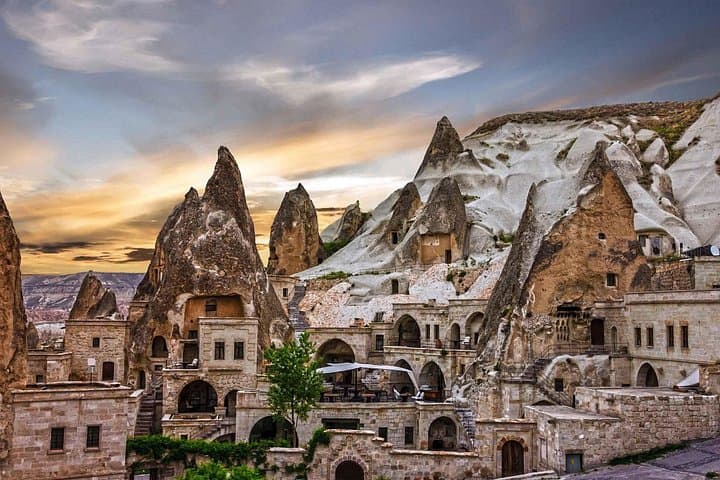
You step off the van on a low, wind-carved ridge and the land takes a breath — a sweep of ochre spires, mushroom-shaped chimneys and low-domed rock villages stretching toward the horizon. The guide folds out a simple map, but the landscape reads like an atlas of deep time: volcanic ash compressed, eroded and sculpted into shapes people keep trying to name.
You step off the van on a low, wind-carved ridge and the land takes a breath — a sweep of ochre spires, mushroom-shaped chimneys and low-domed rock villages stretching toward the horizon. The guide folds out a simple map, but the landscape reads like an atlas of deep time: volcanic ash compressed, eroded and sculpted into shapes people keep trying to name.
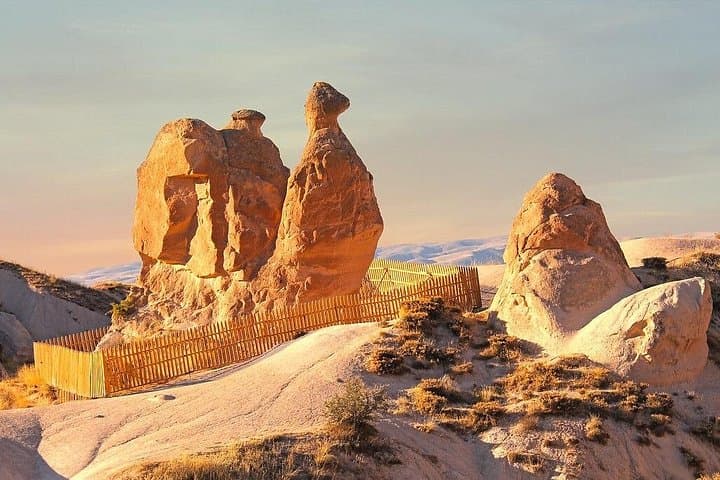
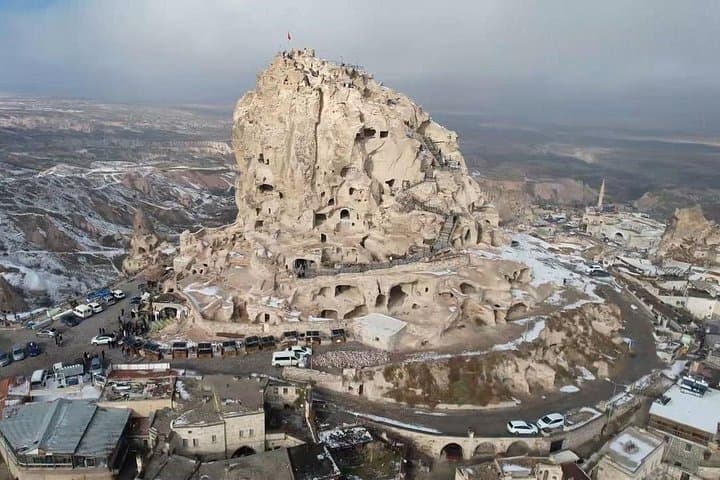
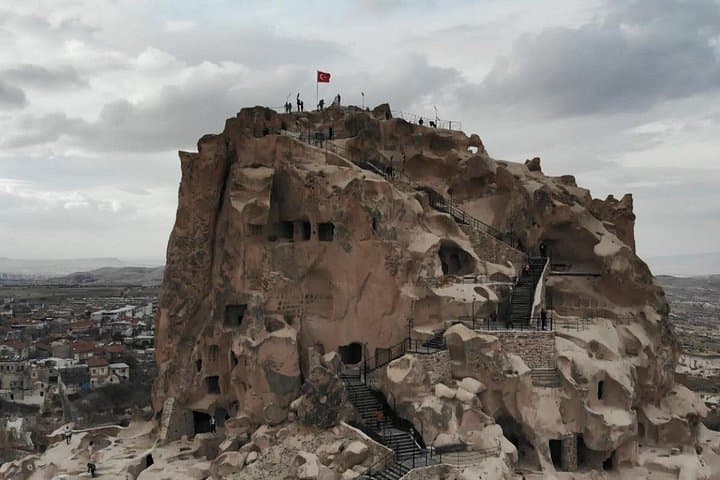
This is the Red Tour, a six-to-seven-hour loop across northern Cappadocia that stitches together Uchisar Castle’s rooftop views, the frescoed caverns of Göreme Open-Air Museum, the odd silhouettes of Devrent (Imagination) Valley, the monks’ chimneys at Paşabağı, and a working pottery studio where hands still throw pots the way they did for a millennium.
Geology here is straightforward and dramatic. Millions of years of eruptions from nearby Mount Erciyes and Hasan left tuff — soft, layered ash — which wind and water carved into pinnacles and ridges. Human history follows the curves: Byzantine Christians hollowed churches into the soft rock and left vivid frescoes; later, village life adapted by cutting stone houses and pigeonholes into cliffs. Cappadocia’s cultural layers are visible as much as readable.
The Red Tour is more a land-based reconnaissance than a long hike: expect short walks at each stop (2–4 km total on mostly compact dirt and paved paths), a handful of stairs inside churches and an ascent to Uchisar that gains roughly 100–150 meters. The terrain is stable but uneven in places; comfortable footwear matters.
Practical edge: the tour runs best in early spring and fall when light is crisp and crowds thin. Summer afternoons bake the tuff; winter brings a stark, quiet beauty but can close some trails. Photographers chase early- or late-day light: the chimneys throw long, dramatic shadows then.
Guides on these small-group departures blend geology with local lore — the monks who lived above Paşabağı, Ottoman-era pottery methods in Avanos, the significance of pigeon houses for soil fertility. Bring sun protection and a reusable water bottle; hydration and footing are the real trip-makers.
Logistics are simple: pick-up and drop-off from Göreme hotels, insurance and guide included, and a pottery stop where you can try the wheel or buy a hand-painted souvenir. The tour is rated easy for most fitness levels but moves at a steady pace — expect to be on your feet across several sites for most of the day. If you want to linger, plan a second day in the region; the Red Tour gives you the map, not the last word.
