THE ADVENTURE COLLECTIVE® · Independent discovery and booking for outdoor travel

A six-hour sweep across Cappadocia’s lunar valleys, the Red Tour pairs Zelve’s rock-cut churches, Paşabağ’s iconic fairy chimneys and the subterranean ingenuity of Özkonak with a included lunch and hotel pickup. Perfect for travelers who want concentrated history, geology and local craft in one practical day trip.
A six-hour sweep across Cappadocia’s lunar valleys, the Red Tour pairs Zelve’s rock-cut churches, Paşabağ’s iconic fairy chimneys and the subterranean ingenuity of Özkonak with a included lunch and hotel pickup. Perfect for travelers who want concentrated history, geology and local craft in one practical day trip.
The minivan eases past fields of wind-carved stone and low scrub, the driver pointing toward a skyline riddled with chimneys that look like the remains of a ruined city. You step out and the air is thin—Göreme sits at roughly 1,300 meters—and the rocks seem to breathe history. On the Red Tour a six-hour sweep across Cappadocia, each stop reorients you to a landscape that has been both shelter and stage for millennia.
Verified experiences and guided adventures in the surrounding area.
Operated by Theory Tour · Göreme, Nevşehir
The minivan eases past fields of wind-carved stone and low scrub, the driver pointing toward a skyline riddled with chimneys that look like the remains of a ruined city. You step out and the air is thin—Göreme sits at roughly 1,300 meters—and the rocks seem to breathe history. On the Red Tour a six-hour sweep across Cappadocia, each stop reorients you to a landscape that has been both shelter and stage for millennia.
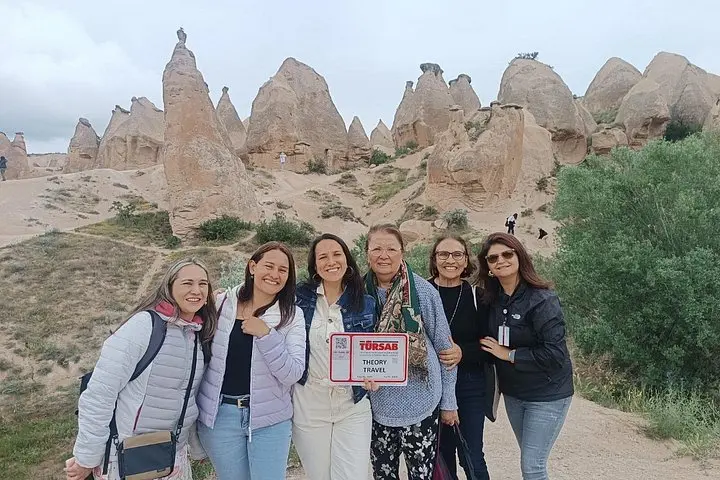
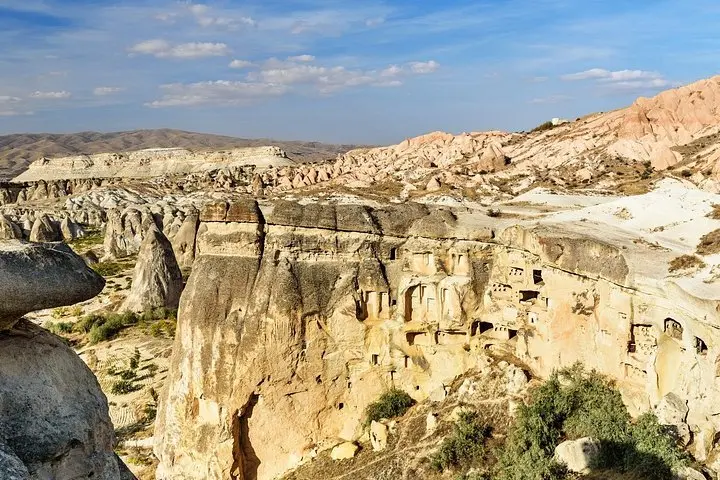
Geology here reads like a long, slow action film. Volcanic tuff from ancient eruptions compacted into soft stone that wind and water sculpted into cones and pillars. Those “fairy chimneys” in Paşabağ rise like weathered totems, some capped by harder basalt that slowed erosion. People learned to work the stone—carving homes, pigeon houses, chapels, and whole subterranean cities—because tuff is forgiving enough to carve but solid enough to shelter.
History crowds every chamber and cliff. At Zelve Open Air Museum, ruined dwellings and frescoed churches tell a story of early Christian communities who sought refuge and ritual in rock-cut sanctuaries. In Avanos, the Kızılırmak River still supplies red clay to potters who spin traditional wares on foot-powered wheels—an unbroken artisan thread that links daily life to the landscape. The tour’s stop at Özkonak shows how ingenuity met warfare: multi-level tunnels, ventilation shafts, and crowd-control traps built to keep invaders at bay.
Practicality steers the adventure. The itinerary covers roughly six hours with a maximum shared group of 15; expect 20–90 minutes of on-foot exploring at each site, often on uneven or stepped paths. Museum entrances and a midday lunch are included; the vehicle has AC and hotel pickup is standard (they pick up about 30 minutes before departure). Wear sturdy shoes for short hikes and stone steps, and bring a daypack with water, sun protection, and a light layer—the high plateau can be breezy.
Local guides balance history and logistics: they time visits for softer light when possible and keep walking loops compact for older travelers. Accessibility is limited at several sites—many rock-cut areas have narrow passages and uneven floors, so those with mobility issues should check ahead. Photography rewards patience: dawn and late afternoon throw the landscape into high relief, while midday reveals the subtle color of tuff and painted church interiors.
This is a tour that moves you through geology, craft, and survival architecture—an efficient primer on why Cappadocia’s strange, beautiful forms have shaped human life here for centuries. Go prepared, keep your pace, and let the stones tell the story.
Yes—museum entrances listed in the itinerary, including Zelve, are included in the tour price.
Yes—an included lunch at a local restaurant is part of the tour.
Yes—pickup from Göreme-area hotels is standard; confirm your pickup point and be ready 30 minutes before departure.
Underground city sections like Özkonak have low ceilings and narrow tunnels; those with claustrophobia should consider staying on surface-level routes.
Transportation may be wheelchair accessible, but many sites have uneven terrain and steps—access is limited at rock-cut sites.
Shared tours are capped at about 15 travelers, allowing time for guided stops and manageable walking groups.
Theory Tour operates guided outdoor trips and adventures with an emphasis on safety, stewardship, and memorable experiences.
The minivan eases past fields of wind-carved stone and low scrub, the driver pointing toward a skyline riddled with chimneys that look like the remains of a ruined city. You step out and the air is thin—Göreme sits at roughly 1,300 meters—and the rocks seem to breathe history. On the Red Tour a six-hour sweep across Cappadocia, each stop reorients you to a landscape that has been both shelter and stage for millennia.
The minivan eases past fields of wind-carved stone and low scrub, the driver pointing toward a skyline riddled with chimneys that look like the remains of a ruined city. You step out and the air is thin—Göreme sits at roughly 1,300 meters—and the rocks seem to breathe history. On the Red Tour a six-hour sweep across Cappadocia, each stop reorients you to a landscape that has been both shelter and stage for millennia.
Geology here reads like a long, slow action film. Volcanic tuff from ancient eruptions compacted into soft stone that wind and water sculpted into cones and pillars. Those “fairy chimneys” in Paşabağ rise like weathered totems, some capped by harder basalt that slowed erosion. People learned to work the stone—carving homes, pigeon houses, chapels, and whole subterranean cities—because tuff is forgiving enough to carve but solid enough to shelter.
History crowds every chamber and cliff. At Zelve Open Air Museum, ruined dwellings and frescoed churches tell a story of early Christian communities who sought refuge and ritual in rock-cut sanctuaries. In Avanos, the Kızılırmak River still supplies red clay to potters who spin traditional wares on foot-powered wheels—an unbroken artisan thread that links daily life to the landscape. The tour’s stop at Özkonak shows how ingenuity met warfare: multi-level tunnels, ventilation shafts, and crowd-control traps built to keep invaders at bay.
Practicality steers the adventure. The itinerary covers roughly six hours with a maximum shared group of 15; expect 20–90 minutes of on-foot exploring at each site, often on uneven or stepped paths. Museum entrances and a midday lunch are included; the vehicle has AC and hotel pickup is standard (they pick up about 30 minutes before departure). Wear sturdy shoes for short hikes and stone steps, and bring a daypack with water, sun protection, and a light layer—the high plateau can be breezy.
Local guides balance history and logistics: they time visits for softer light when possible and keep walking loops compact for older travelers. Accessibility is limited at several sites—many rock-cut areas have narrow passages and uneven floors, so those with mobility issues should check ahead. Photography rewards patience: dawn and late afternoon throw the landscape into high relief, while midday reveals the subtle color of tuff and painted church interiors.
This is a tour that moves you through geology, craft, and survival architecture—an efficient primer on why Cappadocia’s strange, beautiful forms have shaped human life here for centuries. Go prepared, keep your pace, and let the stones tell the story.