THE ADVENTURE COLLECTIVE® · Independent discovery and booking for outdoor travel

See Capri’s luminous Blue Grotto, stroll Sorrento’s cliffside streets and walk among Pompeii’s ruins in a single, private day. This guided circuit pairs fast ferries and coastal drives for a compact, scenic immersion in Campania.
See Capri’s luminous Blue Grotto, stroll Sorrento’s cliffside streets and walk among Pompeii’s ruins in a single, private day. This guided circuit pairs fast ferries and coastal drives for a compact, scenic immersion in Campania.
A crisp morning at the port—salt tang in the air, ferry engines humming—and the coastline of the Bay of Naples unfolds like a hand-drawn map. Travelers board a fast ferry and watch cliffs and villas slip past, the island of Capri rising from the sea with the Faraglioni rocks punctuating the horizon.
Verified experiences and guided adventures in the surrounding area.
Operated by Raphael Tours & Events · Sorrento, Campania
A crisp morning at the port—salt tang in the air, ferry engines humming—and the coastline of the Bay of Naples unfolds like a hand-drawn map. Travelers board a fast ferry and watch cliffs and villas slip past, the island of Capri rising from the sea with the Faraglioni rocks punctuating the horizon.
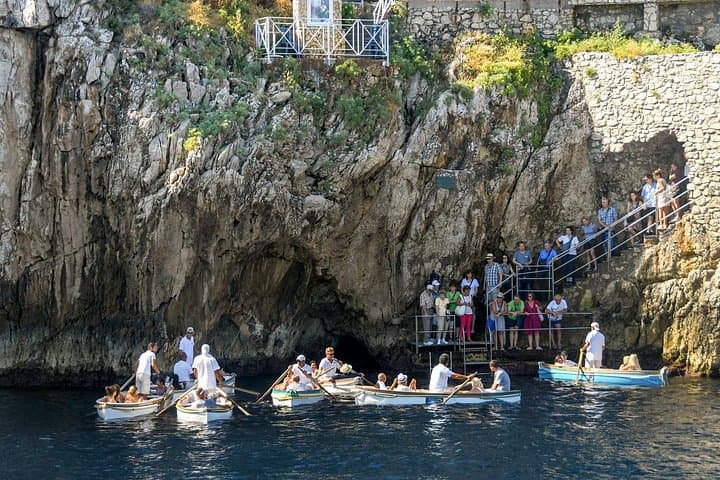
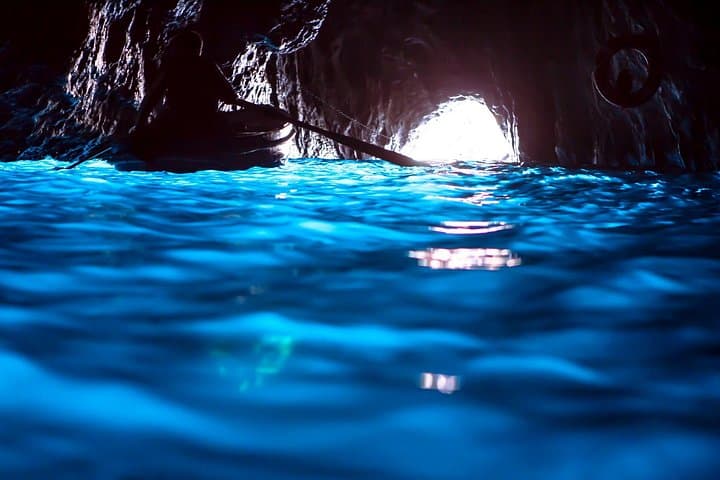
Capri’s coastline is volcanic limestone and tufa carved by sea and storm; the Blue Grotto is a narrow cave where sunlight refracts through an underwater opening to flood the chamber with an otherworldly blue. Sorrento sits on a limestone terrace above the sea, long a crossroads for travelers and a center for citrus cultivation and maritime trade. Then there is Pompeii—an urban grid frozen by Vesuvius in 79 AD—its streets, frescoes and plaster casts offering a direct line to Roman daily life.
Culturally, the route weaves island leisure, coastal fishing villages, and classical archaeology; guides typically explain local crafts like limoncello and the geology that shaped the bay.
Practical guidance: the full itinerary runs about nine hours—expect several short ferries, walking on uneven cobbles in Pompeii, and brief transfers by car along the Sorrentine coast. Blue Grotto access is weather- and tide-dependent; when closed, the boat will circle Capri’s other grottos and show the Faraglioni from the water. Wear supportive shoes for archaeological stone and coastal steps, bring sun protection for exposed ferry decks, and carry water—hydration is the simplest way to keep the day moving. With private transport on land and scheduled ferry legs, timing is tight: plan a single-day visit only if you prefer a curated overview rather than lingering exploration.
If the Blue Grotto is closed for weather or sea conditions the tour includes a boat ride around Capri to view other caves and the Faraglioni rocks from the water.
Some areas of Pompeii have uneven surfaces and steps; while the tour notes wheelchair accessibility, visitors with mobility concerns should inform the operator in advance to arrange accessible routes where possible.
Yes—pick-up can be arranged at Naples or Sorrento ports; the itinerary uses fast ferries and private transfers to link the three stops.
Yes—this private tour includes Blue Grotto entrance (when visit occurs), ferry tickets, and Pompeii entrance, along with a dedicated guide and land transfer.
Raphael Tours & Events operates guided outdoor trips and adventures with an emphasis on safety, stewardship, and memorable experiences.


A crisp morning at the port—salt tang in the air, ferry engines humming—and the coastline of the Bay of Naples unfolds like a hand-drawn map. Travelers board a fast ferry and watch cliffs and villas slip past, the island of Capri rising from the sea with the Faraglioni rocks punctuating the horizon.
A crisp morning at the port—salt tang in the air, ferry engines humming—and the coastline of the Bay of Naples unfolds like a hand-drawn map. Travelers board a fast ferry and watch cliffs and villas slip past, the island of Capri rising from the sea with the Faraglioni rocks punctuating the horizon.
Capri’s coastline is volcanic limestone and tufa carved by sea and storm; the Blue Grotto is a narrow cave where sunlight refracts through an underwater opening to flood the chamber with an otherworldly blue. Sorrento sits on a limestone terrace above the sea, long a crossroads for travelers and a center for citrus cultivation and maritime trade. Then there is Pompeii—an urban grid frozen by Vesuvius in 79 AD—its streets, frescoes and plaster casts offering a direct line to Roman daily life.
Culturally, the route weaves island leisure, coastal fishing villages, and classical archaeology; guides typically explain local crafts like limoncello and the geology that shaped the bay.
Practical guidance: the full itinerary runs about nine hours—expect several short ferries, walking on uneven cobbles in Pompeii, and brief transfers by car along the Sorrentine coast. Blue Grotto access is weather- and tide-dependent; when closed, the boat will circle Capri’s other grottos and show the Faraglioni from the water. Wear supportive shoes for archaeological stone and coastal steps, bring sun protection for exposed ferry decks, and carry water—hydration is the simplest way to keep the day moving. With private transport on land and scheduled ferry legs, timing is tight: plan a single-day visit only if you prefer a curated overview rather than lingering exploration.