THE ADVENTURE COLLECTIVE® · Independent discovery and booking for outdoor travel

Travel from Lima to the ancient city of Caral on a full-day guided tour that explores pre-Inca pyramids, plazas, and irrigation remnants. This archaeological visit blends a coastal road trip with a deep dive into one of the Americas’ earliest urban centers.
Travel from Lima to the ancient city of Caral on a full-day guided tour that explores pre-Inca pyramids, plazas, and irrigation remnants. This archaeological visit blends a coastal road trip with a deep dive into one of the Americas’ earliest urban centers.
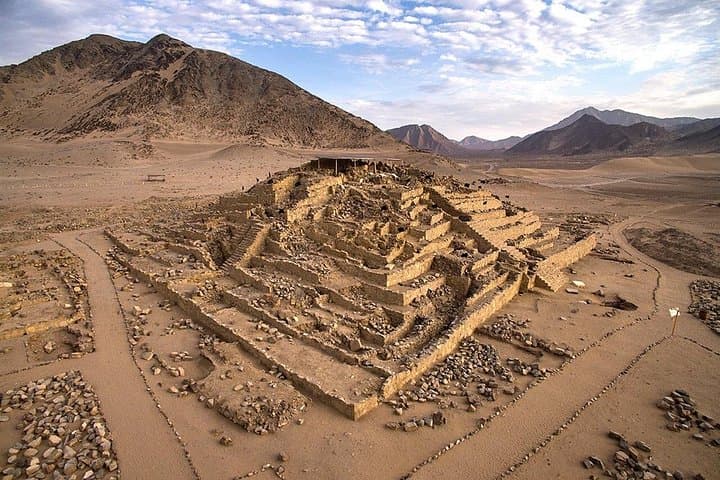
You step out before dawn as Lima’s city lights shrink behind the bus, the highway pulling you across a stretch of coastal desert where wind and salt shape the horizon. By midmorning the terraces and low pyramids of Caral resolve from a flat valley—stone platforms rising like disciplined thoughts from the earth.
Verified experiences and guided adventures in the surrounding area.
Operated by Inca Trilogy Tours · Supe, Lima
You step out before dawn as Lima’s city lights shrink behind the bus, the highway pulling you across a stretch of coastal desert where wind and salt shape the horizon. By midmorning the terraces and low pyramids of Caral resolve from a flat valley—stone platforms rising like disciplined thoughts from the earth.
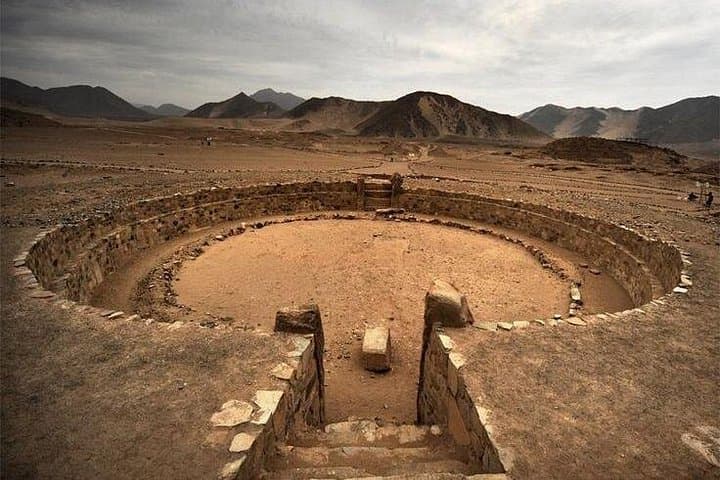
Caral is one of the earliest urban centers in the Americas, occupied between roughly 3000 and 1800 BCE. The complex on the Supe River shows monumental plaza planning, truncated pyramids, and evidence of early trade with coastal fishing communities such as Áspero. Geologically the site sits on alluvial terraces carved by seasonal streams, its soils thin and wind-swept; that openness helped preserve baked adobe and stone foundations.
Local culture links modern Supe fishermen and farmers with these ancient networks—guides will point out ancient irrigation alignments and the way the builders oriented plazas to prevailing breezes. The UNESCO designation protects fragile surfaces, and the site’s sparse vegetation and exposure mean sun and wind shape the day as much as the ruins.
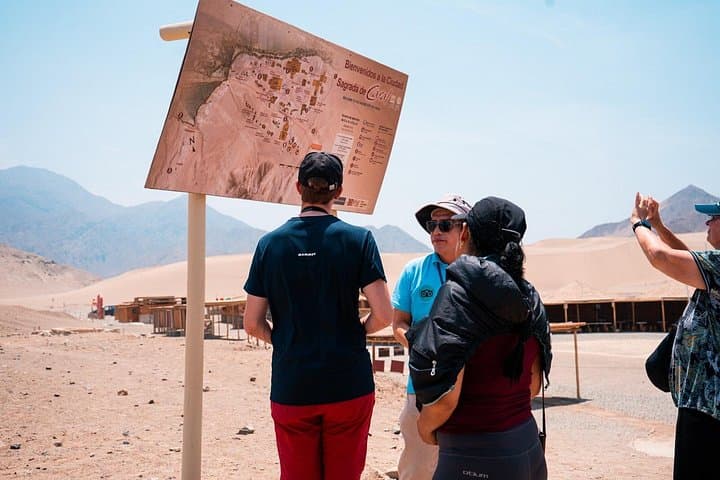
Practically: arrive early, carry water, and expect uneven packed-earth trails and short stair climbs up platforms. The guided visit runs several hours with interpretive stops; bring sun protection, comfortable walking shoes, and a light layer for coastal fog or wind. Photography is welcomed but keep to marked routes; touching masonry is prohibited. A full-day logistics loop returns you to Lima by evening, leaving time to reflect on how a small river valley dared to support one of the hemisphere’s first cities.
Most full-day tours run about 10–13 hours door-to-door, with roughly 2.5–3 hours each way on the road and 3–4 hours exploring the site.
Young children can attend but terrain includes steps and uneven paths; strollers are possible in some areas but not recommended for all ruins—infants often ride on laps.
Many operators include breakfast and entrance; confirm whether lunch is included or if there will be a stop at a local restaurant where you must pay separately.
Photography for personal use is generally allowed on marked paths; drones are typically restricted—check with your operator and site regulations in advance.
Inca Trilogy Tours operates guided outdoor trips and adventures with an emphasis on safety, stewardship, and memorable experiences.

You step out before dawn as Lima’s city lights shrink behind the bus, the highway pulling you across a stretch of coastal desert where wind and salt shape the horizon. By midmorning the terraces and low pyramids of Caral resolve from a flat valley—stone platforms rising like disciplined thoughts from the earth.
You step out before dawn as Lima’s city lights shrink behind the bus, the highway pulling you across a stretch of coastal desert where wind and salt shape the horizon. By midmorning the terraces and low pyramids of Caral resolve from a flat valley—stone platforms rising like disciplined thoughts from the earth.
Caral is one of the earliest urban centers in the Americas, occupied between roughly 3000 and 1800 BCE. The complex on the Supe River shows monumental plaza planning, truncated pyramids, and evidence of early trade with coastal fishing communities such as Áspero. Geologically the site sits on alluvial terraces carved by seasonal streams, its soils thin and wind-swept; that openness helped preserve baked adobe and stone foundations.
Local culture links modern Supe fishermen and farmers with these ancient networks—guides will point out ancient irrigation alignments and the way the builders oriented plazas to prevailing breezes. The UNESCO designation protects fragile surfaces, and the site’s sparse vegetation and exposure mean sun and wind shape the day as much as the ruins.
Practically: arrive early, carry water, and expect uneven packed-earth trails and short stair climbs up platforms. The guided visit runs several hours with interpretive stops; bring sun protection, comfortable walking shoes, and a light layer for coastal fog or wind. Photography is welcomed but keep to marked routes; touching masonry is prohibited. A full-day logistics loop returns you to Lima by evening, leaving time to reflect on how a small river valley dared to support one of the hemisphere’s first cities.