THE ADVENTURE COLLECTIVE® · Independent discovery and booking for outdoor travel

Explore Cardiff on foot with a local guide and cover medieval fortifications, Edwardian civic architecture, bustling arcades and the central market in a compact two-hour route. Ideal as an orientation for first-time visitors, the tour blends city history, street art and practical local tips.
Explore Cardiff on foot with a local guide and cover medieval fortifications, Edwardian civic architecture, bustling arcades and the central market in a compact two-hour route. Ideal as an orientation for first-time visitors, the tour blends city history, street art and practical local tips.
You step off the tram and into a street that hums with weekday commerce: cafés steaming, shopfronts opening, and the River Taff nudging the city toward the Severn Estuary. A local guide gathers the group, maps in hand, and the two-hour route unfolds like a quick primer on Cardiff’s many faces — medieval, industrial, Edwardian and modern.
Verified experiences and guided adventures in the surrounding area.
Operated by James · Cardiff, Wales
You step off the tram and into a street that hums with weekday commerce: cafés steaming, shopfronts opening, and the River Taff nudging the city toward the Severn Estuary. A local guide gathers the group, maps in hand, and the two-hour route unfolds like a quick primer on Cardiff’s many faces — medieval, industrial, Edwardian and modern.
The walk threads from the medieval heart around St John’s Church and the 11th-century earthworks of Cardiff Castle, whose Victorian Gothic interiors reflect the ambitions of the Bute family more than seven centuries after the Normans first fortified the site. Geology shows up too: the city grew where coal from the South Wales Valleys met navigable rivers, shaping Cardiff’s rise as a port and steel town; the National Museum displays fossils and local mineral collections that tell that story.
Wandering the city’s covered arcades feels practical and charming — narrow lanes of independent shops and tea rooms that survived industrial boom and modern reinvention. The Animal Wall and Bute Gardens offer green interruptions; the Principality Stadium looms like a modern colossus on match days. Street art punctuates the route, and the market’s stalls present a useful crash course in local food and craft.
Practical guidance: wear comfortable walking shoes for mostly paved streets, bring a compact umbrella (weather changes fast), and arrive 10 minutes early for the meeting point. The tour is wheelchair- and stroller-accessible and well served by public transport, making it an efficient city orientation for first-time visitors or repeat travelers wanting local recommendations.
The tour lasts about two hours and covers roughly 1.5–2 miles (2.5–3.5 km) at an easy pace with frequent stops for commentary.
Yes — the listed tour is described as wheelchair- and stroller-accessible with mostly paved surfaces and accessible meeting points.
This highlights tour focuses on external viewpoints and history; admissions are typically not included, but guides can advise on visiting the castle interior separately.
Tours are conducted in English and guides encourage questions throughout to tailor recommendations and point out local gems.
James operates guided outdoor trips and adventures with an emphasis on safety, stewardship, and memorable experiences.
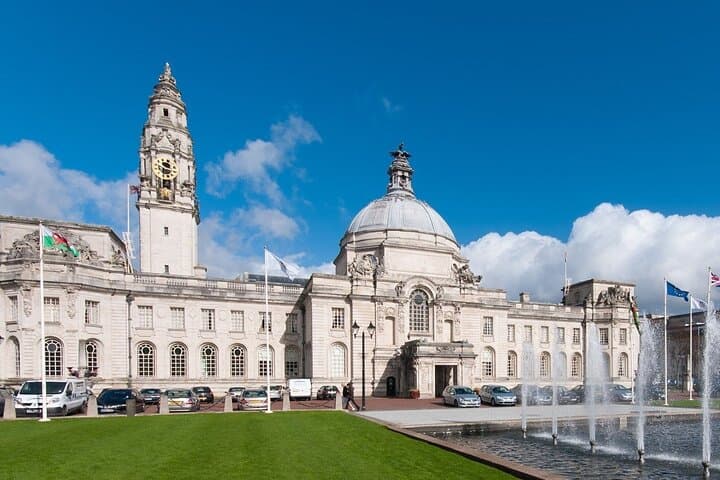


You step off the tram and into a street that hums with weekday commerce: cafés steaming, shopfronts opening, and the River Taff nudging the city toward the Severn Estuary. A local guide gathers the group, maps in hand, and the two-hour route unfolds like a quick primer on Cardiff’s many faces — medieval, industrial, Edwardian and modern.
You step off the tram and into a street that hums with weekday commerce: cafés steaming, shopfronts opening, and the River Taff nudging the city toward the Severn Estuary. A local guide gathers the group, maps in hand, and the two-hour route unfolds like a quick primer on Cardiff’s many faces — medieval, industrial, Edwardian and modern.
The walk threads from the medieval heart around St John’s Church and the 11th-century earthworks of Cardiff Castle, whose Victorian Gothic interiors reflect the ambitions of the Bute family more than seven centuries after the Normans first fortified the site. Geology shows up too: the city grew where coal from the South Wales Valleys met navigable rivers, shaping Cardiff’s rise as a port and steel town; the National Museum displays fossils and local mineral collections that tell that story.
Wandering the city’s covered arcades feels practical and charming — narrow lanes of independent shops and tea rooms that survived industrial boom and modern reinvention. The Animal Wall and Bute Gardens offer green interruptions; the Principality Stadium looms like a modern colossus on match days. Street art punctuates the route, and the market’s stalls present a useful crash course in local food and craft.
Practical guidance: wear comfortable walking shoes for mostly paved streets, bring a compact umbrella (weather changes fast), and arrive 10 minutes early for the meeting point. The tour is wheelchair- and stroller-accessible and well served by public transport, making it an efficient city orientation for first-time visitors or repeat travelers wanting local recommendations.