THE ADVENTURE COLLECTIVE® · Independent discovery and booking for outdoor travel

Walk the Caribbean night under the guidance of local naturalists and discover frogs, night birds, and shy mammals during a three-hour forest hike in Limón. This guided outing focuses on quiet observation, safety, and local ecological knowledge to reveal the region's nocturnal life.
Walk the Caribbean night under the guidance of local naturalists and discover frogs, night birds, and shy mammals during a three-hour forest hike in Limón. This guided outing focuses on quiet observation, safety, and local ecological knowledge to reveal the region's nocturnal life.
The path opens in fragments of silver—moonlight cutting the leaves, a chorus of frogs answering from the understory. You move slowly under a low canopy; your guide's flashlight picks out reflective eyes, the wet sheen of amphibian skin, the brief silhouette of a mammal slipping between buttress roots. Night on Costa Rica's Caribbean coast is active and intimate: the forest breathes close, and small sounds become the map.
Verified experiences and guided adventures in the surrounding area.
Operated by Sticos Adventures · Puerto Viejo de Talamanca, Limón
The path opens in fragments of silver—moonlight cutting the leaves, a chorus of frogs answering from the understory. You move slowly under a low canopy; your guide's flashlight picks out reflective eyes, the wet sheen of amphibian skin, the brief silhouette of a mammal slipping between buttress roots. Night on Costa Rica's Caribbean coast is active and intimate: the forest breathes close, and small sounds become the map.
This three-hour guided hike typically takes place inside a primary wildlife refuge in Limón province, an area shaped by volcanic soils and Caribbean tides. The coast's Afro-Caribbean culture and banana-era history inform local place names and guide traditions, and many guides come from families with multi-generation knowledge of nocturnal species and safe night travel. Geologically the region is low-elevation rainforest, with clay soils, tidal creeks, and shallow ridgelines that influence where animals move after sundown.
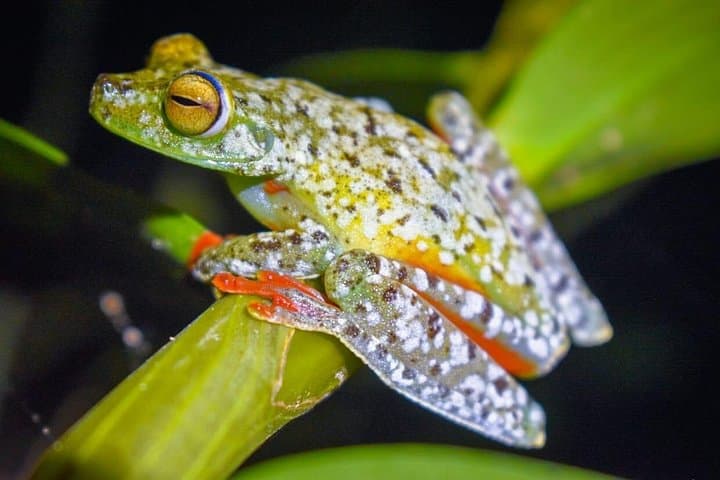
Expect amphibians—red-eyed tree frogs and glass frogs—nocturnal birds and small mammals like kinkajous. Guides use low-beam observation techniques and binoculars to preserve night vision while revealing detail. Practicalities: wear closed-toe shoes with good tread for muddy roots, bring a dimmable headlamp or red filter to minimize disturbance, and pack a lightweight rain layer—Caribbean nights can turn wet fast. Hydrate before departure; small snacks are provided but bring water. Groups are kept small and the pace is slow to maximize sightings and safety. If you are prone to insect bites, apply repellent before the tour and wear long, breathable layers. Follow your guide's directions: stay on trail, avoid white lights on nesting beaches, and keep noise low. The payoff is immediate—quiet moments of discovery where a single flick of reflected eyes can rewrite what you thought you knew about the dark.
The tour lasts about three hours; exact pickup or meeting time depends on sunset and will be confirmed at booking—expect to depart shortly after dark.
The operator notes infant seats are available and the hike is rated easy, but guardians should consider child tolerance for night conditions and insects.
Large mammals are present in the region but rarely seen on short night walks; the tour focuses on amphibians, night birds, and small mammals.
Tours may be canceled in heavy rain for safety; check the cancellation policy—refunds are available if you cancel at least 24 hours prior.
Sticos Adventures operates guided outdoor trips and adventures with an emphasis on safety, stewardship, and memorable experiences.

The path opens in fragments of silver—moonlight cutting the leaves, a chorus of frogs answering from the understory. You move slowly under a low canopy; your guide's flashlight picks out reflective eyes, the wet sheen of amphibian skin, the brief silhouette of a mammal slipping between buttress roots. Night on Costa Rica's Caribbean coast is active and intimate: the forest breathes close, and small sounds become the map.
The path opens in fragments of silver—moonlight cutting the leaves, a chorus of frogs answering from the understory. You move slowly under a low canopy; your guide's flashlight picks out reflective eyes, the wet sheen of amphibian skin, the brief silhouette of a mammal slipping between buttress roots. Night on Costa Rica's Caribbean coast is active and intimate: the forest breathes close, and small sounds become the map.
This three-hour guided hike typically takes place inside a primary wildlife refuge in Limón province, an area shaped by volcanic soils and Caribbean tides. The coast's Afro-Caribbean culture and banana-era history inform local place names and guide traditions, and many guides come from families with multi-generation knowledge of nocturnal species and safe night travel. Geologically the region is low-elevation rainforest, with clay soils, tidal creeks, and shallow ridgelines that influence where animals move after sundown.
Expect amphibians—red-eyed tree frogs and glass frogs—nocturnal birds and small mammals like kinkajous. Guides use low-beam observation techniques and binoculars to preserve night vision while revealing detail. Practicalities: wear closed-toe shoes with good tread for muddy roots, bring a dimmable headlamp or red filter to minimize disturbance, and pack a lightweight rain layer—Caribbean nights can turn wet fast. Hydrate before departure; small snacks are provided but bring water. Groups are kept small and the pace is slow to maximize sightings and safety. If you are prone to insect bites, apply repellent before the tour and wear long, breathable layers. Follow your guide's directions: stay on trail, avoid white lights on nesting beaches, and keep noise low. The payoff is immediate—quiet moments of discovery where a single flick of reflected eyes can rewrite what you thought you knew about the dark.