THE ADVENTURE COLLECTIVE® · Independent discovery and booking for outdoor travel

Glide through Cartagena’s fortified heart and the colorful alleys of Getsemaní on a focused two-hour private bike tour. Learn colonial history, see coastal defenses and street art, and get practical tips to make the most of a short city ride.
Glide through Cartagena’s fortified heart and the colorful alleys of Getsemaní on a focused two-hour private bike tour. Learn colonial history, see coastal defenses and street art, and get practical tips to make the most of a short city ride.
You start on a sun-warmed plaza, tires whispering on colonial cobblestones as a warm Caribbean breeze pushes you toward the city walls. The tour moves briskly—past bastions and cannons that once turned back corsairs, along bougainvillea-bright streets, and into the paint-splashed lanes of Getsemaní where murals pull you to the curb.
Verified experiences and guided adventures in the surrounding area.
Operated by Que hay pa' hacer en cartagena · Cartagena, Bolívar
You start on a sun-warmed plaza, tires whispering on colonial cobblestones as a warm Caribbean breeze pushes you toward the city walls. The tour moves briskly—past bastions and cannons that once turned back corsairs, along bougainvillea-bright streets, and into the paint-splashed lanes of Getsemaní where murals pull you to the curb.
Cartagena's walled city dates to the 16th century, its stone ramparts raised by Spanish engineers to defend one of the hemisphere's busiest ports. The geology beneath is coastal limestone and clay; the fortifications sit on reclaimed sand and bedrock that shaped where forts and plazas were placed. Culturally, the Old City is layered: Spanish colonial planning, African heritage from the slave trade, and modern street art that tells local stories.
Expect short bursts of riding with stops for history and photo ops—bastions, plazas, and colorful balconies. The guide will explain the defensive architecture, point out plaques and street names that mark past battles and neighborhoods, and show where locals gather for coffee and ceviche.
Practical guidance: wear closed-toe shoes, bring sunscreen and a small water bottle (bottled water is provided), and plan this for early morning or late afternoon to avoid the strongest sun. The route is flat with cobbles—an easy physical effort but watch for uneven pavement and pedestrians. Helmets are recommended and infant seats are available for family groups.
This two-hour private ride is a fast, context-rich introduction to Cartagena—equal parts history, street-level culture, and city cycling.
Meeting point is typically at a central plaza in the walled city; your confirmation will list the exact location and the guide will return you nearby.
Yes—infant seats are available and the pace is gentle, but check age and height limits when booking.
Yes, a bike is included and bottled water is provided; request any special bike sizes in advance.
No—cobbled streets and narrow lanes make the route unsuitable for wheelchairs and difficult for strollers.
Que hay pa' hacer en cartagena operates guided outdoor trips and adventures with an emphasis on safety, stewardship, and memorable experiences.
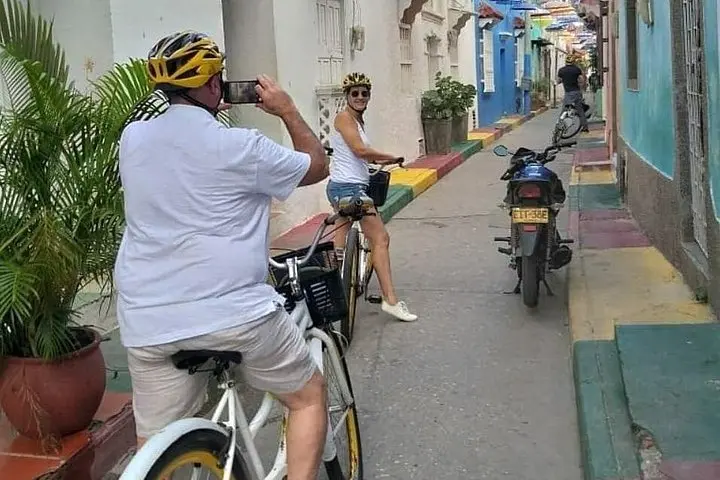
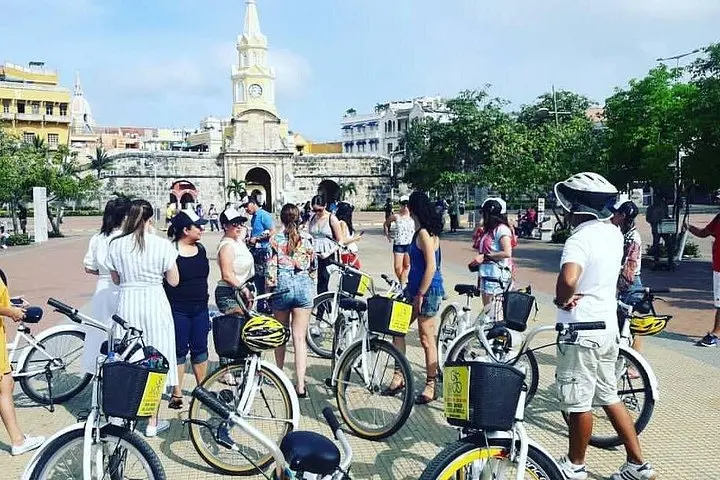
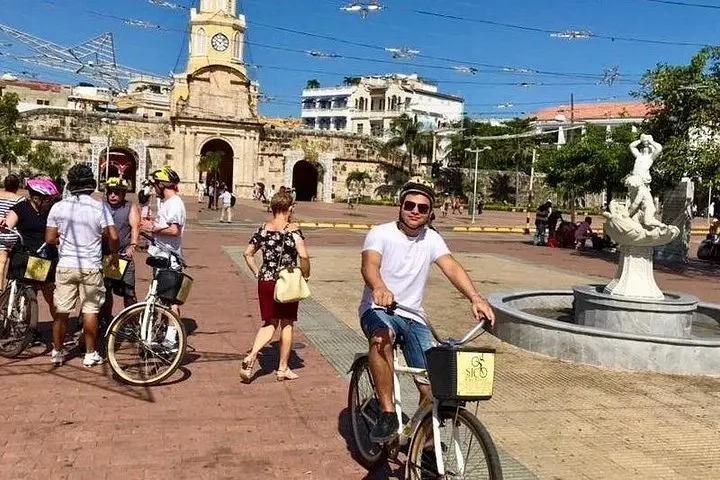
You start on a sun-warmed plaza, tires whispering on colonial cobblestones as a warm Caribbean breeze pushes you toward the city walls. The tour moves briskly—past bastions and cannons that once turned back corsairs, along bougainvillea-bright streets, and into the paint-splashed lanes of Getsemaní where murals pull you to the curb.
You start on a sun-warmed plaza, tires whispering on colonial cobblestones as a warm Caribbean breeze pushes you toward the city walls. The tour moves briskly—past bastions and cannons that once turned back corsairs, along bougainvillea-bright streets, and into the paint-splashed lanes of Getsemaní where murals pull you to the curb.
Cartagena's walled city dates to the 16th century, its stone ramparts raised by Spanish engineers to defend one of the hemisphere's busiest ports. The geology beneath is coastal limestone and clay; the fortifications sit on reclaimed sand and bedrock that shaped where forts and plazas were placed. Culturally, the Old City is layered: Spanish colonial planning, African heritage from the slave trade, and modern street art that tells local stories.
Expect short bursts of riding with stops for history and photo ops—bastions, plazas, and colorful balconies. The guide will explain the defensive architecture, point out plaques and street names that mark past battles and neighborhoods, and show where locals gather for coffee and ceviche.
Practical guidance: wear closed-toe shoes, bring sunscreen and a small water bottle (bottled water is provided), and plan this for early morning or late afternoon to avoid the strongest sun. The route is flat with cobbles—an easy physical effort but watch for uneven pavement and pedestrians. Helmets are recommended and infant seats are available for family groups.
This two-hour private ride is a fast, context-rich introduction to Cartagena—equal parts history, street-level culture, and city cycling.