THE ADVENTURE COLLECTIVE® · Independent discovery and booking for outdoor travel

Soar over coastal forest and finish near the water’s edge on Cartagena’s first zipline course. This three-hour canopy tour pairs off-road access, ocean panoramas and a relaxed, safety-focused experience suitable for most travelers.
Soar over coastal forest and finish near the water’s edge on Cartagena’s first zipline course. This three-hour canopy tour pairs off-road access, ocean panoramas and a relaxed, safety-focused experience suitable for most travelers.
The first tower rises like a wooden eyebrow above the treeline; you feel the off-road vehicle rock beneath you as it climbs toward the ridge. Cartagena shrinks into a cluster of red roofs and bright facades, while the Caribbean unspools to the horizon — and then the guide clips you in and the world tilts. The line hums, the trees rush, and for a heartbeat the ocean dares you forward.
Verified experiences and guided adventures in the surrounding area.
Operated by Adventure Park Cartagena · Cartagena, Bolívar
The first tower rises like a wooden eyebrow above the treeline; you feel the off-road vehicle rock beneath you as it climbs toward the ridge. Cartagena shrinks into a cluster of red roofs and bright facades, while the Caribbean unspools to the horizon — and then the guide clips you in and the world tilts. The line hums, the trees rush, and for a heartbeat the ocean dares you forward.
This three-hour canopy course — Cartagena’s first commercial zipline — threads mountain, canyon and coastline. Riders move from platform to platform, crossing a shallow canyon and finishing near the water’s edge. The route was built where coastal limestone foothills drop to mangrove and beach, so the geology alternates between thin, sharp rock outcrops and soil that supports low tropical forest.
Cartagena itself is layered history: a fortified colonial port, a trade hub where Spanish stonework meets Afro-Caribbean culture. The course is a contemporary addition to that landscape — an adrenaline reply to centuries of maritime trade — and it gives a different kind of perspective on the coastline that defended and connected the city.
Locals in the villages above the bay still tend small plots and coconut palms; guides will point out farm terraces and explain how the access road was cut for both tourism and to connect remote families with the city. Conservation is a live concern here — the coastline’s mangroves and nearshore reefs are fragile, and operators often limit group size to reduce noise and foot traffic.
Practicalities: meet on the front steps of the Iglesia de San Pedro church one hour before your scheduled departure; the tour includes round-trip transport in an air-conditioned vehicle, a short off-road ride uphill, lunch, bottled water and all safety gear. The total time on site is about three hours; expect periods of waiting between lines as staff secure riders. Weight limit is 350 lbs; the operator flags the activity as unsuitable for pregnant guests and people with serious spinal, heart or cardiovascular conditions.
What to bring: lightweight clothing you can move in, closed-toe shoes with grip, sunscreen and a small dry bag for loose items. Cameras are welcome but secure them with a strap; many travelers prefer a compact action cam clipped safely rather than a phone.
This canopy is approachable — no technical skills required — but the payoff is distinct: coastal panoramas and a fast, tree-top way to see a different side of Cartagena. For a short, high-thrill taste of Colombia’s Caribbean edge, it’s hard to beat the view from the wire.
The total tour is about three hours, including transport, safety briefing, multiple zipline runs and lunch.
You meet on the front steps of the Iglesia de San Pedro church in Cartagena one hour before your scheduled tour time.
There is a weight limit of 350 lbs; specific age limits aren’t listed, but the course is designed to be family-friendly — check with the operator for child minimums.
No — staff provide safety instruction and full harnessing; no technical experience is necessary.
Closed-toe shoes, comfortable activewear, sunscreen and a secure way to carry small items; avoid loose clothing that can catch in the harness.
Round-trip transport in an air-conditioned vehicle, bottled water, lunch, safety gear and all course instruction are included.
Adventure Park Cartagena operates guided outdoor trips and adventures with an emphasis on safety, stewardship, and memorable experiences.

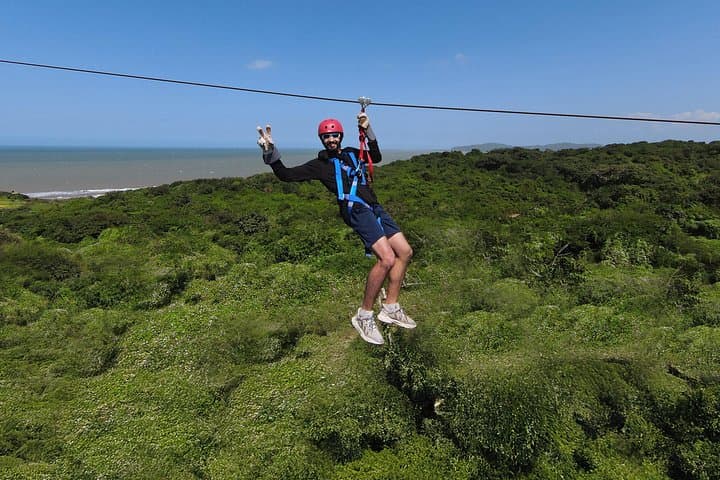
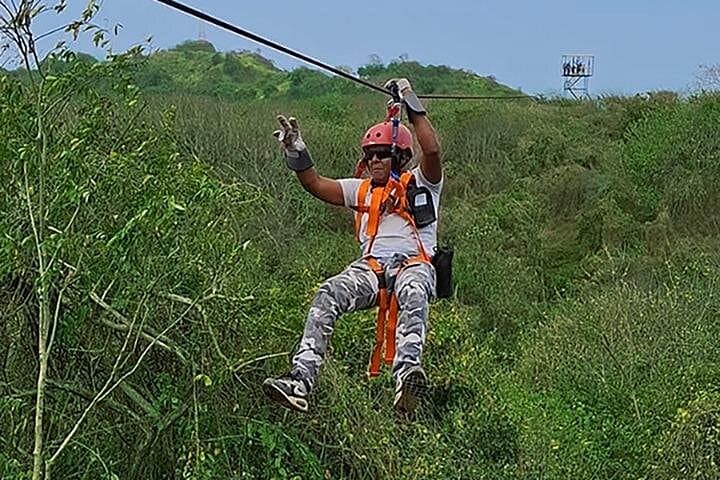

The first tower rises like a wooden eyebrow above the treeline; you feel the off-road vehicle rock beneath you as it climbs toward the ridge. Cartagena shrinks into a cluster of red roofs and bright facades, while the Caribbean unspools to the horizon — and then the guide clips you in and the world tilts. The line hums, the trees rush, and for a heartbeat the ocean dares you forward.
The first tower rises like a wooden eyebrow above the treeline; you feel the off-road vehicle rock beneath you as it climbs toward the ridge. Cartagena shrinks into a cluster of red roofs and bright facades, while the Caribbean unspools to the horizon — and then the guide clips you in and the world tilts. The line hums, the trees rush, and for a heartbeat the ocean dares you forward.
This three-hour canopy course — Cartagena’s first commercial zipline — threads mountain, canyon and coastline. Riders move from platform to platform, crossing a shallow canyon and finishing near the water’s edge. The route was built where coastal limestone foothills drop to mangrove and beach, so the geology alternates between thin, sharp rock outcrops and soil that supports low tropical forest.
Cartagena itself is layered history: a fortified colonial port, a trade hub where Spanish stonework meets Afro-Caribbean culture. The course is a contemporary addition to that landscape — an adrenaline reply to centuries of maritime trade — and it gives a different kind of perspective on the coastline that defended and connected the city.
Locals in the villages above the bay still tend small plots and coconut palms; guides will point out farm terraces and explain how the access road was cut for both tourism and to connect remote families with the city. Conservation is a live concern here — the coastline’s mangroves and nearshore reefs are fragile, and operators often limit group size to reduce noise and foot traffic.
Practicalities: meet on the front steps of the Iglesia de San Pedro church one hour before your scheduled departure; the tour includes round-trip transport in an air-conditioned vehicle, a short off-road ride uphill, lunch, bottled water and all safety gear. The total time on site is about three hours; expect periods of waiting between lines as staff secure riders. Weight limit is 350 lbs; the operator flags the activity as unsuitable for pregnant guests and people with serious spinal, heart or cardiovascular conditions.
What to bring: lightweight clothing you can move in, closed-toe shoes with grip, sunscreen and a small dry bag for loose items. Cameras are welcome but secure them with a strap; many travelers prefer a compact action cam clipped safely rather than a phone.
This canopy is approachable — no technical skills required — but the payoff is distinct: coastal panoramas and a fast, tree-top way to see a different side of Cartagena. For a short, high-thrill taste of Colombia’s Caribbean edge, it’s hard to beat the view from the wire.