THE ADVENTURE COLLECTIVE® · Independent discovery and booking for outdoor travel

Make a long but rewarding leap from Marrakech to Morocco’s Atlantic center: a day that pairs the monumental Hassan II Mosque with Art Deco streets and a breezy corniche walk. Expect coastal views, colonial architecture, and a full day of walking and driving.
Make a long but rewarding leap from Marrakech to Morocco’s Atlantic center: a day that pairs the monumental Hassan II Mosque with Art Deco streets and a breezy corniche walk. Expect coastal views, colonial architecture, and a full day of walking and driving.
You step out before dawn in Marrakech, the road cooling under a glassy sky as the vehicle slices across the Haouz plain toward the Atlantic. By midmorning the sea appears at the horizon and Casablanca’s skyline—flat, white, and punctuated by the Hassan II minaret—rises like a marker for a different Morocco: coastal, modern, and public.
Verified experiences and guided adventures in the surrounding area.
Operated by Tours Village Voyage · Casablanca, Casablanca-Settat
You step out before dawn in Marrakech, the road cooling under a glassy sky as the vehicle slices across the Haouz plain toward the Atlantic. By midmorning the sea appears at the horizon and Casablanca’s skyline—flat, white, and punctuated by the Hassan II minaret—rises like a marker for a different Morocco: coastal, modern, and public.
Casablanca grew from a small port to Morocco’s commercial hub under French colonial planning; its Art Deco façades and wide boulevards reflect that era. Geologically the city sits on Atlantic coastal plain and sand-dune deposits that meet engineered seawalls along Ain Diab. The Hassan II Mosque, completed in the early 1990s, is a recent national statement—its prayer hall, ocean-facing glass floor, and 210-meter minaret combine craft and scale.
The tour stitches together mosque architecture, the Habous Quarter’s artisan shops, and the medina’s narrow alleys, then spills out to the palm-lined corniche where cafés and surf beaches open to the Atlantic. Culture here is public and visual: colonial mosaics, French-era plazas, and working patisseries where locals take coffee.
Practically: expect a long day—roughly 9–12 hours round trip with 2.5–3 hours driving each way. Entry to Hassan II is commonly only included on private options; confirm if you want interior access. Wear comfortable walking shoes, dress modestly for mosque visits, and bring sun protection and water for the corniche stroll. Hotel pickup and air-conditioned transport make it achievable in a single, brisk day.
Interior entry is included only for private tour options; shared tours typically provide exterior visits with guide commentary—confirm when booking.
Expect roughly 2.5–3 hours each way by air-conditioned vehicle, depending on traffic and rest stops.
Lunch is usually not included; the itinerary includes a lunch stop at local restaurants or the Ain Diab corniche where you can choose Moroccan or seafood options.
Yes—this tour is listed as stroller accessible and suitable for all fitness levels, though long transit times may be tiring for very young children.
Tours Village Voyage operates guided outdoor trips and adventures with an emphasis on safety, stewardship, and memorable experiences.
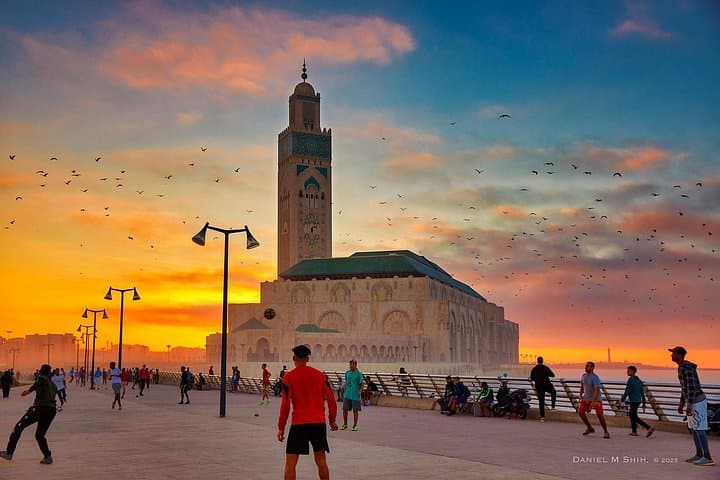

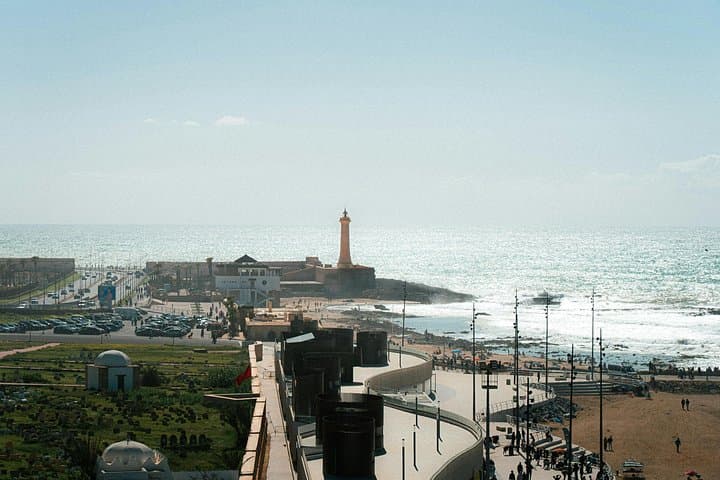
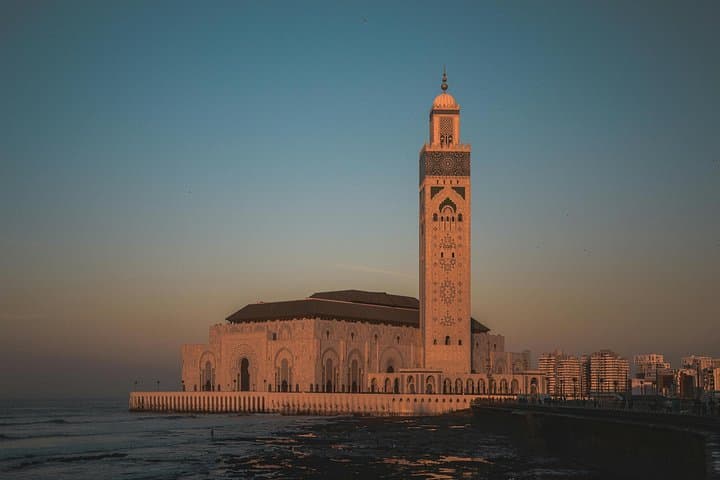
You step out before dawn in Marrakech, the road cooling under a glassy sky as the vehicle slices across the Haouz plain toward the Atlantic. By midmorning the sea appears at the horizon and Casablanca’s skyline—flat, white, and punctuated by the Hassan II minaret—rises like a marker for a different Morocco: coastal, modern, and public.
You step out before dawn in Marrakech, the road cooling under a glassy sky as the vehicle slices across the Haouz plain toward the Atlantic. By midmorning the sea appears at the horizon and Casablanca’s skyline—flat, white, and punctuated by the Hassan II minaret—rises like a marker for a different Morocco: coastal, modern, and public.
Casablanca grew from a small port to Morocco’s commercial hub under French colonial planning; its Art Deco façades and wide boulevards reflect that era. Geologically the city sits on Atlantic coastal plain and sand-dune deposits that meet engineered seawalls along Ain Diab. The Hassan II Mosque, completed in the early 1990s, is a recent national statement—its prayer hall, ocean-facing glass floor, and 210-meter minaret combine craft and scale.
The tour stitches together mosque architecture, the Habous Quarter’s artisan shops, and the medina’s narrow alleys, then spills out to the palm-lined corniche where cafés and surf beaches open to the Atlantic. Culture here is public and visual: colonial mosaics, French-era plazas, and working patisseries where locals take coffee.
Practically: expect a long day—roughly 9–12 hours round trip with 2.5–3 hours driving each way. Entry to Hassan II is commonly only included on private options; confirm if you want interior access. Wear comfortable walking shoes, dress modestly for mosque visits, and bring sun protection and water for the corniche stroll. Hotel pickup and air-conditioned transport make it achievable in a single, brisk day.