THE ADVENTURE COLLECTIVE® · Independent discovery and booking for outdoor travel

See Casablanca’s iconic oceanfront mosque, wander the Habous Quarter’s artisan streets, and walk the Corniche in a focused four-hour tour. This half-day route balances architectural landmarks, market life, and seaside views with local insight and practical tips.
See Casablanca’s iconic oceanfront mosque, wander the Habous Quarter’s artisan streets, and walk the Corniche in a focused four-hour tour. This half-day route balances architectural landmarks, market life, and seaside views with local insight and practical tips.
You step out onto the Corniche and the Atlantic wind pushes at your jacket as gulls wheel over a stretch of blue that dares you to look beyond the city. In four hours a local guide threads you through Casablanca’s contrasting faces: the oceanfront majesty of Hassan II Mosque, the ordered lanes of the Habous Quarter, the lively stalls of the Old Medina, and the cafés of Ain Diab’s promenade.
Verified experiences and guided adventures in the surrounding area.
Operated by Morocco Majesty Tours · Casablanca, Casablanca-Settat
You step out onto the Corniche and the Atlantic wind pushes at your jacket as gulls wheel over a stretch of blue that dares you to look beyond the city. In four hours a local guide threads you through Casablanca’s contrasting faces: the oceanfront majesty of Hassan II Mosque, the ordered lanes of the Habous Quarter, the lively stalls of the Old Medina, and the cafés of Ain Diab’s promenade.
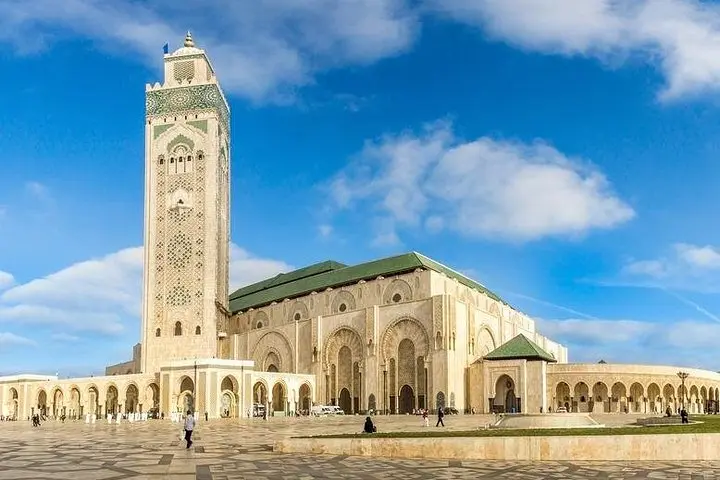
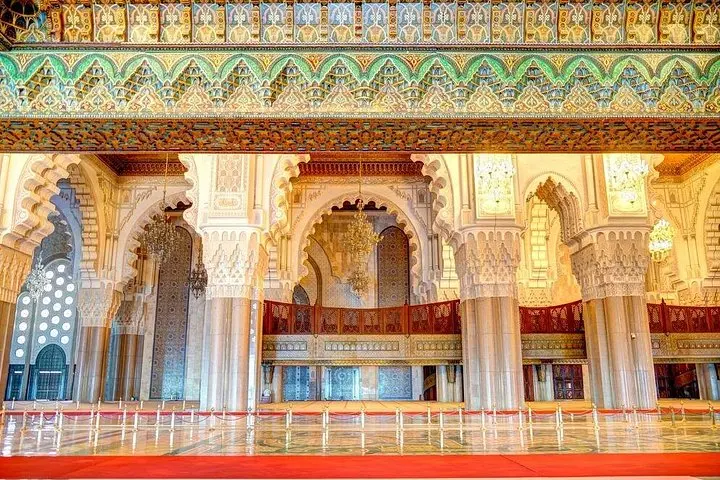
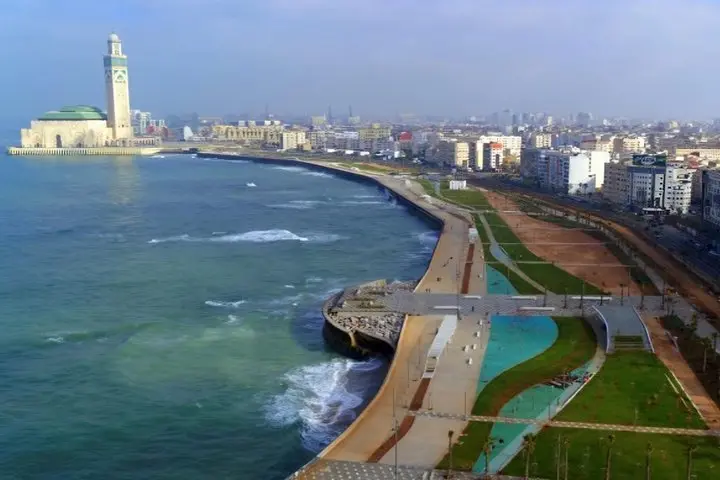
The mosque itself — one of the world’s largest — perches at the water’s edge, its minaret cutting a clean line into the sky; nearby, the Habous was built in the 1920s under the French Protectorate with traditional Moroccan shops and artisanal ateliers. The Old Medina preserves a working market culture where spice merchants and fishmongers keep centuries-old rhythms alive. Along the Corniche, modern leisure culture meets Atlantic geology: basalt outcrops, sandy beaches, and tidal shelves shaped by strong coastal currents.
Expect a culturally rich, low-impact urban outing: architectural contrast, market scenes, and ocean views rather than strenuous terrain. Practical notes — modest dress is customary at religious sites, comfortable shoes for cobbles and alleys, and small-change for market purchases. Morning light is best for photos and cooler temperatures; late afternoons bring warm café light and fewer tour groups.
This guided loop is ideal for newcomers who want an efficient, sensory introduction to Casablanca’s history and contemporary life, with a local guide providing context, directions, and tips for further exploration.
The tour advertises priority access to the mosque but policies vary—confirm on your booking whether the admission fee is included or payable on site.
Yes — the operator notes stroller access and infant seats are available, though some narrow Medina lanes may be tight for larger strollers.
Yes — the itinerary includes stops in the Old Medina and Habous Quarter with dedicated time to browse local crafts and sample foods.
Booking asks for a pickup point; check your confirmation for meeting or transfer options and provide arrival details if needed.
Morocco Majesty Tours operates guided outdoor trips and adventures with an emphasis on safety, stewardship, and memorable experiences.
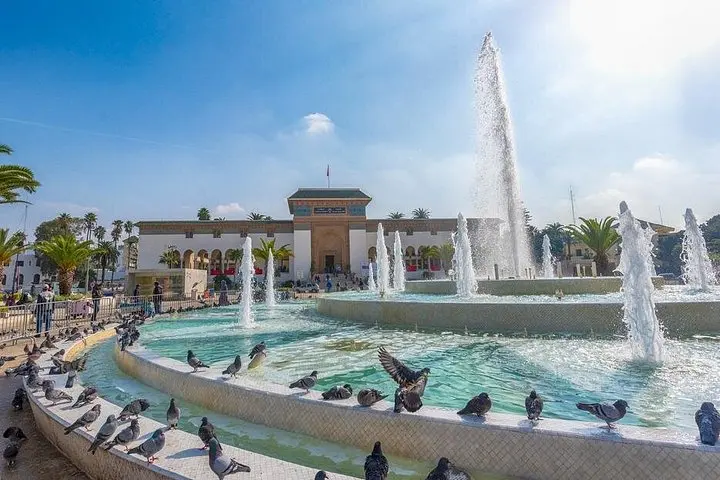
You step out onto the Corniche and the Atlantic wind pushes at your jacket as gulls wheel over a stretch of blue that dares you to look beyond the city. In four hours a local guide threads you through Casablanca’s contrasting faces: the oceanfront majesty of Hassan II Mosque, the ordered lanes of the Habous Quarter, the lively stalls of the Old Medina, and the cafés of Ain Diab’s promenade.
You step out onto the Corniche and the Atlantic wind pushes at your jacket as gulls wheel over a stretch of blue that dares you to look beyond the city. In four hours a local guide threads you through Casablanca’s contrasting faces: the oceanfront majesty of Hassan II Mosque, the ordered lanes of the Habous Quarter, the lively stalls of the Old Medina, and the cafés of Ain Diab’s promenade.
The mosque itself — one of the world’s largest — perches at the water’s edge, its minaret cutting a clean line into the sky; nearby, the Habous was built in the 1920s under the French Protectorate with traditional Moroccan shops and artisanal ateliers. The Old Medina preserves a working market culture where spice merchants and fishmongers keep centuries-old rhythms alive. Along the Corniche, modern leisure culture meets Atlantic geology: basalt outcrops, sandy beaches, and tidal shelves shaped by strong coastal currents.
Expect a culturally rich, low-impact urban outing: architectural contrast, market scenes, and ocean views rather than strenuous terrain. Practical notes — modest dress is customary at religious sites, comfortable shoes for cobbles and alleys, and small-change for market purchases. Morning light is best for photos and cooler temperatures; late afternoons bring warm café light and fewer tour groups.
This guided loop is ideal for newcomers who want an efficient, sensory introduction to Casablanca’s history and contemporary life, with a local guide providing context, directions, and tips for further exploration.