THE ADVENTURE COLLECTIVE® · Independent discovery and booking for outdoor travel

See Casablanca’s shoreline and historic heart on a focused 4–5 hour guided tour. Visit the Hassan II Mosque, Habbous Market, Mohammed V Square, and the Ain Diab Corniche with hotel pickup and local insights.
See Casablanca’s shoreline and historic heart on a focused 4–5 hour guided tour. Visit the Hassan II Mosque, Habbous Market, Mohammed V Square, and the Ain Diab Corniche with hotel pickup and local insights.
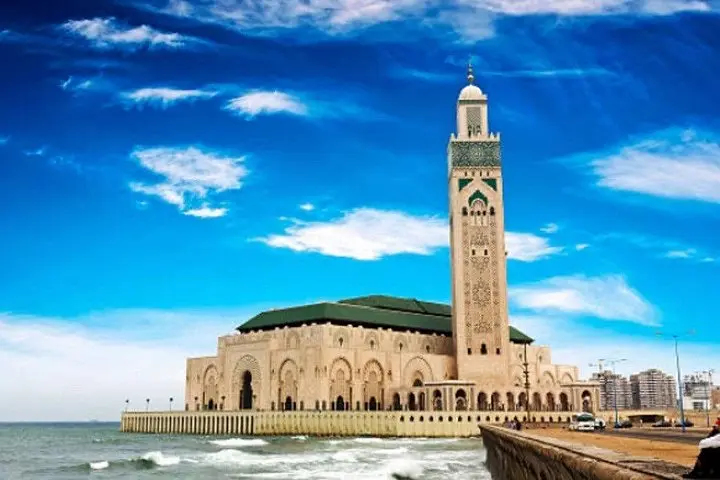
You step off the van and the Atlantic wind immediately rearranges your plans — not violently, but with insistence. The Hassan II Mosque rises ahead, its minaret a straight-backed finger against a blue-gray sky while the sea presses at its foundations, daring you to look away.
Verified experiences and guided adventures in the surrounding area.
Operated by platinum morocco travel · Casablanca, Casablanca-Settat
You step off the van and the Atlantic wind immediately rearranges your plans — not violently, but with insistence. The Hassan II Mosque rises ahead, its minaret a straight-backed finger against a blue-gray sky while the sea presses at its foundations, daring you to look away.
This half-day guided loop stitches together Casablanca’s contrasting layers: French protectorate boulevards and modern glass, the compact lanes of the Old Medina, and the relaxed pull of Ain Diab Corniche. The mosque (completed in 1993) is the architectural anchor — reinforced concrete clad in carved stone and zellij tile — while Mohammed V Square and the Sacré-Cœur recall the city’s colonial-era urban planning.
Geologically, the coastline here is young Atlantic edge: sandy beaches, rocky outcrops and man-made promenades. Culturally, Casablanca has always been a working port that absorbed migrants and influences; the Habbous (Habous) quarter reflects deliberate early-20th-century urban design to house artisans and traders.
Practically, expect roughly 4–5 hours of mostly flat walking with several short stops — a guided visit to Habbous, photo pauses at Rick’s Café, and a break on the Corniche for mint tea. The tour includes hotel pickup, bottled water and a multilingual driver-guide; groups are small (up to 15) and physically easy but wear modest clothing for mosque areas. Carry a refillable bottle, sunscreen, and a light scarf for quick cultural respect. Aim for morning or late afternoon to avoid the hottest mid-day sun and to catch softer light along the coast.
This is a city tour that trades strenuous exertion for concentrated cultural returns — an efficient way to feel Casablanca’s scale, history, and seaside pulse in one sensible outing.
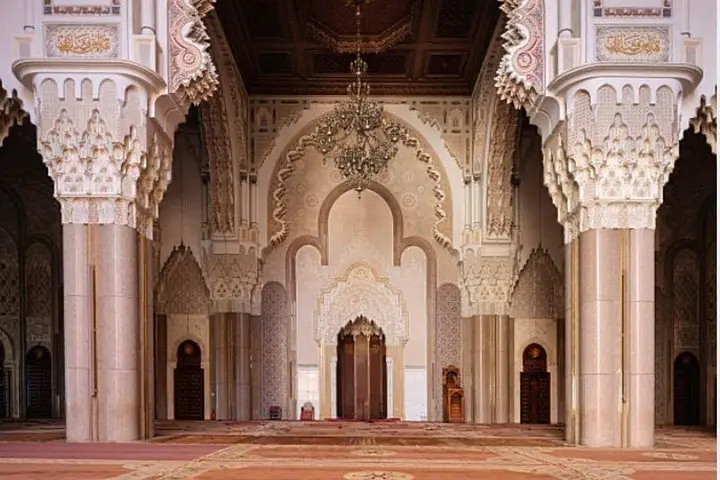
The tour visits the mosque exterior and usually includes a guided interior visit when available; confirm at booking since interior access depends on prayer times and group size.
Yes — the tour is family-friendly and stroller accessible; infant seats are available and pace is gentle.
Yes — hotel pickup and drop-off within central Casablanca are included in the tour price.
Tipping is customary for guides and drivers in Morocco; a modest amount per person is appreciated for good service.
platinum morocco travel operates guided outdoor trips and adventures with an emphasis on safety, stewardship, and memorable experiences.
You step off the van and the Atlantic wind immediately rearranges your plans — not violently, but with insistence. The Hassan II Mosque rises ahead, its minaret a straight-backed finger against a blue-gray sky while the sea presses at its foundations, daring you to look away.
You step off the van and the Atlantic wind immediately rearranges your plans — not violently, but with insistence. The Hassan II Mosque rises ahead, its minaret a straight-backed finger against a blue-gray sky while the sea presses at its foundations, daring you to look away.
This half-day guided loop stitches together Casablanca’s contrasting layers: French protectorate boulevards and modern glass, the compact lanes of the Old Medina, and the relaxed pull of Ain Diab Corniche. The mosque (completed in 1993) is the architectural anchor — reinforced concrete clad in carved stone and zellij tile — while Mohammed V Square and the Sacré-Cœur recall the city’s colonial-era urban planning.
Geologically, the coastline here is young Atlantic edge: sandy beaches, rocky outcrops and man-made promenades. Culturally, Casablanca has always been a working port that absorbed migrants and influences; the Habbous (Habous) quarter reflects deliberate early-20th-century urban design to house artisans and traders.
Practically, expect roughly 4–5 hours of mostly flat walking with several short stops — a guided visit to Habbous, photo pauses at Rick’s Café, and a break on the Corniche for mint tea. The tour includes hotel pickup, bottled water and a multilingual driver-guide; groups are small (up to 15) and physically easy but wear modest clothing for mosque areas. Carry a refillable bottle, sunscreen, and a light scarf for quick cultural respect. Aim for morning or late afternoon to avoid the hottest mid-day sun and to catch softer light along the coast.
This is a city tour that trades strenuous exertion for concentrated cultural returns — an efficient way to feel Casablanca’s scale, history, and seaside pulse in one sensible outing.