THE ADVENTURE COLLECTIVE® · Independent discovery and booking for outdoor travel

Spend a half day sampling Casablanca’s contrasts: the monumental Hassan II Mosque by the Atlantic, a stroll through the Old Medina, and a taste of French-era boulevards and Habous markets. This guided outing pairs skip-the-line mosque entry with local stories and practical access to the city’s best photo stops.
Spend a half day sampling Casablanca’s contrasts: the monumental Hassan II Mosque by the Atlantic, a stroll through the Old Medina, and a taste of French-era boulevards and Habous markets. This guided outing pairs skip-the-line mosque entry with local stories and practical access to the city’s best photo stops.
A breeze off the Atlantic carries the city’s sounds as the tour’s minivan eases along the Corniche toward the mosque—its minaret slicing the sky like a ruler of the coast. The guide opens the door to Hassan II Mosque’s marble forecourt and the group steps into a world where carved cedar, zellij tiles and ocean spray meet.
Verified experiences and guided adventures in the surrounding area.
Operated by Premium Transfers and Tours Travel · Casablanca, Casablanca-Settat
A breeze off the Atlantic carries the city’s sounds as the tour’s minivan eases along the Corniche toward the mosque—its minaret slicing the sky like a ruler of the coast. The guide opens the door to Hassan II Mosque’s marble forecourt and the group steps into a world where carved cedar, zellij tiles and ocean spray meet.
Casablanca grew into Morocco’s commercial heart under the French Protectorate and the city wears that layered history visibly: French art-deco boulevards, Ottoman-influenced religious architecture and compact medina lanes where artisans still hammer brass. Geologically, the coast is a flat Atlantic plain scored by human development rather than dramatic relief, so vistas come from plazas and minarets rather than peaks.
Culturally the city balances modern commerce and traditional crafts—the Habous quarter’s bookshops and the Old Medina’s souks sit close to broad, European-style boulevards. The mosque itself, completed in 1993, is notable not only for its scale but for being built partly over the sea, a deliberate dialogue between faith and ocean.
Practical guidance: expect 4–5 hours including transfers; wear comfortable walking shoes and a light layer for sea breezes. Modest dress is required for mosque entry and guided tours are the only way for non‑Muslims to visit; private mosque tours are not authorized. Bring cash for small purchases in the souk, hydrate in the afternoon heat, and plan morning slots if you want the softest light for photos and fewer crowds. The itinerary mixes short walks with seated time in the vehicle, making it accessible to most travelers while delivering concentrated cultural insights.
Yes—non‑Muslim visitors can join guided tours of the mosque at scheduled times; private mosque tours are not authorized by mosque administration.
Yes—this tour generally includes hassle‑free hotel pickup and drop‑off within Casablanca per the booking details.
Expect roughly 20–30 minutes of guided walking through the Old Medina and souks, with opportunities to browse and photograph.
Multilingual drivers/guides are provided on most departures; confirm preferred language when booking to ensure availability.
Premium Transfers and Tours Travel operates guided outdoor trips and adventures with an emphasis on safety, stewardship, and memorable experiences.
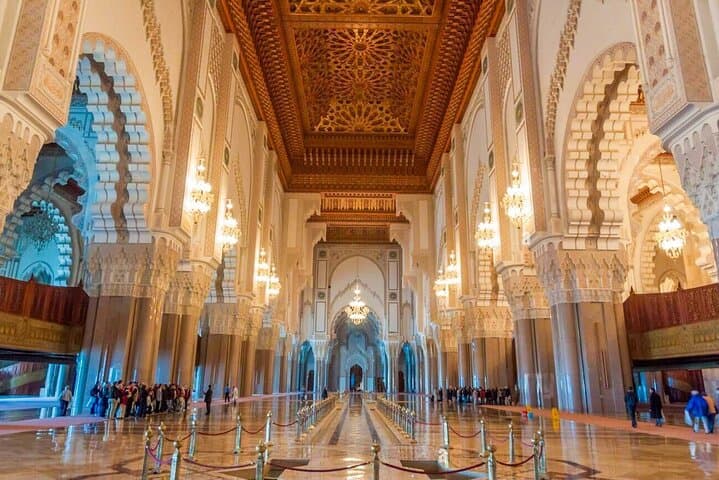


A breeze off the Atlantic carries the city’s sounds as the tour’s minivan eases along the Corniche toward the mosque—its minaret slicing the sky like a ruler of the coast. The guide opens the door to Hassan II Mosque’s marble forecourt and the group steps into a world where carved cedar, zellij tiles and ocean spray meet.
A breeze off the Atlantic carries the city’s sounds as the tour’s minivan eases along the Corniche toward the mosque—its minaret slicing the sky like a ruler of the coast. The guide opens the door to Hassan II Mosque’s marble forecourt and the group steps into a world where carved cedar, zellij tiles and ocean spray meet.
Casablanca grew into Morocco’s commercial heart under the French Protectorate and the city wears that layered history visibly: French art-deco boulevards, Ottoman-influenced religious architecture and compact medina lanes where artisans still hammer brass. Geologically, the coast is a flat Atlantic plain scored by human development rather than dramatic relief, so vistas come from plazas and minarets rather than peaks.
Culturally the city balances modern commerce and traditional crafts—the Habous quarter’s bookshops and the Old Medina’s souks sit close to broad, European-style boulevards. The mosque itself, completed in 1993, is notable not only for its scale but for being built partly over the sea, a deliberate dialogue between faith and ocean.
Practical guidance: expect 4–5 hours including transfers; wear comfortable walking shoes and a light layer for sea breezes. Modest dress is required for mosque entry and guided tours are the only way for non‑Muslims to visit; private mosque tours are not authorized. Bring cash for small purchases in the souk, hydrate in the afternoon heat, and plan morning slots if you want the softest light for photos and fewer crowds. The itinerary mixes short walks with seated time in the vehicle, making it accessible to most travelers while delivering concentrated cultural insights.