THE ADVENTURE COLLECTIVE® · Independent discovery and booking for outdoor travel

Drive Morocco’s Atlantic edge over two relaxed days: Portuguese forts, argan cooperatives and Essaouira’s wind-swept ramparts. This private tour pairs coastal scenery with cultural stops and an overnight in a seaside medina.
Drive Morocco’s Atlantic edge over two relaxed days: Portuguese forts, argan cooperatives and Essaouira’s wind-swept ramparts. This private tour pairs coastal scenery with cultural stops and an overnight in a seaside medina.
You step into the car in Casablanca as the city hums behind you and the Atlantic draws you westward — a ribbon of highway that peels through coastal towns, argan groves and wind-battered scrub.
Verified experiences and guided adventures in the surrounding area.
Operated by Marrakech First Trip · Essaouira, Marrakesh-Safi
You step into the car in Casablanca as the city hums behind you and the Atlantic draws you westward — a ribbon of highway that peels through coastal towns, argan groves and wind-battered scrub.
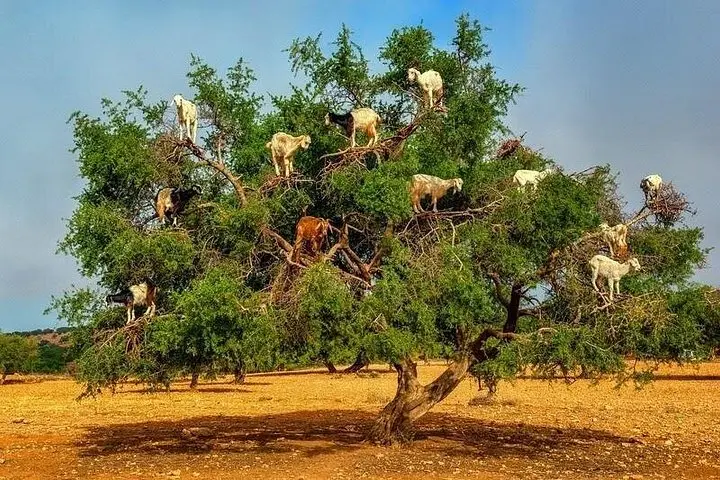
Day one moves at a steady pace: El Jadida’s Portuguese cisterns appear after an hour or two, then Safi’s pottery quarter and the near-blanket of blue ocean. The guide pauses at a women’s argan cooperative where the scent of toasted nuts and fresh oil fills the air; the trees themselves seem to lean into the sea breeze, offering shade and a livelihood.
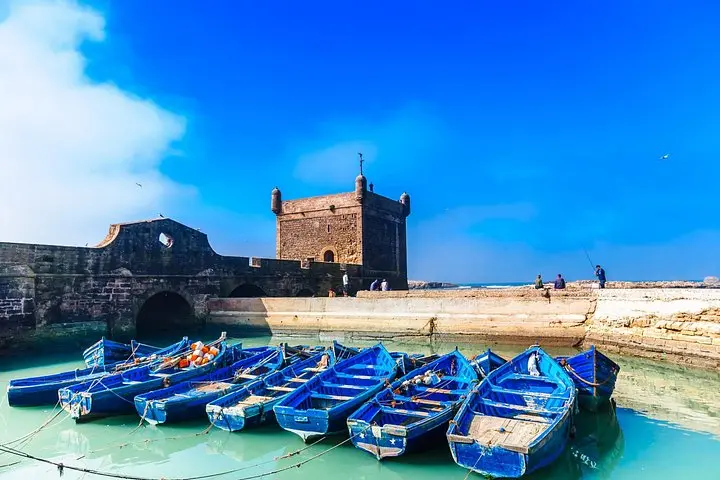
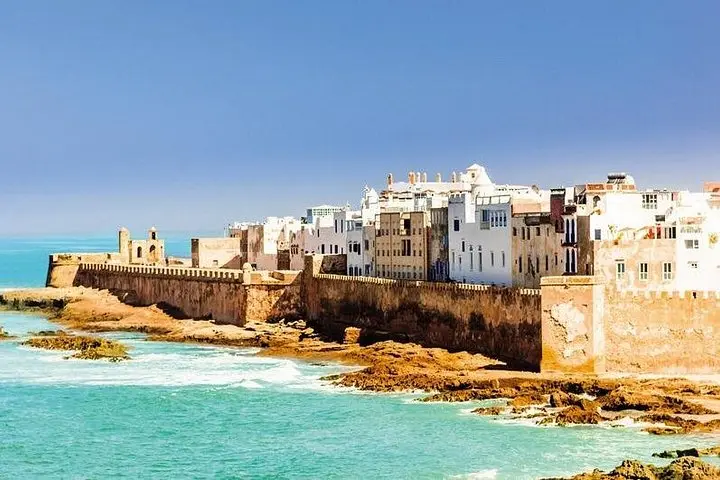
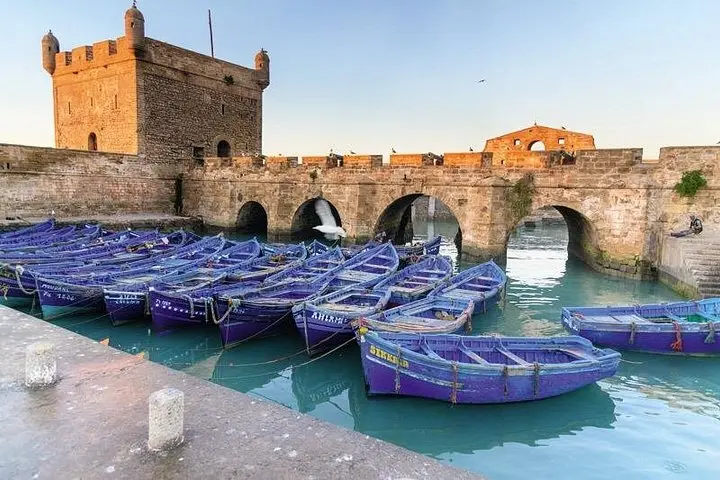
Essaouira arrives as a low, fortified town ringed by ramparts and cannon-studded parapets designed in the 18th century by European engineers under Sultan Sidi Mohamed Ben Abdellah. The port’s auction calls, the cry of gulls and the “Alizée” trade wind give the town its working, open-air character — a place shaped by Portuguese forts, caravan trade and ocean commerce once nicknamed the Port of Timbuktu.
Practically: expect roughly 4–5 hours of driving each way (≈370–380 km one-way via coastal route), easy walking around cobbled medina streets, and brief stops at sites and cooperatives. Bring sun protection and layers for the windy coast, cash for market purchases, and comfortable shoes for uneven streets and ramparts. Timing your visit for late afternoon makes the ramparts glow and the fishermen return with the day’s sardines.
This private two-day format balances relaxed travel with deep local touches — historical forts, working ports, and the argan woodlands that define Morocco’s Atlantic edge.
One-way driving time is typically 4–5 hours (about 370–380 km) along the coastal route with stops; your private itinerary paces this across two days.
Yes — the itinerary notes wheelchair and stroller accessibility for most transport and many stops, but cobbled medina streets and ramparts can be uneven; inquire about specific accessibility needs when booking.
Breakfast is included; other meals such as lunch and dinner are typically at your expense unless specified, though your guide will recommend local seafood and market options.
Yes — the tour includes a visit to the Marjana argan cooperative where you can observe production and purchase locally made oils and cosmetics supporting women’s economic projects.
Marrakech First Trip operates guided outdoor trips and adventures with an emphasis on safety, stewardship, and memorable experiences.
You step into the car in Casablanca as the city hums behind you and the Atlantic draws you westward — a ribbon of highway that peels through coastal towns, argan groves and wind-battered scrub.
You step into the car in Casablanca as the city hums behind you and the Atlantic draws you westward — a ribbon of highway that peels through coastal towns, argan groves and wind-battered scrub.
Day one moves at a steady pace: El Jadida’s Portuguese cisterns appear after an hour or two, then Safi’s pottery quarter and the near-blanket of blue ocean. The guide pauses at a women’s argan cooperative where the scent of toasted nuts and fresh oil fills the air; the trees themselves seem to lean into the sea breeze, offering shade and a livelihood.
Essaouira arrives as a low, fortified town ringed by ramparts and cannon-studded parapets designed in the 18th century by European engineers under Sultan Sidi Mohamed Ben Abdellah. The port’s auction calls, the cry of gulls and the “Alizée” trade wind give the town its working, open-air character — a place shaped by Portuguese forts, caravan trade and ocean commerce once nicknamed the Port of Timbuktu.
Practically: expect roughly 4–5 hours of driving each way (≈370–380 km one-way via coastal route), easy walking around cobbled medina streets, and brief stops at sites and cooperatives. Bring sun protection and layers for the windy coast, cash for market purchases, and comfortable shoes for uneven streets and ramparts. Timing your visit for late afternoon makes the ramparts glow and the fishermen return with the day’s sardines.
This private two-day format balances relaxed travel with deep local touches — historical forts, working ports, and the argan woodlands that define Morocco’s Atlantic edge.