THE ADVENTURE COLLECTIVE® · Independent discovery and booking for outdoor travel

A compact five-day route linking Casablanca and Marrakech via the High Atlas and Erg Chebbi. Expect mountain passes, UNESCO kasbahs, desert camels, and an overnight Berber camp under the stars.
A compact five-day route linking Casablanca and Marrakech via the High Atlas and Erg Chebbi. Expect mountain passes, UNESCO kasbahs, desert camels, and an overnight Berber camp under the stars.
You crest the Tizi n’Tichka at first light and the High Atlas stretches like a stern guardian, ridgelines catching the sun while the road drops toward ochre villages and kasbahs.
Verified experiences and guided adventures in the surrounding area.
Operated by Imperial Trail Tours · Marrakech, Marrakesh-Safi
You crest the Tizi n’Tichka at first light and the High Atlas stretches like a stern guardian, ridgelines catching the sun while the road drops toward ochre villages and kasbahs.
This five-day run from Casablanca to Marrakech stitches urban medinas, mountain passes, fortified ksars and the wind-sculpted Erg Chebbi dunes into a compact introduction to southern Morocco. Geologically, the High Atlas is young and rugged—folded rock and jagged passes formed by tectonic uplift—while the Sahara here is loose sand riding seasonal trade winds into spectacular crescent dunes. Culturally, the route follows old trans-Saharan corridors: Ait Ben Haddou’s earthen buildings recall caravan wealth, Todra’s gorges frame Berber villages that still practice date farming and pastoralism.
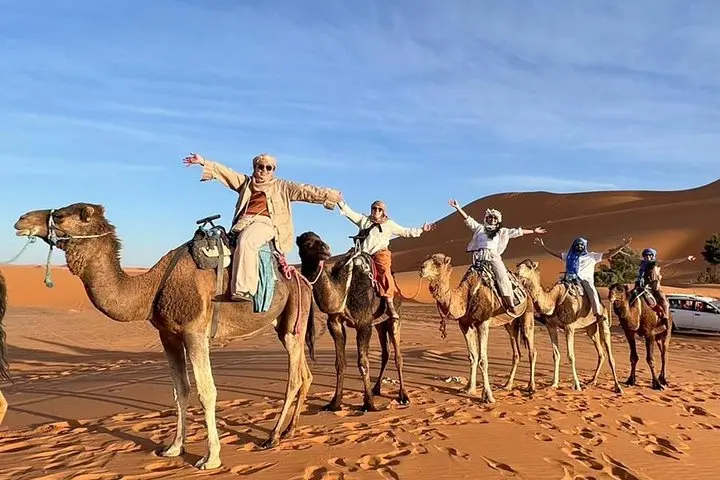
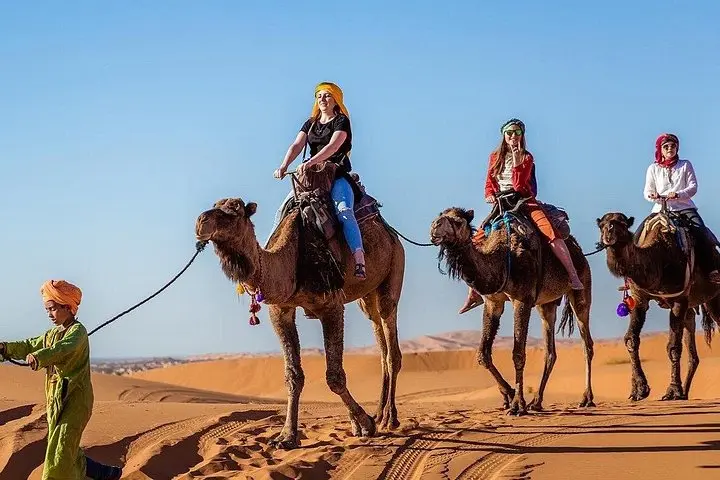
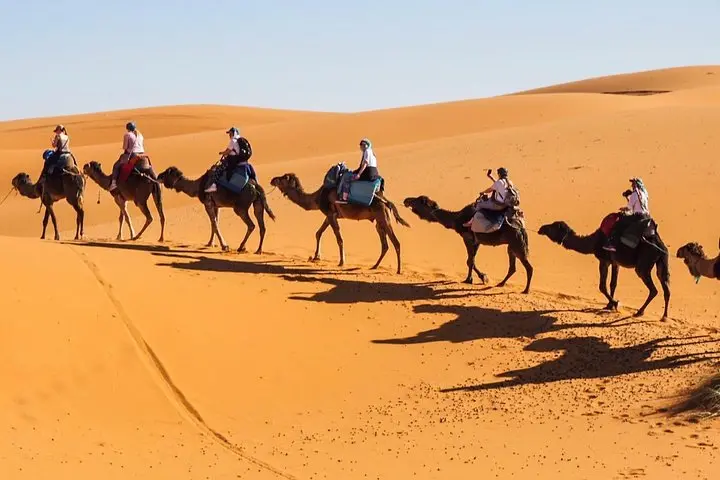
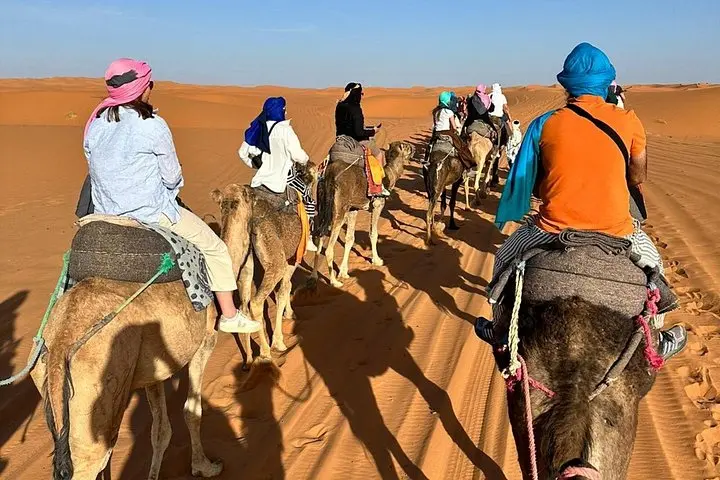
Expect long but scenic drives, short guided walks through medinas and kasbahs, a sunrise camel ride, sandboarding on Erg Chebbi and an overnight in a Berber camp under open desert sky. Guides introduce local crafts, the history of kasbah architecture and the seasonal rhythms of oasis agriculture.
Practical guidance: book comfortable transport and light luggage for the camel segment, schedule time for sunrise and sunset at the dunes, and carry cash for small village purchases. Hydrate, layer against cold desert nights, and bring sun protection—the desert punishes exposure but rewards early and late light with unforgettable views.
Walking is limited to short guided strolls in medinas, brief canyon walks and climbing dune slopes—most transfers are by vehicle so basic mobility is sufficient.
Yes—most itineraries include secure storage at your Merzouga hotel while you take only a small overnight bag to the camp.
Camel rides are gentle and guided; mounts are trained for tourists, but mounting and dismounting can be awkward—ask staff for assistance if needed.
Yes—travel insurance that covers medical evacuation and trip interruption is recommended for multi-day tours that cross remote areas.
Imperial Trail Tours operates guided outdoor trips and adventures with an emphasis on safety, stewardship, and memorable experiences.
You crest the Tizi n’Tichka at first light and the High Atlas stretches like a stern guardian, ridgelines catching the sun while the road drops toward ochre villages and kasbahs.
You crest the Tizi n’Tichka at first light and the High Atlas stretches like a stern guardian, ridgelines catching the sun while the road drops toward ochre villages and kasbahs.
This five-day run from Casablanca to Marrakech stitches urban medinas, mountain passes, fortified ksars and the wind-sculpted Erg Chebbi dunes into a compact introduction to southern Morocco. Geologically, the High Atlas is young and rugged—folded rock and jagged passes formed by tectonic uplift—while the Sahara here is loose sand riding seasonal trade winds into spectacular crescent dunes. Culturally, the route follows old trans-Saharan corridors: Ait Ben Haddou’s earthen buildings recall caravan wealth, Todra’s gorges frame Berber villages that still practice date farming and pastoralism.
Expect long but scenic drives, short guided walks through medinas and kasbahs, a sunrise camel ride, sandboarding on Erg Chebbi and an overnight in a Berber camp under open desert sky. Guides introduce local crafts, the history of kasbah architecture and the seasonal rhythms of oasis agriculture.
Practical guidance: book comfortable transport and light luggage for the camel segment, schedule time for sunrise and sunset at the dunes, and carry cash for small village purchases. Hydrate, layer against cold desert nights, and bring sun protection—the desert punishes exposure but rewards early and late light with unforgettable views.