THE ADVENTURE COLLECTIVE® · Independent discovery and booking for outdoor travel

An eight-day loop from Casablanca to the Sahara that pairs imperial cities with dune-swept nights. Travel the High Atlas, explore medinas and camp beneath desert stars—practical prep included.
An eight-day loop from Casablanca to the Sahara that pairs imperial cities with dune-swept nights. Travel the High Atlas, explore medinas and camp beneath desert stars—practical prep included.
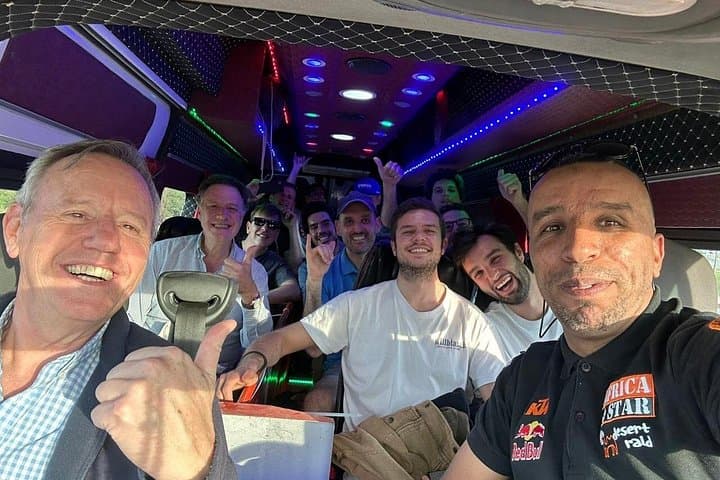
You step off the coastal air and within hours the ocean's hush gives way to a different rhythm: the rumble of an air-conditioned minivan cutting through citrus groves, then climbing toward the High Atlas where wind shapes the road and the mountains push back the sky.
Verified experiences and guided adventures in the surrounding area.
Operated by Fes desert tours jamai · Casablanca, Casablanca-Settat
You step off the coastal air and within hours the ocean's hush gives way to a different rhythm: the rumble of an air-conditioned minivan cutting through citrus groves, then climbing toward the High Atlas where wind shapes the road and the mountains push back the sky.
This eight-day loop links Casablanca's Atlantic port, Marrakech's ochre ramparts, the fortified ksars of the Atlas foothills and the wide-shouldered Erg Chebbi dunes near Merzouga. The route follows centuries-old caravan corridors; palaces and medinas in Fes and Marrakech recall Moroccan imperial history while adobe kasbahs and film-set towns like Ouarzazate show the region’s layered geology and modern uses.
Geologically, you’ll pass folded Paleozoic rocks in the Atlas and vast Quaternary dunes that still shift with each hot wind—some dunes rise 100–150 meters above the plain. Culturally, encounters range from Berber hospitality at a desert camp to the labyrinthine markets where craftsmen dye wool and hammer copper.
Practical guidance: expect long drives (Casablanca–Marrakech ~240 km; Marrakech–Merzouga 550–600 km via Tizi n’Tichka at 2,260 m), intermittent paved roads and short hikes or dune climbs at the itinerary stops. Sunrise and sunset on the dunes are cooler and offer the best light; carry at least 2–3 liters of water per day, sun protection and a lightweight layer for desert nights. Footwear should handle sand and uneven kasbah alleys. Bring local cash for small markets and a compact daypack for walks. With basic stamina and an openness to varied paces—you’ll trade city bustle for desert silence and back in a week.
No—this tour is suitable for most fitness levels; guides provide camels or vehicles for dune approaches and camps are equipped for first-time desert campers.
Guides are typically English-speaking and Arabic or French are common regionally; learning a few Arabic or Berber phrases is appreciated.
Desert camps range from comfortable tented accommodations with mattresses and meals to simpler communal-style camps—check the itinerary specifics before booking.
Notify the operator in advance; local guides can usually accommodate common dietary restrictions but remote stretches may have limited options.
Fes desert tours jamai operates guided outdoor trips and adventures with an emphasis on safety, stewardship, and memorable experiences.

You step off the coastal air and within hours the ocean's hush gives way to a different rhythm: the rumble of an air-conditioned minivan cutting through citrus groves, then climbing toward the High Atlas where wind shapes the road and the mountains push back the sky.
You step off the coastal air and within hours the ocean's hush gives way to a different rhythm: the rumble of an air-conditioned minivan cutting through citrus groves, then climbing toward the High Atlas where wind shapes the road and the mountains push back the sky.
This eight-day loop links Casablanca's Atlantic port, Marrakech's ochre ramparts, the fortified ksars of the Atlas foothills and the wide-shouldered Erg Chebbi dunes near Merzouga. The route follows centuries-old caravan corridors; palaces and medinas in Fes and Marrakech recall Moroccan imperial history while adobe kasbahs and film-set towns like Ouarzazate show the region’s layered geology and modern uses.
Geologically, you’ll pass folded Paleozoic rocks in the Atlas and vast Quaternary dunes that still shift with each hot wind—some dunes rise 100–150 meters above the plain. Culturally, encounters range from Berber hospitality at a desert camp to the labyrinthine markets where craftsmen dye wool and hammer copper.
Practical guidance: expect long drives (Casablanca–Marrakech ~240 km; Marrakech–Merzouga 550–600 km via Tizi n’Tichka at 2,260 m), intermittent paved roads and short hikes or dune climbs at the itinerary stops. Sunrise and sunset on the dunes are cooler and offer the best light; carry at least 2–3 liters of water per day, sun protection and a lightweight layer for desert nights. Footwear should handle sand and uneven kasbah alleys. Bring local cash for small markets and a compact daypack for walks. With basic stamina and an openness to varied paces—you’ll trade city bustle for desert silence and back in a week.