THE ADVENTURE COLLECTIVE® · Independent discovery and booking for outdoor travel

Short, private tour from Braga exploring Serra da Cabreira’s waterfalls, medieval bridges and the cave sanctuary of Nossa Senhora da Lapa. Expect short hikes, scenic viewpoints and a mix of placid reservoirs and dramatic cascades.
Short, private tour from Braga exploring Serra da Cabreira’s waterfalls, medieval bridges and the cave sanctuary of Nossa Senhora da Lapa. Expect short hikes, scenic viewpoints and a mix of placid reservoirs and dramatic cascades.
You arrive where granite shoulders the sky and the Ave River threads the valley, its current daring you to follow. On a clear morning the air is cool and mineral; by afternoon the rock faces warm and the waterfalls glint like cut glass. The tour moves from chapel-in-the-rock to reservoir beaches, through villages that keep old ways visible in stone ovens and millworks.
Verified experiences and guided adventures in the surrounding area.
Operated by Huaka'i Aventura e Diversão · Braga, Braga District
You arrive where granite shoulders the sky and the Ave River threads the valley, its current daring you to follow. On a clear morning the air is cool and mineral; by afternoon the rock faces warm and the waterfalls glint like cut glass. The tour moves from chapel-in-the-rock to reservoir beaches, through villages that keep old ways visible in stone ovens and millworks.
Serra da Cabreira is a compact landscape of granite ridges, carved fluvial valleys and human traces — medieval bridges, watermills and the cave chapel of Nossa Senhora da Lapa, said to have appeared to a shepherdess. Geologically, the range is schist and granite, shaped by centuries of seasonal runoff; in winter cascades swell and sculpt new channels through the rock.
Culturally the area is rural and resilient: small parishes retain communal ovens, seasonal fairs and cuisine rooted in hearty mountain produce. Ermal reservoir contrasts with wild cascades, offering both placid water and, in places, opportunities for water sports.
Practically, expect a 4–5 hour outing with private transport from Braga, short walks to viewpoints and a 1–2 km round-trip trail to Cascata da Candosa across uneven, sometimes steep terrain. Bottled water is provided but bring sturdy shoes, a rain layer and a towel if you plan a dip; mobile reception can be patchy in narrow valleys. Access to some waterfalls is on foot only; paths can be slick after rain. The trip suits moderately fit travelers who can handle short hikes and uneven ground. Timing your visit for morning or late afternoon gives better light and cooler temperatures for walking.
The trail to Cascata da Candosa is roughly 1–2 km round-trip, on uneven terrain with short elevation changes; allow 30–45 minutes depending on pace.
Swimming is often possible in summer in the Candosa pool, but check with guides on the day for safety and current conditions before entering the water.
This private tour typically departs from Braga with private transport included; confirm your specific pickup point at booking.
Many points involve uneven trails, stone steps and short hikes; not recommended for travelers with spinal issues or limited mobility.
Huaka'i Aventura e Diversão operates guided outdoor trips and adventures with an emphasis on safety, stewardship, and memorable experiences.
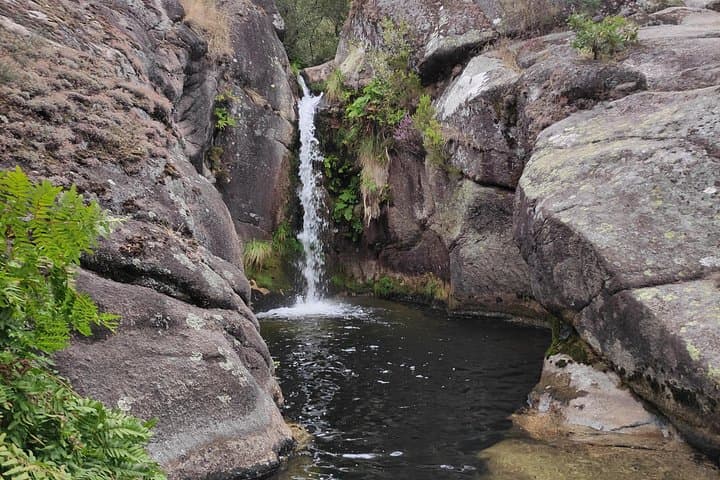


You arrive where granite shoulders the sky and the Ave River threads the valley, its current daring you to follow. On a clear morning the air is cool and mineral; by afternoon the rock faces warm and the waterfalls glint like cut glass. The tour moves from chapel-in-the-rock to reservoir beaches, through villages that keep old ways visible in stone ovens and millworks.
You arrive where granite shoulders the sky and the Ave River threads the valley, its current daring you to follow. On a clear morning the air is cool and mineral; by afternoon the rock faces warm and the waterfalls glint like cut glass. The tour moves from chapel-in-the-rock to reservoir beaches, through villages that keep old ways visible in stone ovens and millworks.
Serra da Cabreira is a compact landscape of granite ridges, carved fluvial valleys and human traces — medieval bridges, watermills and the cave chapel of Nossa Senhora da Lapa, said to have appeared to a shepherdess. Geologically, the range is schist and granite, shaped by centuries of seasonal runoff; in winter cascades swell and sculpt new channels through the rock.
Culturally the area is rural and resilient: small parishes retain communal ovens, seasonal fairs and cuisine rooted in hearty mountain produce. Ermal reservoir contrasts with wild cascades, offering both placid water and, in places, opportunities for water sports.
Practically, expect a 4–5 hour outing with private transport from Braga, short walks to viewpoints and a 1–2 km round-trip trail to Cascata da Candosa across uneven, sometimes steep terrain. Bottled water is provided but bring sturdy shoes, a rain layer and a towel if you plan a dip; mobile reception can be patchy in narrow valleys. Access to some waterfalls is on foot only; paths can be slick after rain. The trip suits moderately fit travelers who can handle short hikes and uneven ground. Timing your visit for morning or late afternoon gives better light and cooler temperatures for walking.