THE ADVENTURE COLLECTIVE® · Independent discovery and booking for outdoor travel

A lively tuk tuk tour that stitches Cascais’ seaside charm to the dramatic cliffs of Cabo da Roca and the fairytale roofs of Sintra. In about 3.5 hours you'll sample beaches, lighthouses and panoramic headlands with local insight and minimal walking.
A lively tuk tuk tour that stitches Cascais’ seaside charm to the dramatic cliffs of Cabo da Roca and the fairytale roofs of Sintra. In about 3.5 hours you'll sample beaches, lighthouses and panoramic headlands with local insight and minimal walking.
The tuk tuk hums through Cascais like a small, curious creature—wheels whispering on sun-warmed cobbles as the Atlantic pushes a steady salt wind against your face. In three and a half hours the ride folds you into a compact loop of Portugal’s western edge: pastel facades and marina masts give way to rocky headlands, limestone cavities that bellow with surf, and the forested slopes of Sintra where palaces peer through umbrella pines.
Verified experiences and guided adventures in the surrounding area.
Operated by Ticket Online · Cascais, Lisbon
The tuk tuk hums through Cascais like a small, curious creature—wheels whispering on sun-warmed cobbles as the Atlantic pushes a steady salt wind against your face. In three and a half hours the ride folds you into a compact loop of Portugal’s western edge: pastel facades and marina masts give way to rocky headlands, limestone cavities that bellow with surf, and the forested slopes of Sintra where palaces peer through umbrella pines.
Cascais began life as a fishing village, its sheltered bay a natural harbor since the 12th century. By the 19th century it had converted from working port to royal refuge; the Praia da Rainha earned its name after Queen Amélia made a small private inlet her beach. Geologically the coast here is a story of limestone and granite: at Cabo da Roca the land drops to the Atlantic at roughly 140 meters above sea level, where you can feel the rock’s long battle with waves and wind. Guincho’s 750-meter shoreline sits in a wind-scoured bowl, its dunes a fragile system that supports coastal plants and nesting seabirds.
Culture arrives in small, tangible forms on this route: the modernist sweep of the Casa das Histórias Paula Rego, a lighthouse museum that doubles as local history, and the tiled facades and seafood shops of Cascais’ historic center. Sintra, briefly visited on this tour, is a UNESCO crown: romantic 19th‑century palaces, Moorish walls and dense, mist-prone woodlands that inspired poets and kings.
Practical guidance: the shared tuk tuk tour runs about 3–3.5 hours and handles most driving and parking logistics for you—useful in a region where streets narrow and viewpoints demand short walks. Expect several short stops of 10–20 minutes to photograph the Marina, Praia da Rainha, Boca do Inferno (Mouth of Hell) and the lighthouse museum, with a longer 50–55 minute stop at Cabo da Roca. Bring a windproof layer—Cabo da Roca and Guincho are exposed—and sturdy shoes for rocky viewpoints and dune sand. The tour is limited to six travelers, so book earlier in summer; cancellation is free up to 24 hours.
Timing tips: aim for late afternoon to catch warmer light at the cliffs and less crowded viewpoints, or early morning for cleaner air and stronger surf. Photography-wise, the cape’s edge and the Guincho dunes reward wide-angle compositions, while Cascais’ marina and Paula Rego’s museum favor closer architectural frames. The tuk tuk keeps the pace compact and active: it’s part transport, part local storyteller, and part rolling vantage point for an hour-and-a-half of Portugal’s bravest coastline.
The tour lasts approximately 3–3.5 hours with several short photo stops and a longer stop at Cabo da Roca.
Museum admissions such as Casa das Histórias or other sites are not included; the tour provides external stops and viewpoints.
Yes—pickup from many hotels and ports is available; you must provide exact pickup location and contact number.
Infants are allowed but must sit on an adult’s lap; operators note a moderate level of fitness for participants.
Tours may be canceled or rescheduled for bad weather; full refund is available if canceled at least 24 hours prior.
Shared tours are limited to a maximum of six travelers for a more personalized experience.
Ticket Online operates guided outdoor trips and adventures with an emphasis on safety, stewardship, and memorable experiences.


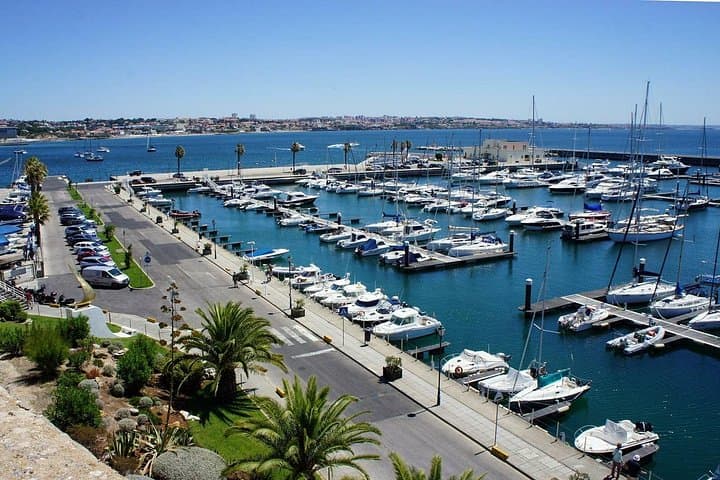
The tuk tuk hums through Cascais like a small, curious creature—wheels whispering on sun-warmed cobbles as the Atlantic pushes a steady salt wind against your face. In three and a half hours the ride folds you into a compact loop of Portugal’s western edge: pastel facades and marina masts give way to rocky headlands, limestone cavities that bellow with surf, and the forested slopes of Sintra where palaces peer through umbrella pines.
The tuk tuk hums through Cascais like a small, curious creature—wheels whispering on sun-warmed cobbles as the Atlantic pushes a steady salt wind against your face. In three and a half hours the ride folds you into a compact loop of Portugal’s western edge: pastel facades and marina masts give way to rocky headlands, limestone cavities that bellow with surf, and the forested slopes of Sintra where palaces peer through umbrella pines.
Cascais began life as a fishing village, its sheltered bay a natural harbor since the 12th century. By the 19th century it had converted from working port to royal refuge; the Praia da Rainha earned its name after Queen Amélia made a small private inlet her beach. Geologically the coast here is a story of limestone and granite: at Cabo da Roca the land drops to the Atlantic at roughly 140 meters above sea level, where you can feel the rock’s long battle with waves and wind. Guincho’s 750-meter shoreline sits in a wind-scoured bowl, its dunes a fragile system that supports coastal plants and nesting seabirds.
Culture arrives in small, tangible forms on this route: the modernist sweep of the Casa das Histórias Paula Rego, a lighthouse museum that doubles as local history, and the tiled facades and seafood shops of Cascais’ historic center. Sintra, briefly visited on this tour, is a UNESCO crown: romantic 19th‑century palaces, Moorish walls and dense, mist-prone woodlands that inspired poets and kings.
Practical guidance: the shared tuk tuk tour runs about 3–3.5 hours and handles most driving and parking logistics for you—useful in a region where streets narrow and viewpoints demand short walks. Expect several short stops of 10–20 minutes to photograph the Marina, Praia da Rainha, Boca do Inferno (Mouth of Hell) and the lighthouse museum, with a longer 50–55 minute stop at Cabo da Roca. Bring a windproof layer—Cabo da Roca and Guincho are exposed—and sturdy shoes for rocky viewpoints and dune sand. The tour is limited to six travelers, so book earlier in summer; cancellation is free up to 24 hours.
Timing tips: aim for late afternoon to catch warmer light at the cliffs and less crowded viewpoints, or early morning for cleaner air and stronger surf. Photography-wise, the cape’s edge and the Guincho dunes reward wide-angle compositions, while Cascais’ marina and Paula Rego’s museum favor closer architectural frames. The tuk tuk keeps the pace compact and active: it’s part transport, part local storyteller, and part rolling vantage point for an hour-and-a-half of Portugal’s bravest coastline.