THE ADVENTURE COLLECTIVE® · Independent discovery and booking for outdoor travel

Two hours of narrow streets, colonial plazas and coastal views: this guided walk through Casco Viejo connects Panama’s colonial past with lively present-day culture. Perfect for first-time visitors seeking architecture, history and local food tips.
Two hours of narrow streets, colonial plazas and coastal views: this guided walk through Casco Viejo connects Panama’s colonial past with lively present-day culture. Perfect for first-time visitors seeking architecture, history and local food tips.
You step off the curb into a sun-warmed square where church bells punctuate the chatter of a morning market. Cobbled lanes funnel you between low-rise facades painted ochre, coral and teal; a breeze from the bay teases the banners hanging over Calle 5.
Verified experiences and guided adventures in the surrounding area.
Operated by Panamanian Aventures · Panama City, Panama Province
You step off the curb into a sun-warmed square where church bells punctuate the chatter of a morning market. Cobbled lanes funnel you between low-rise facades painted ochre, coral and teal; a breeze from the bay teases the banners hanging over Calle 5.
Casco Viejo (Casco Antiguo) is the compact colonial district built after Old Panama was sacked in the 17th century. The neighborhood layers Spanish plaza planning with later French and U.S. influences visible in wrought-iron balconies and early 20th‑century hotels. On this two‑hour walk you move from the Metropolitan Cathedral’s echoing nave to the Canal Museum’s sober displays, pass the Flat Arch and the Esteban Huertas promenade where the city leans toward the sea.
The guide will thread history and local color together: where independence was declared, which houses sheltered canal engineers, and how the French plaza marks an ambitious, failed chapter of the canal story. Architecture here is tactile—peeling stucco and carved doors that hint at private courtyards and rooftop views.
Practical side: the route is short but paved with uneven stone—good shoes matter. Start early to avoid midday heat and to catch softer light on plazas; bring water and a compact sun hat. Expect frequent stops for stories, photo ops and a final recommendation for local cuisine in a nearby café. The tour balances easy walking with dense history; it’s urban exploration that moves at the pace of the neighborhood itself.
The guided route lasts about two hours and covers short distances on mostly paved, cobbled streets with frequent stops for sights and narration.
Yes—it's rated physically easy, but uneven pavement may be challenging for strollers and some mobility issues; ask the operator about access options.
This walking tour focuses on external visits and storytelling; specific museum entries or church donations are typically not included—bring small cash if you plan to enter paid sites.
Meet at Herrera Plaza in front of Casacasco (look for the guide with the company logo); the tour also finishes at the same plaza.
Panamanian Aventures operates guided outdoor trips and adventures with an emphasis on safety, stewardship, and memorable experiences.

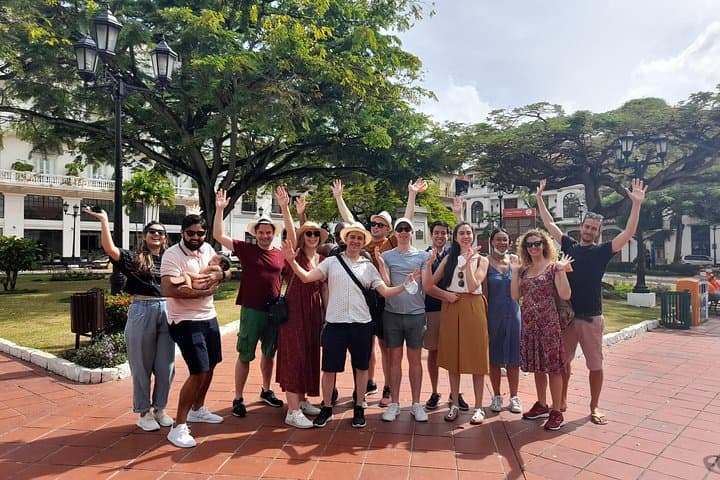


You step off the curb into a sun-warmed square where church bells punctuate the chatter of a morning market. Cobbled lanes funnel you between low-rise facades painted ochre, coral and teal; a breeze from the bay teases the banners hanging over Calle 5.
You step off the curb into a sun-warmed square where church bells punctuate the chatter of a morning market. Cobbled lanes funnel you between low-rise facades painted ochre, coral and teal; a breeze from the bay teases the banners hanging over Calle 5.
Casco Viejo (Casco Antiguo) is the compact colonial district built after Old Panama was sacked in the 17th century. The neighborhood layers Spanish plaza planning with later French and U.S. influences visible in wrought-iron balconies and early 20th‑century hotels. On this two‑hour walk you move from the Metropolitan Cathedral’s echoing nave to the Canal Museum’s sober displays, pass the Flat Arch and the Esteban Huertas promenade where the city leans toward the sea.
The guide will thread history and local color together: where independence was declared, which houses sheltered canal engineers, and how the French plaza marks an ambitious, failed chapter of the canal story. Architecture here is tactile—peeling stucco and carved doors that hint at private courtyards and rooftop views.
Practical side: the route is short but paved with uneven stone—good shoes matter. Start early to avoid midday heat and to catch softer light on plazas; bring water and a compact sun hat. Expect frequent stops for stories, photo ops and a final recommendation for local cuisine in a nearby café. The tour balances easy walking with dense history; it’s urban exploration that moves at the pace of the neighborhood itself.