THE ADVENTURE COLLECTIVE® · Independent discovery and booking for outdoor travel

Take a full-day guided loop from Marseille along sea cliffs and through Provençal vineyards—choose a cliffside drive or a boat into the Calanques, visit Bandol and Le Castellet, and finish with a Côtes de Provence tasting.
Take a full-day guided loop from Marseille along sea cliffs and through Provençal vineyards—choose a cliffside drive or a boat into the Calanques, visit Bandol and Le Castellet, and finish with a Côtes de Provence tasting.
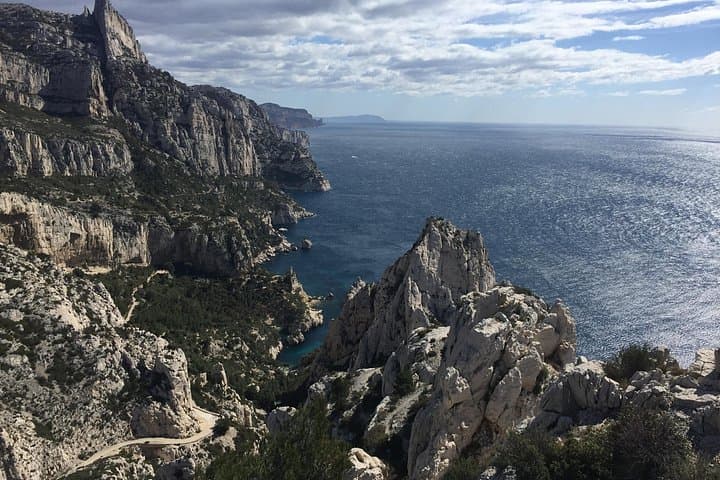
Morning in Marseille begins with gulls quarrelling over a croissant and the port steaming with ferries. From the quay you climb into an air‑conditioned minibus and the city peels away: graffitied facades giving way to sea glinting under the road that hugs limestone. The guide offers two kinds of promise—an adrenaline line along the Route des Crêtes over Cap Canaille, Europe’s highest sea cliff, or a quieter choice: a boat that slips into the pale blue mouths of the Calanques, where stone cliffs dare you to look down.
Verified experiences and guided adventures in the surrounding area.
Operated by Planetazur · Cassis, Provence-Alpes-Côte d'Azur
Morning in Marseille begins with gulls quarrelling over a croissant and the port steaming with ferries. From the quay you climb into an air‑conditioned minibus and the city peels away: graffitied facades giving way to sea glinting under the road that hugs limestone. The guide offers two kinds of promise—an adrenaline line along the Route des Crêtes over Cap Canaille, Europe’s highest sea cliff, or a quieter choice: a boat that slips into the pale blue mouths of the Calanques, where stone cliffs dare you to look down.
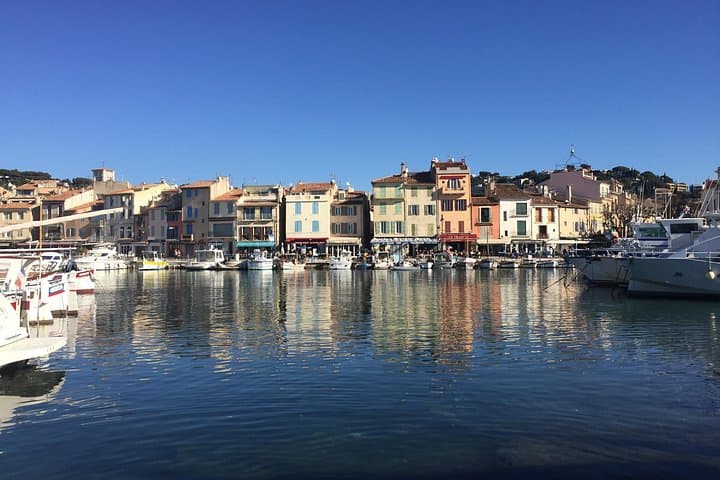
Cassis itself is short on pretense. Once a lobster-fishing hamlet, it evolved into a wine-producing village whose terraces of vines cling to thin soils above the sea. Bandol, an hour along the coast, is louder—markets and Provençal rhythms, rosés that have made the region famous—and Le Castellet carries a different voice: medieval walls and narrow lanes that unwind toward a hilltop view and a modern motor circuit tucked nearby.
Geology writes the day. The Calanques are carved from porous limestone; their steep walls and narrow inlets were shaped by river incision and wave action over millennia. That geology creates microclimates ideal for viticulture: wind-swept slopes, thin soils, and plenty of sun yield wines with saline lift and Provençal brightness.
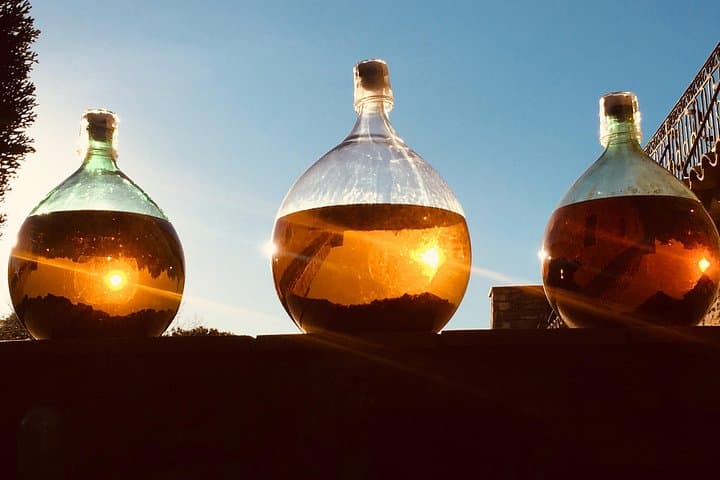
Culturally, this is a meeting of sea and vine. Côtes de Provence producers here favor blends of Rolle, Grenache and Mourvèdre that pair as easily with bouillabaisse as with tapenade. Local producers emphasize small-batch, terroir-driven wines and many have cellars that welcome casual tasters as part of a slower, convivial afternoon.
Practical guidance: the full loop runs about eight hours. If you choose the Route des Crêtes, expect hairpin viewpoints and short roadside photo stops—no long hikes required. The boat option adds sea breezes and the chance to disembark near hidden calanques; bring layered clothing for wind and spray. Tasting sessions are moderate in length; drivers should consider rotating or skipping pours. Reserve in advance during summer; tour groups cap at eight, which keeps the experience personal.
On the etiquette side, tasting rooms will ask respectful questions about preferences; tip modestly and buy a bottle if a producer made your afternoon. For conservation, keep to marked paths around the Calanques and avoid anchoring on seagrass meadows (posidonia). Finally, wear sturdy shoes for cobbled streets and a sun hat—Provence does not forgive poor planning.
This day is about contrasts: cliff and vineyard, salt and tannin, ancient stone and modern road. With a good guide it’s a contained adventure—one that rewards simple curiosity and leaves you with a few bottles and a clearer sense of why the Mediterranean composes its own rules for travel and taste.
The itinerary offers a choice between driving the Route des Crêtes or taking a boat into the Calanques; confirm which option when booking as availability can vary.
The meeting point is in Marseille near the port (the organizer lists a landmark across from Monoprix); the tour returns to the same location.
Infants are allowed but must sit on a lap; wine tastings are for adults—minors should be supervised and not participate in alcohol sampling.
Handheld cameras are fine; drones are restricted over Calanques National Park and many historic villages—check park regulations before flying.
Full refunds are available if you cancel at least 24 hours before departure; no refund within 24 hours except as noted in the operator’s terms.
The day is classified as easy but includes boat boarding and uneven village streets; travelers with significant mobility limitations should contact the operator in advance.
Planetazur operates guided outdoor trips and adventures with an emphasis on safety, stewardship, and memorable experiences.

Morning in Marseille begins with gulls quarrelling over a croissant and the port steaming with ferries. From the quay you climb into an air‑conditioned minibus and the city peels away: graffitied facades giving way to sea glinting under the road that hugs limestone. The guide offers two kinds of promise—an adrenaline line along the Route des Crêtes over Cap Canaille, Europe’s highest sea cliff, or a quieter choice: a boat that slips into the pale blue mouths of the Calanques, where stone cliffs dare you to look down.
Morning in Marseille begins with gulls quarrelling over a croissant and the port steaming with ferries. From the quay you climb into an air‑conditioned minibus and the city peels away: graffitied facades giving way to sea glinting under the road that hugs limestone. The guide offers two kinds of promise—an adrenaline line along the Route des Crêtes over Cap Canaille, Europe’s highest sea cliff, or a quieter choice: a boat that slips into the pale blue mouths of the Calanques, where stone cliffs dare you to look down.
Cassis itself is short on pretense. Once a lobster-fishing hamlet, it evolved into a wine-producing village whose terraces of vines cling to thin soils above the sea. Bandol, an hour along the coast, is louder—markets and Provençal rhythms, rosés that have made the region famous—and Le Castellet carries a different voice: medieval walls and narrow lanes that unwind toward a hilltop view and a modern motor circuit tucked nearby.
Geology writes the day. The Calanques are carved from porous limestone; their steep walls and narrow inlets were shaped by river incision and wave action over millennia. That geology creates microclimates ideal for viticulture: wind-swept slopes, thin soils, and plenty of sun yield wines with saline lift and Provençal brightness.
Culturally, this is a meeting of sea and vine. Côtes de Provence producers here favor blends of Rolle, Grenache and Mourvèdre that pair as easily with bouillabaisse as with tapenade. Local producers emphasize small-batch, terroir-driven wines and many have cellars that welcome casual tasters as part of a slower, convivial afternoon.
Practical guidance: the full loop runs about eight hours. If you choose the Route des Crêtes, expect hairpin viewpoints and short roadside photo stops—no long hikes required. The boat option adds sea breezes and the chance to disembark near hidden calanques; bring layered clothing for wind and spray. Tasting sessions are moderate in length; drivers should consider rotating or skipping pours. Reserve in advance during summer; tour groups cap at eight, which keeps the experience personal.
On the etiquette side, tasting rooms will ask respectful questions about preferences; tip modestly and buy a bottle if a producer made your afternoon. For conservation, keep to marked paths around the Calanques and avoid anchoring on seagrass meadows (posidonia). Finally, wear sturdy shoes for cobbled streets and a sun hat—Provence does not forgive poor planning.
This day is about contrasts: cliff and vineyard, salt and tannin, ancient stone and modern road. With a good guide it’s a contained adventure—one that rewards simple curiosity and leaves you with a few bottles and a clearer sense of why the Mediterranean composes its own rules for travel and taste.