THE ADVENTURE COLLECTIVE® · Independent discovery and booking for outdoor travel

Spend a full day exploring Cat Ba National Park’s forest trails, Viet Hai village, and the sheltered karsts of Lan Ha Bay. Hike to Frog Pond, cycle pastoral roads, then kayak past floating houses for a compact wilderness and cultural experience.
Spend a full day exploring Cat Ba National Park’s forest trails, Viet Hai village, and the sheltered karsts of Lan Ha Bay. Hike to Frog Pond, cycle pastoral roads, then kayak past floating houses for a compact wilderness and cultural experience.
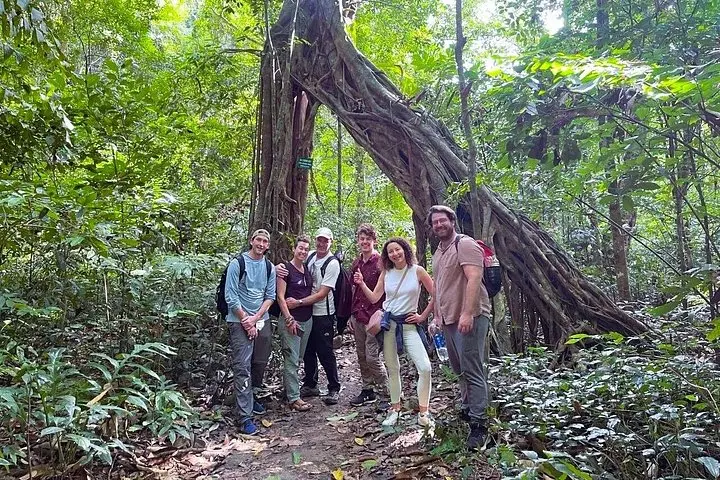
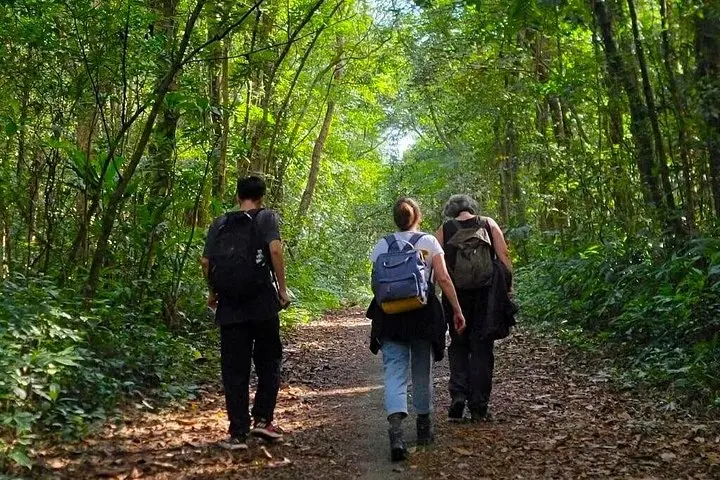
You step off the bus where limestone ridges tilt out of green, the forest breathing warm, humid air that presses close. Up the trail the karsts watch you—stoic, vertical—and the understorey hums with insects and distant bird calls. The path to Frog Pond threads through primary forest, then opens onto glassy water dotted with Va Nuoc trees that seem to float like small islands.
Verified experiences and guided adventures in the surrounding area.
Operated by Authentic SAPA · Cat Ba Town, Hai Phong
You step off the bus where limestone ridges tilt out of green, the forest breathing warm, humid air that presses close. Up the trail the karsts watch you—stoic, vertical—and the understorey hums with insects and distant bird calls. The path to Frog Pond threads through primary forest, then opens onto glassy water dotted with Va Nuoc trees that seem to float like small islands.
Cat Ba is a UNESCO-listed biosphere reserve whose karst landscape was sculpted from ancient marine sediments; peaks here rise abruptly from sea level and host pockets of primary forest and specialized flora. Viet Hai village preserves a working rural culture—rice paddies, wooden homes, and a tradition of small-boat fishing that connects the island to Lan Ha Bay. Cai Beo, a living floating village, offers a window into centuries of maritime life.
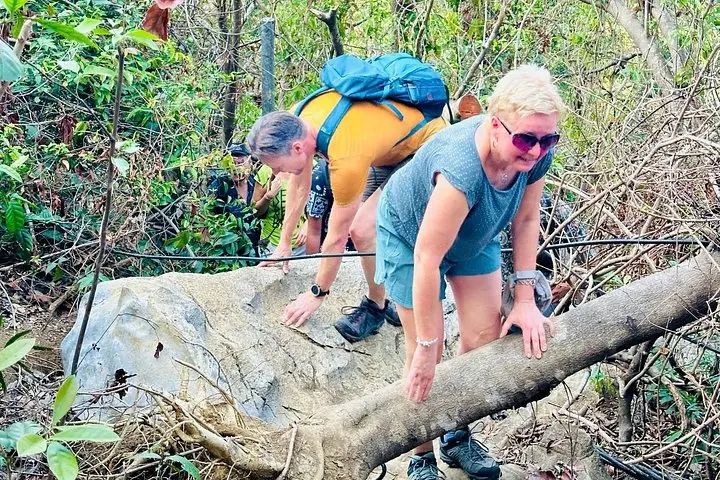
Expect a full day: roughly 8–9 hours combining a 2–3 hour hike (with short ascents across three small peaks), a 4 km descent into Viet Hai, a 5 km village bike ride to the harbor, and an afternoon of kayaking in Lan Ha Bay. Terrain alternates between uneven forest trail, compact dirt roads, and flat coastal paths; kayaks sit ready for sheltered paddling among karst islets. Bring layered, quick-dry clothing, sturdy shoes with grip, sunscreen, insect repellent, and some cash for village purchases. Move deliberately on wet limestone, follow your guide, and keep noise low—this is one of the few places where the endangered Cat Ba langur still clings to the cliffs. With preparation, the day delivers close wildlife encounters, cultural connection, and the calm of Lan Ha’s sheltered waters.
Yes—guides adapt pace and the tour is marketed as suitable for all fitness levels; basic cycling and kayaking confidence helps but instruction is provided.
Yes—entrance tickets and a home-cooked lunch in Viet Hai are included in the tour price per the itinerary.
Bring small bills for drinks, tips, or incidental purchases in Viet Hai and at floating stops; card access is limited on the island.
Common sightings include deer, squirrels, and a variety of birds; the endangered Cat Ba langur is rare but possible—keep noise low and follow your guide’s instructions.
Authentic SAPA operates guided outdoor trips and adventures with an emphasis on safety, stewardship, and memorable experiences.

You step off the bus where limestone ridges tilt out of green, the forest breathing warm, humid air that presses close. Up the trail the karsts watch you—stoic, vertical—and the understorey hums with insects and distant bird calls. The path to Frog Pond threads through primary forest, then opens onto glassy water dotted with Va Nuoc trees that seem to float like small islands.
You step off the bus where limestone ridges tilt out of green, the forest breathing warm, humid air that presses close. Up the trail the karsts watch you—stoic, vertical—and the understorey hums with insects and distant bird calls. The path to Frog Pond threads through primary forest, then opens onto glassy water dotted with Va Nuoc trees that seem to float like small islands.
Cat Ba is a UNESCO-listed biosphere reserve whose karst landscape was sculpted from ancient marine sediments; peaks here rise abruptly from sea level and host pockets of primary forest and specialized flora. Viet Hai village preserves a working rural culture—rice paddies, wooden homes, and a tradition of small-boat fishing that connects the island to Lan Ha Bay. Cai Beo, a living floating village, offers a window into centuries of maritime life.
Expect a full day: roughly 8–9 hours combining a 2–3 hour hike (with short ascents across three small peaks), a 4 km descent into Viet Hai, a 5 km village bike ride to the harbor, and an afternoon of kayaking in Lan Ha Bay. Terrain alternates between uneven forest trail, compact dirt roads, and flat coastal paths; kayaks sit ready for sheltered paddling among karst islets. Bring layered, quick-dry clothing, sturdy shoes with grip, sunscreen, insect repellent, and some cash for village purchases. Move deliberately on wet limestone, follow your guide, and keep noise low—this is one of the few places where the endangered Cat Ba langur still clings to the cliffs. With preparation, the day delivers close wildlife encounters, cultural connection, and the calm of Lan Ha’s sheltered waters.