THE ADVENTURE COLLECTIVE® · Independent discovery and booking for outdoor travel

Cross the Caribbean to Catalina Island for clear-water snorkeling among living coral, then return to explore Altos de Chavón’s stone streets and river views. This full-day tour pairs marine wildlife with crafted Mediterranean-style culture just outside La Romana.
Cross the Caribbean to Catalina Island for clear-water snorkeling among living coral, then return to explore Altos de Chavón’s stone streets and river views. This full-day tour pairs marine wildlife with crafted Mediterranean-style culture just outside La Romana.
Salt on the air, the boat's bow cutting a bright blue that seems to push the shoreline back — the day opens with a short run from La Romana across clear Caribbean water toward Catalina Island. Sunlight picks out coral ridges beneath the surface; when you drop into the water the reef claims your attention with sudden schools of parrotfish and wriggling brain coral. The island itself is small and uninhabited, its beaches of white sand giving way quickly to shallow reef flats where visibility often reaches 20–30 meters.
Verified experiences and guided adventures in the surrounding area.
Operated by Scape Caribe Tours & Travel · La Romana, La Romana Province
Salt on the air, the boat's bow cutting a bright blue that seems to push the shoreline back — the day opens with a short run from La Romana across clear Caribbean water toward Catalina Island. Sunlight picks out coral ridges beneath the surface; when you drop into the water the reef claims your attention with sudden schools of parrotfish and wriggling brain coral. The island itself is small and uninhabited, its beaches of white sand giving way quickly to shallow reef flats where visibility often reaches 20–30 meters.
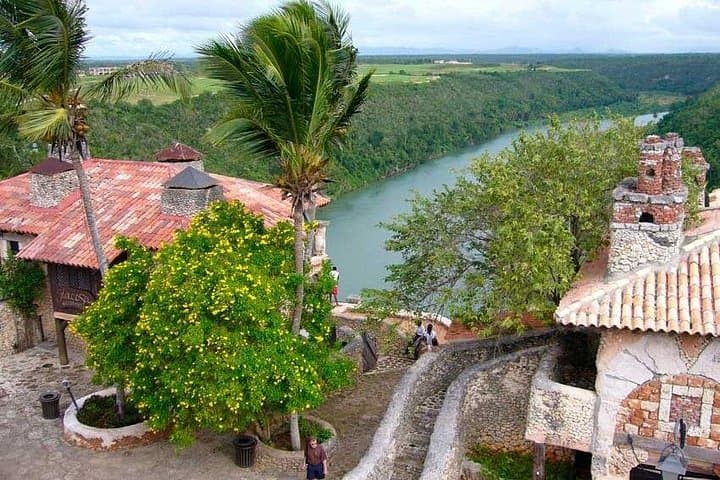
Back on the mainland the tour climbs to Altos de Chavón, a crafted 16th‑century Mediterranean‑style village built above the Chavón River. The village was conceived in the 1970s as a cultural center — stone streets, an amphitheater, and artisan workshops that reference colonial-era stonework more than vernacular Dominican architecture. Geologically the region is limestone and karst; the river carved the valley that made this dramatic perch possible.
Practical guidance: expect an eight-hour day with boat transfers and guided snorkeling included. Bring reef‑safe sunscreen, a mask or snorkel if you prefer your own, and a light cover-up for the village visit. Wear sturdy sandals for cobbled streets and water shoes for reef entries. Hydrate before and after snorkeling and follow the guide’s safety briefing — currents can pick up near the reef.
Altos de Chavón offers shade and café stops; Catalina offers short, intense encounters with marine life. The mix of easy cultural walking and moderate snorkeling makes this a well‑rounded day trip from La Romana.
Boat time from La Romana to Catalina is typically 30–60 minutes depending on the operator and sea conditions.
Most tours include basic snorkel gear and life vests, but bringing a personal mask ensures a better fit.
Yes — many operators provide flotation vests and guides stay close to shallow reef areas; notify the operator at booking.
The village has cobbled streets and steps; parts are stroller-friendly but some viewpoints require short uphill walks.
Scape Caribe Tours & Travel operates guided outdoor trips and adventures with an emphasis on safety, stewardship, and memorable experiences.



Salt on the air, the boat's bow cutting a bright blue that seems to push the shoreline back — the day opens with a short run from La Romana across clear Caribbean water toward Catalina Island. Sunlight picks out coral ridges beneath the surface; when you drop into the water the reef claims your attention with sudden schools of parrotfish and wriggling brain coral. The island itself is small and uninhabited, its beaches of white sand giving way quickly to shallow reef flats where visibility often reaches 20–30 meters.
Salt on the air, the boat's bow cutting a bright blue that seems to push the shoreline back — the day opens with a short run from La Romana across clear Caribbean water toward Catalina Island. Sunlight picks out coral ridges beneath the surface; when you drop into the water the reef claims your attention with sudden schools of parrotfish and wriggling brain coral. The island itself is small and uninhabited, its beaches of white sand giving way quickly to shallow reef flats where visibility often reaches 20–30 meters.
Back on the mainland the tour climbs to Altos de Chavón, a crafted 16th‑century Mediterranean‑style village built above the Chavón River. The village was conceived in the 1970s as a cultural center — stone streets, an amphitheater, and artisan workshops that reference colonial-era stonework more than vernacular Dominican architecture. Geologically the region is limestone and karst; the river carved the valley that made this dramatic perch possible.
Practical guidance: expect an eight-hour day with boat transfers and guided snorkeling included. Bring reef‑safe sunscreen, a mask or snorkel if you prefer your own, and a light cover-up for the village visit. Wear sturdy sandals for cobbled streets and water shoes for reef entries. Hydrate before and after snorkeling and follow the guide’s safety briefing — currents can pick up near the reef.
Altos de Chavón offers shade and café stops; Catalina offers short, intense encounters with marine life. The mix of easy cultural walking and moderate snorkeling makes this a well‑rounded day trip from La Romana.