THE ADVENTURE COLLECTIVE® · Independent discovery and booking for outdoor travel

Set sail from Corralejo to Isla de Lobos on a small catamaran for a four-hour excursion of sailing, snorkeling, kayaking and paella on deck. Anchor off the protected islet, swim crystal water, and enjoy drinks and equipment provided by the crew.
Set sail from Corralejo to Isla de Lobos on a small catamaran for a four-hour excursion of sailing, snorkeling, kayaking and paella on deck. Anchor off the protected islet, swim crystal water, and enjoy drinks and equipment provided by the crew.
The catamaran slips away from Corralejo’s marina with the same calm patience of a tide waiting to be read. Onboard—no more than twenty people—passengers trade the clatter of the quay for the low thrum of hulls cutting wind and the fresh, mineral smell of Atlantic spray. Within minutes the coastline of Fuerteventura collapses into a low line of sand dunes and white buildings; ahead, Isla de Lobos rises like a dark coin of volcanic rock, its cliffs daring the sea to push closer.
Verified experiences and guided adventures in the surrounding area.
Operated by Tour2b · Corralejo, Las Palmas
The catamaran slips away from Corralejo’s marina with the same calm patience of a tide waiting to be read. Onboard—no more than twenty people—passengers trade the clatter of the quay for the low thrum of hulls cutting wind and the fresh, mineral smell of Atlantic spray. Within minutes the coastline of Fuerteventura collapses into a low line of sand dunes and white buildings; ahead, Isla de Lobos rises like a dark coin of volcanic rock, its cliffs daring the sea to push closer.
Isla de Lobos is small and uncompromising: a volcanic islet shaped by eruptions and wind, historically a transient fishing outpost and supply stop for whalers. Today it’s protected as a natural reserve—boat tours anchor offshore rather than permit disembarkation—so the day centers on water: snorkeling among clear, aquamarine shelves, paddling along the hull in stand-up paddleboards or kayaks, and slipping into the chill of the Atlantic where fish scatter like punctuation.
The geology is obvious in the black basalt of the islet and the pale, shifting dunes of Corralejo—this is volcanic terrain wearing a veneer of sand. The crew typically deploys sail when the wind agrees, turning a motorized run into a sailing leg that feels slower and more deliberate, as if the ocean itself sets the pace.
Lunch is communal and straightforward: paella served on deck with fresh fruit and continuous drinks—wine, beer, soft drinks and water—permitted throughout the four-hour trip. Snorkeling equipment, kayaks and stand-up paddleboards are supplied, so the barrier to enjoying the sea is low; the only rule is to respect the protected shorelines and remain aboard or in the water where the crew instructs.
Practical details: the excursion departs from Muelle Deportivo in Corralejo; arrive 30 minutes early. The tour runs roughly four hours and is rated easy—suitable for most fitness levels—but bring basic swimming ability and a head for waves if you plan to snorkel beyond the shallows. Motion-sickness medication helps on windier days.
Timing matters: mornings are often calmer; afternoons can offer stronger winds and a livelier sail. Wear reef-friendly sunscreen, water shoes for slippery ladders, and a light windbreaker for the return leg—temperatures on deck drop when the sails fill. For photographers, the best frames form at the bow during the sailing stretches and at anchor when the sun illuminates the island’s submerged shelves.
This outing is an uncomplicated way to experience the Canary Islands’ marine side—social, active, and anchored in respect for a protected islet whose geology, birds and reefs give context to every swim and every line dropped from the rail.
No. The island is protected and this excursion anchors offshore; swimming, snorkeling and watercraft use are allowed under crew supervision.
Yes—snorkeling gear, kayaks and stand-up paddleboards are included with the excursion.
Yes—families are welcome; the tour is labeled physically easy, but children should be supervised and wear life jackets when provided.
Lunch (paella and fresh fruit) and drinks are included; contact the operator ahead of time for vegetarian or allergy requests.
The operator may cancel for bad weather or insufficient travelers; full refunds apply for cancellations at least 24 hours prior.
Muelle Deportivo is in central Corralejo and is reachable by local bus, taxi, or on foot from nearby hotels—arrive 30 minutes early to check in.
Tour2b operates guided outdoor trips and adventures with an emphasis on safety, stewardship, and memorable experiences.
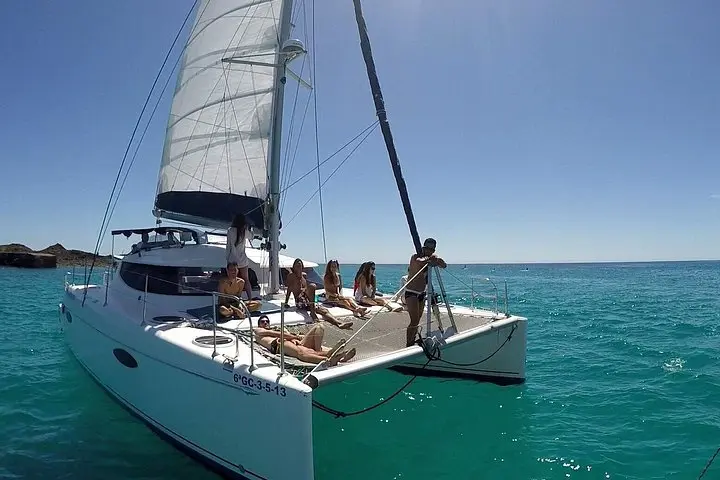
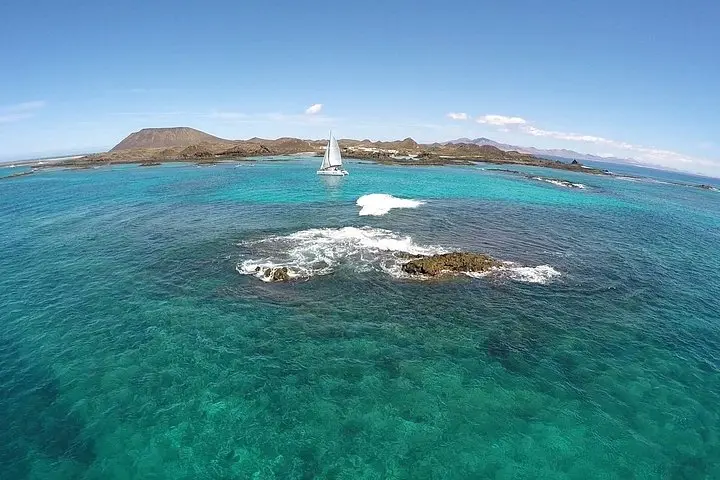
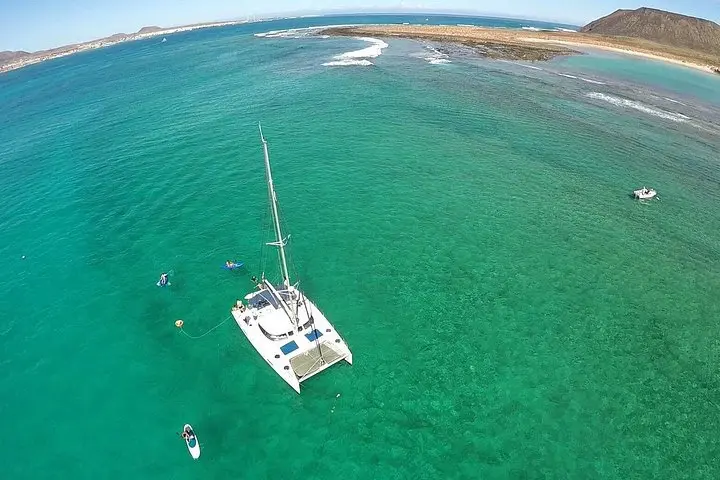
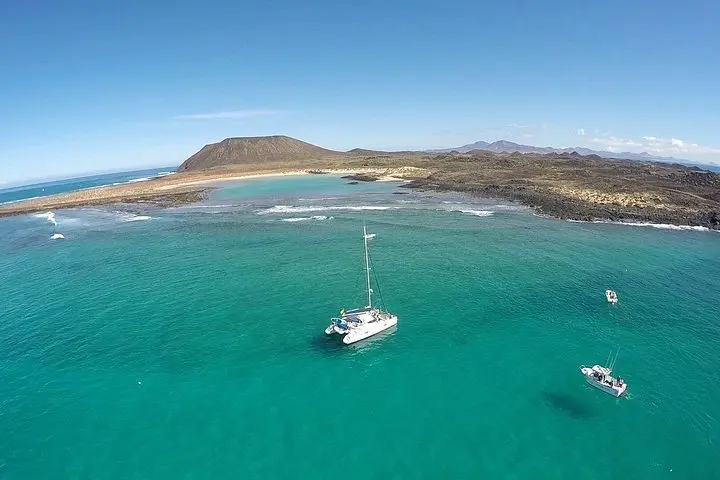
The catamaran slips away from Corralejo’s marina with the same calm patience of a tide waiting to be read. Onboard—no more than twenty people—passengers trade the clatter of the quay for the low thrum of hulls cutting wind and the fresh, mineral smell of Atlantic spray. Within minutes the coastline of Fuerteventura collapses into a low line of sand dunes and white buildings; ahead, Isla de Lobos rises like a dark coin of volcanic rock, its cliffs daring the sea to push closer.
The catamaran slips away from Corralejo’s marina with the same calm patience of a tide waiting to be read. Onboard—no more than twenty people—passengers trade the clatter of the quay for the low thrum of hulls cutting wind and the fresh, mineral smell of Atlantic spray. Within minutes the coastline of Fuerteventura collapses into a low line of sand dunes and white buildings; ahead, Isla de Lobos rises like a dark coin of volcanic rock, its cliffs daring the sea to push closer.
Isla de Lobos is small and uncompromising: a volcanic islet shaped by eruptions and wind, historically a transient fishing outpost and supply stop for whalers. Today it’s protected as a natural reserve—boat tours anchor offshore rather than permit disembarkation—so the day centers on water: snorkeling among clear, aquamarine shelves, paddling along the hull in stand-up paddleboards or kayaks, and slipping into the chill of the Atlantic where fish scatter like punctuation.
The geology is obvious in the black basalt of the islet and the pale, shifting dunes of Corralejo—this is volcanic terrain wearing a veneer of sand. The crew typically deploys sail when the wind agrees, turning a motorized run into a sailing leg that feels slower and more deliberate, as if the ocean itself sets the pace.
Lunch is communal and straightforward: paella served on deck with fresh fruit and continuous drinks—wine, beer, soft drinks and water—permitted throughout the four-hour trip. Snorkeling equipment, kayaks and stand-up paddleboards are supplied, so the barrier to enjoying the sea is low; the only rule is to respect the protected shorelines and remain aboard or in the water where the crew instructs.
Practical details: the excursion departs from Muelle Deportivo in Corralejo; arrive 30 minutes early. The tour runs roughly four hours and is rated easy—suitable for most fitness levels—but bring basic swimming ability and a head for waves if you plan to snorkel beyond the shallows. Motion-sickness medication helps on windier days.
Timing matters: mornings are often calmer; afternoons can offer stronger winds and a livelier sail. Wear reef-friendly sunscreen, water shoes for slippery ladders, and a light windbreaker for the return leg—temperatures on deck drop when the sails fill. For photographers, the best frames form at the bow during the sailing stretches and at anchor when the sun illuminates the island’s submerged shelves.
This outing is an uncomplicated way to experience the Canary Islands’ marine side—social, active, and anchored in respect for a protected islet whose geology, birds and reefs give context to every swim and every line dropped from the rail.