THE ADVENTURE COLLECTIVE® · Independent discovery and booking for outdoor travel

Spend a day moving from Catania’s baroque center to the volcanic slopes of Mount Etna. This guided private tour combines city history with a hands-on trek across extinct craters and a short exploration of a lava cave.
Spend a day moving from Catania’s baroque center to the volcanic slopes of Mount Etna. This guided private tour combines city history with a hands-on trek across extinct craters and a short exploration of a lava cave.
You start the day in Catania before the tourist crowds arrive, the plaza still cool under the shadow of its lava-stone elephant statue and the cathedral’s black and white facades. The city’s street grid feels lived-in: market calls, espresso steam, and the slow grit of a port town shaped by eruptions.
Verified experiences and guided adventures in the surrounding area.
Operated by Etna Sicily Tours · Catania, Sicily
You start the day in Catania before the tourist crowds arrive, the plaza still cool under the shadow of its lava-stone elephant statue and the cathedral’s black and white facades. The city’s street grid feels lived-in: market calls, espresso steam, and the slow grit of a port town shaped by eruptions.
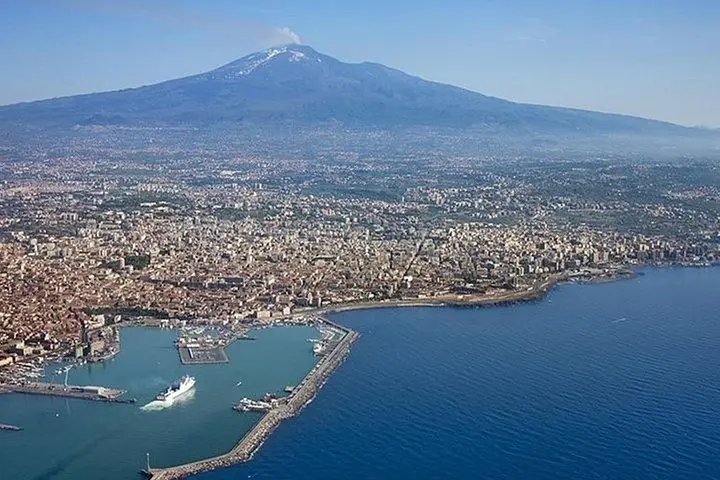
From there the road climbs; the urban limestone gives way to the rough, dark language of lava fields. Mount Etna’s slopes unfold in bands — vineyards and chestnut woods at low elevations, then slabby ʻaʻā and pahoehoe flows, and finally the jagged rims of extinct craters around 2,000 m. Geologically, Etna is one of Europe’s most active stratovolcanoes, a place where sulfur-stained vents and recent lava flows tell a visible history of eruptions. Culturally, Sicily’s relationship with Etna stretches from ancient Greek myths of Hephaestus to Baroque rebuilds in Catania after past eruptions.
The guided trek visits extinct craters and a short volcanic cave; helmets and torches are supplied. Expect uneven, rocky terrain and short steep pitches rather than long alpine approaches. You’ll learn to read lava textures and spot biozones where pioneer plants recolonize fresh rock.
Practical guidance: wear sturdy hiking shoes, layer for wind and sun, and carry at least 1–2 liters of water. If you go in winter, road access may be lower and conditions can be icy — tour operators adjust routes accordingly. Photography windows open on the ascent; plan your light and turn your pace into a rhythm that matches the mountain’s cadence.
The operator marks the activity as suitable for all fitness levels, but children and older adults should be comfortable on uneven, steep sections; consult the operator about specific mobility needs.
Helmets and torches are provided by the tour; wear closed-toe shoes and avoid loose clothing that could snag in low passages.
Yes — in winter or during adverse conditions the excursion may take place at lower altitudes or follow alternate routes for safety.
The tour’s itinerary notes admission included for the Etna portion; confirm at booking if any cable car or off-road vehicle options carry extra charges.
Etna Sicily Tours operates guided outdoor trips and adventures with an emphasis on safety, stewardship, and memorable experiences.
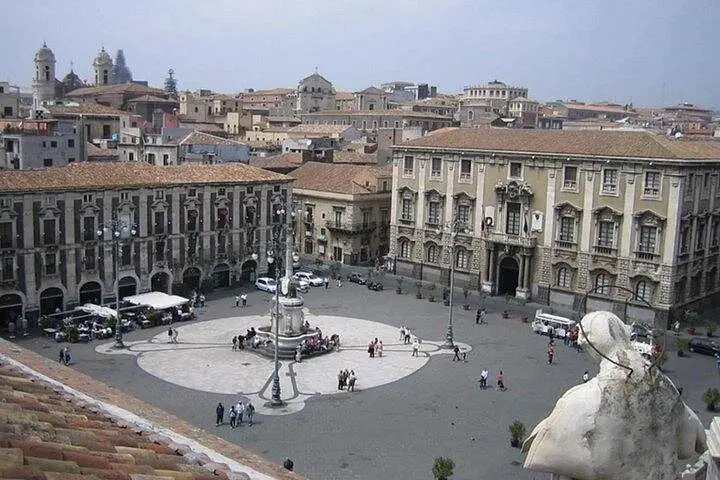
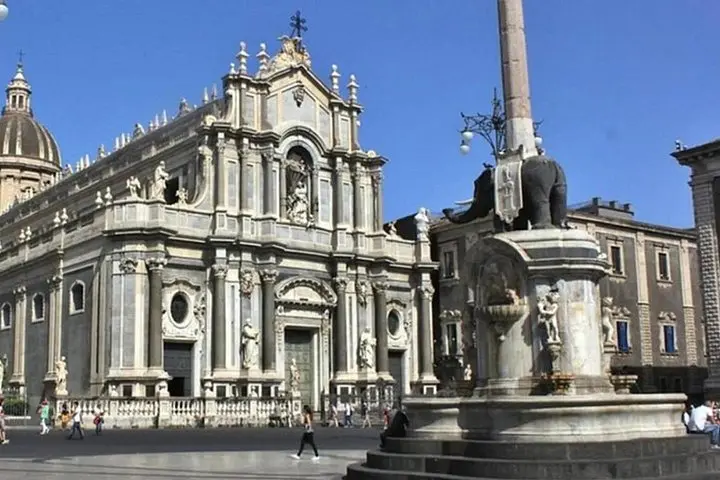
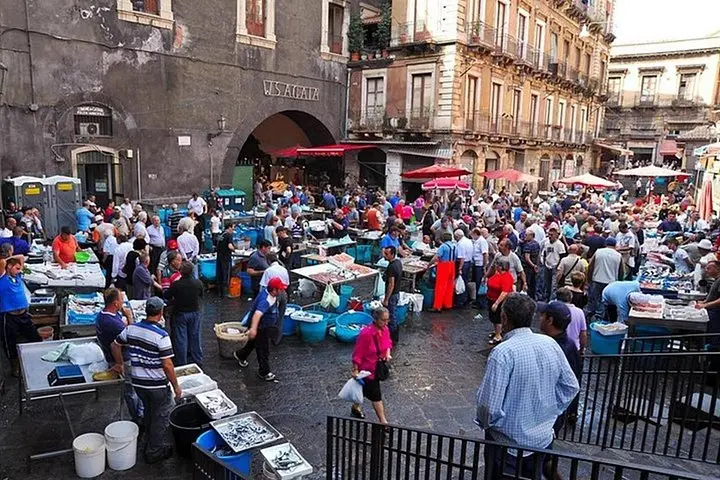
You start the day in Catania before the tourist crowds arrive, the plaza still cool under the shadow of its lava-stone elephant statue and the cathedral’s black and white facades. The city’s street grid feels lived-in: market calls, espresso steam, and the slow grit of a port town shaped by eruptions.
You start the day in Catania before the tourist crowds arrive, the plaza still cool under the shadow of its lava-stone elephant statue and the cathedral’s black and white facades. The city’s street grid feels lived-in: market calls, espresso steam, and the slow grit of a port town shaped by eruptions.
From there the road climbs; the urban limestone gives way to the rough, dark language of lava fields. Mount Etna’s slopes unfold in bands — vineyards and chestnut woods at low elevations, then slabby ʻaʻā and pahoehoe flows, and finally the jagged rims of extinct craters around 2,000 m. Geologically, Etna is one of Europe’s most active stratovolcanoes, a place where sulfur-stained vents and recent lava flows tell a visible history of eruptions. Culturally, Sicily’s relationship with Etna stretches from ancient Greek myths of Hephaestus to Baroque rebuilds in Catania after past eruptions.
The guided trek visits extinct craters and a short volcanic cave; helmets and torches are supplied. Expect uneven, rocky terrain and short steep pitches rather than long alpine approaches. You’ll learn to read lava textures and spot biozones where pioneer plants recolonize fresh rock.
Practical guidance: wear sturdy hiking shoes, layer for wind and sun, and carry at least 1–2 liters of water. If you go in winter, road access may be lower and conditions can be icy — tour operators adjust routes accordingly. Photography windows open on the ascent; plan your light and turn your pace into a rhythm that matches the mountain’s cadence.