THE ADVENTURE COLLECTIVE® · Independent discovery and booking for outdoor travel

Spend a full day tracing Cathar history from the arcaded square of Mirepoix to the exposed ruins of Montségur and the rose‑lined lanes of Camon. This private Carcassonne departure blends a steep castle hike with village walks and local tasting stops.
Spend a full day tracing Cathar history from the arcaded square of Mirepoix to the exposed ruins of Montségur and the rose‑lined lanes of Camon. This private Carcassonne departure blends a steep castle hike with village walks and local tasting stops.
You start the day leaving Carcassonne as the road unfurls into rolling foothills; vineyards and chestnut woods blur past while the Pyrenean fringe looms ahead.
Verified experiences and guided adventures in the surrounding area.
Operated by Olivia Gotti · Carcassonne, Occitanie
You start the day leaving Carcassonne as the road unfurls into rolling foothills; vineyards and chestnut woods blur past while the Pyrenean fringe looms ahead.
First light falls on Mirepoix’s market square — a living medieval set where timbered houses lean over covered arcades and the cobbles still remember horse hooves. The tour then climbs toward Château de Montségur, the Cathar stronghold that crowns a limestone mound. The approach is short but steep: expect about 1–1.5 km one-way with roughly 250–350 m of ascent on rocky, sometimes loose terrain, where wind often pushes you toward the parapet and the ruins stare back across the Ariège valleys.
Camon closes the loop with narrow lanes lined with roses and a quiet abbey founded in the 10th century; the village preserves rural Occitan ways more than commerce. Geology here is primarily limestone and marl — karst ridges that channel water into hidden springs and shape the steep trails. The Cathar siege of the 13th century left both legend and burned stones at Montségur; local winemakers and bakers still follow centuries-old practices.
Practical guidance: wear sturdy boots, bring 1–2 liters of water, and plan for a 9–10 hour day including drives. The Montségur climb is exposed in places; use trekking poles if you have them. Lunch is typically a village meal — bookending history with regional cuisine. The route suits fit walkers comfortable with sustained uphill, and the private format means the guide will pace the hikes and manage entry to sites and a tasting stop in season.
The trail from the village to the ruins is roughly 1–1.5 km one-way with about 250–350 m of elevation gain; expect 30–60 minutes each way depending on pace.
The village visits are accessible, but the Montségur climb is steep and not recommended for people with limited mobility or recent heart conditions; the operator can adapt the day to skip the summit.
The listing states entrance fees to Montségur and a wine tasting are included—confirm specific inclusions at booking and whether any meals are covered.
Bring cash or card for local purchases, a comfortable daypack, water, and weather-appropriate clothing; lunch is typically a village restaurant or picnic arranged by the guide.
Olivia Gotti operates guided outdoor trips and adventures with an emphasis on safety, stewardship, and memorable experiences.
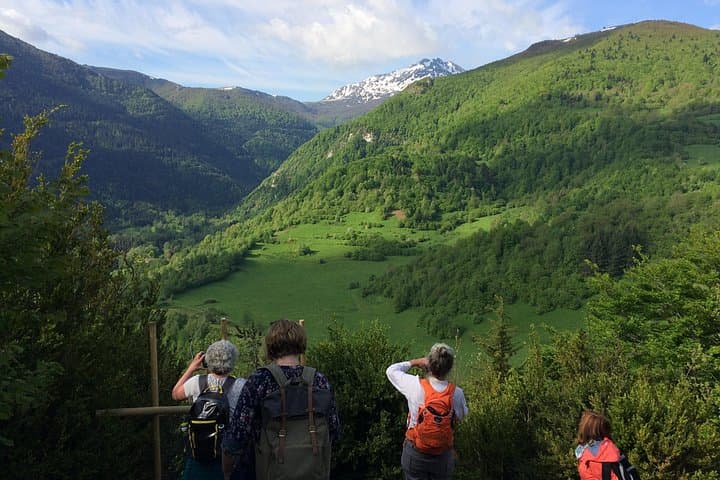


You start the day leaving Carcassonne as the road unfurls into rolling foothills; vineyards and chestnut woods blur past while the Pyrenean fringe looms ahead.
You start the day leaving Carcassonne as the road unfurls into rolling foothills; vineyards and chestnut woods blur past while the Pyrenean fringe looms ahead.
First light falls on Mirepoix’s market square — a living medieval set where timbered houses lean over covered arcades and the cobbles still remember horse hooves. The tour then climbs toward Château de Montségur, the Cathar stronghold that crowns a limestone mound. The approach is short but steep: expect about 1–1.5 km one-way with roughly 250–350 m of ascent on rocky, sometimes loose terrain, where wind often pushes you toward the parapet and the ruins stare back across the Ariège valleys.
Camon closes the loop with narrow lanes lined with roses and a quiet abbey founded in the 10th century; the village preserves rural Occitan ways more than commerce. Geology here is primarily limestone and marl — karst ridges that channel water into hidden springs and shape the steep trails. The Cathar siege of the 13th century left both legend and burned stones at Montségur; local winemakers and bakers still follow centuries-old practices.
Practical guidance: wear sturdy boots, bring 1–2 liters of water, and plan for a 9–10 hour day including drives. The Montségur climb is exposed in places; use trekking poles if you have them. Lunch is typically a village meal — bookending history with regional cuisine. The route suits fit walkers comfortable with sustained uphill, and the private format means the guide will pace the hikes and manage entry to sites and a tasting stop in season.