THE ADVENTURE COLLECTIVE® · Independent discovery and booking for outdoor travel

Three days of mountain biking through the Caucasus, from Truso Valley’s travertine basins to a 3,014 m high climb above Kazbegi. Expect long gravel climbs, glacier views, and comfortable guesthouse stays along the way.
Three days of mountain biking through the Caucasus, from Truso Valley’s travertine basins to a 3,014 m high climb above Kazbegi. Expect long gravel climbs, glacier views, and comfortable guesthouse stays along the way.
The first pedal stroke leaves Tbilisi’s river valley behind and climbs toward a sky that feels closer in the high Caucasus. Gravel loosens under tire, wind sharpens the alpine air, and the jagged ridgelines of Kazbegi push toward the horizon. Riders move through Truso’s colorful travertine basins, push on to high cols with glacier views, and descend toward villages held fast by centuries of mountain weather.
Verified experiences and guided adventures in the surrounding area.
Operated by Biketours.ge · Stepantsminda, Mtskheta-Mtianeti
The first pedal stroke leaves Tbilisi’s river valley behind and climbs toward a sky that feels closer in the high Caucasus. Gravel loosens under tire, wind sharpens the alpine air, and the jagged ridgelines of Kazbegi push toward the horizon. Riders move through Truso’s colorful travertine basins, push on to high cols with glacier views, and descend toward villages held fast by centuries of mountain weather.
The route follows sections of the historic Georgian Military Road, a corridor that has linked Georgia and the North Caucasus for millennia. Geology here is dramatic: volcanic and metamorphic uplifts cut by glacial valleys, with scree and compacted gravel on the higher approaches. Local culture is rooted in highland hospitality — guesthouses and small hotels provide warm meals and a place to dry gear.
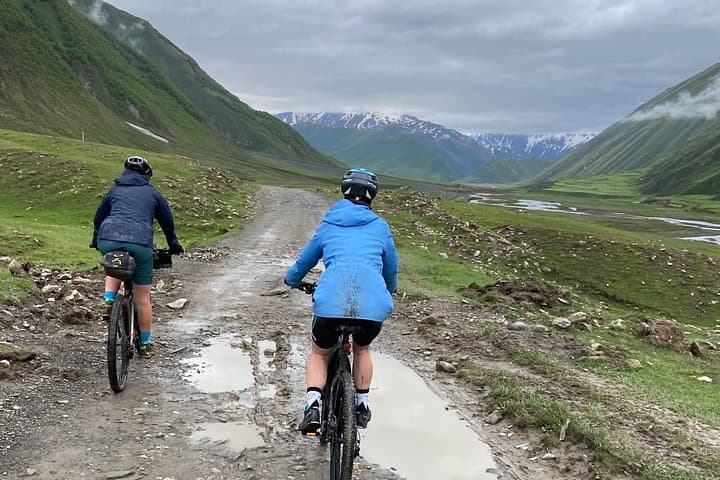
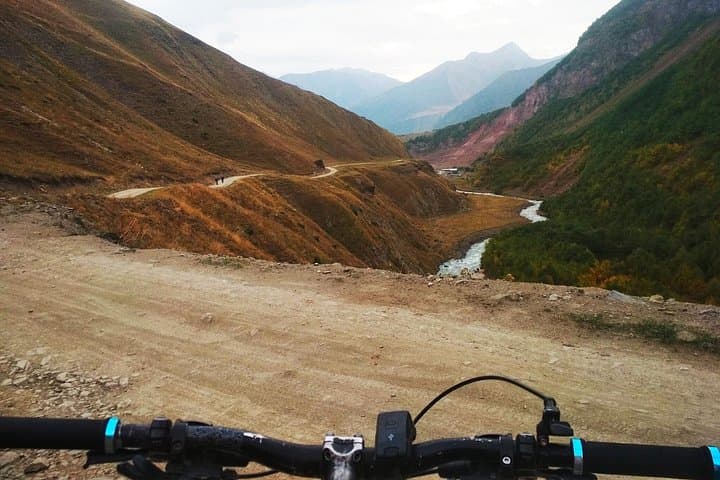
Expect mixed terrain: gravel tracks, occasional asphalt connectors, steep switchbacks and long descents. Altitudes reach roughly 3,014 m on the high ride, so weather can swing from sun to wind-driven rain in hours. Guides provide bikes, helmets and route knowledge; riders should supply technical confidence and endurance for long climbs and fast descents.
Practical takeaways: time your weekend for stable weather, pack layering and puncture repair, and allow extra time for narrow passes and photo stops. Hydrate and eat steadily — the climbs are sustained and the views reward every effort.
Yes — the tour includes use of a bicycle and helmet; confirm bike style and sizing with the operator before arrival.
Days vary from easy–medium to difficult: expect 30–52 km with up to 1,200 m elevation gain on the toughest day.
A short acclimatization in Stepantsminda helps, especially before the 3,014 m ascent; take it easy on arrival day if you’ve come from low elevation.
Full refund available if cancelled at least 24 hours before departure; check the operator for weather-related changes.
Biketours.ge operates guided outdoor trips and adventures with an emphasis on safety, stewardship, and memorable experiences.
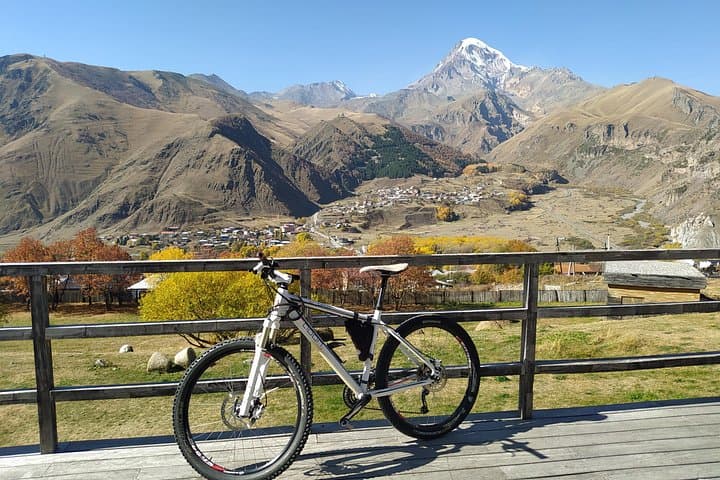
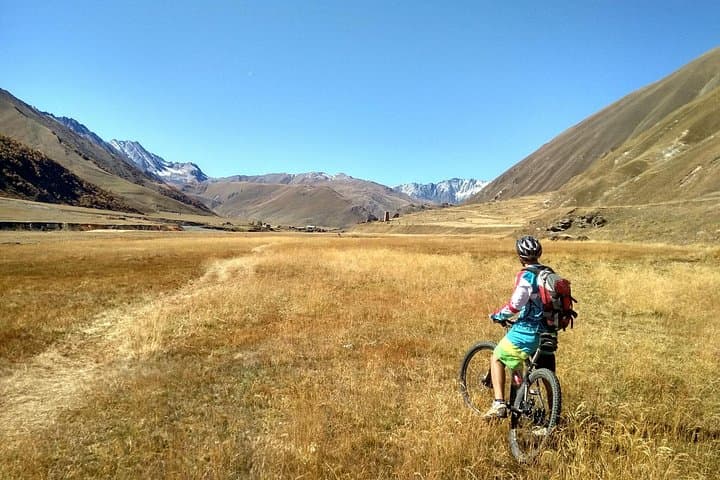
The first pedal stroke leaves Tbilisi’s river valley behind and climbs toward a sky that feels closer in the high Caucasus. Gravel loosens under tire, wind sharpens the alpine air, and the jagged ridgelines of Kazbegi push toward the horizon. Riders move through Truso’s colorful travertine basins, push on to high cols with glacier views, and descend toward villages held fast by centuries of mountain weather.
The first pedal stroke leaves Tbilisi’s river valley behind and climbs toward a sky that feels closer in the high Caucasus. Gravel loosens under tire, wind sharpens the alpine air, and the jagged ridgelines of Kazbegi push toward the horizon. Riders move through Truso’s colorful travertine basins, push on to high cols with glacier views, and descend toward villages held fast by centuries of mountain weather.
The route follows sections of the historic Georgian Military Road, a corridor that has linked Georgia and the North Caucasus for millennia. Geology here is dramatic: volcanic and metamorphic uplifts cut by glacial valleys, with scree and compacted gravel on the higher approaches. Local culture is rooted in highland hospitality — guesthouses and small hotels provide warm meals and a place to dry gear.
Expect mixed terrain: gravel tracks, occasional asphalt connectors, steep switchbacks and long descents. Altitudes reach roughly 3,014 m on the high ride, so weather can swing from sun to wind-driven rain in hours. Guides provide bikes, helmets and route knowledge; riders should supply technical confidence and endurance for long climbs and fast descents.
Practical takeaways: time your weekend for stable weather, pack layering and puncture repair, and allow extra time for narrow passes and photo stops. Hydrate and eat steadily — the climbs are sustained and the views reward every effort.