THE ADVENTURE COLLECTIVE® · Independent discovery and booking for outdoor travel

Float through shafts of light and ancient rock on a two-tank cenote dive from Tulum. This guided day trip combines Casa Cenote’s openwater entry with the cavern corridors of Dos Ojos—ideal for certified divers wanting dramatic formations and the surreal halocline effect.
Float through shafts of light and ancient rock on a two-tank cenote dive from Tulum. This guided day trip combines Casa Cenote’s openwater entry with the cavern corridors of Dos Ojos—ideal for certified divers wanting dramatic formations and the surreal halocline effect.
You climb down a wooden ladder into a cathedral of light—slashes of sun through jungle canopy turning the water to glassy turquoise. The air smells of damp limestone and leaves, and the first breath underwater is an odd, quiet astonishment: columns of rock loom above, stalactites reach like frozen fingers, and faint currents fold a silver veil where fresh water meets salt in a halocline.
Verified experiences and guided adventures in the surrounding area.
Operated by La Calypso Dive Center · Tulum, Quintana Roo
You climb down a wooden ladder into a cathedral of light—slashes of sun through jungle canopy turning the water to glassy turquoise. The air smells of damp limestone and leaves, and the first breath underwater is an odd, quiet astonishment: columns of rock loom above, stalactites reach like frozen fingers, and faint currents fold a silver veil where fresh water meets salt in a halocline.
This two-tank cenote dive from Tulum pairs an open-air entrance at Casa Cenote with the cavern corridors of Dos Ojos. Both sites are part of the Yucatán’s vast karst system, a landscape carved by rainwater over millions of years into underground rivers and sinkholes. Cenotes were freshwater lifelines for the Maya and held ritual significance—many contain fossils and bone deposits that trace human and animal histories in the region.
Geology here is a slow, visible process: limestone dissolves into caves, columns form where stalactites and stalagmites meet, and the halocline—where fresh groundwater overlays denser salt water—creates a shimmering, surreal boundary that seems to move with your light. Biologically, these caverns host caves shrimp, blind crustaceans, and in daytime pockets, bats resting in dark recesses that rattle awake at dusk.
The tour meets at a small dive center in Tulum town (GPS provided), and includes round-trip transport to the sites, full scuba gear, 5mm wetsuits, dive lights, experienced instructors, and entrance fees. Expect about 5 hours total: briefing, surface intervals, two ~40-minute dives, and transit. Guides prioritize safety and stick to cavern limits—there’s permanent visual contact with natural light and easy exit points.
Practicalities: you must show current open-water certification and complete a health questionnaire. Diving is not recommended for pregnant travelers, people with significant cardiovascular issues, or recent fliers (avoid flying within 12 hours after diving). Dress for tropical weather—a rashguard over your suit makes surface time more comfortable, and biodegradable sunscreen protects fragile underwater ecosystems.
Timing matters: morning light accentuates the halocline and interior shafts at Dos Ojos; later in the day you’ll still see impressive formations but softer contrasts. Bring a dive computer and a fresh mask—equipment is provided, but personal fit matters underwater. Photography requires a steady, low-impact approach; remember that flash and fin kicks can disturb sediments and bat colonies.
This is an accessible yet unforgettable intro to cavern diving: technical enough to feel like a serious dive, but managed so the focus stays on the rock, the light, and the rare sensation of moving through a buried, living world beneath the jungle.
Yes—these dives require at least Open Water certification and presentation of your certification card before boarding.
Each cenote dive is approximately 40 minutes, allowing for two tanks total with surface intervals included in the five-hour schedule.
Yes—full scuba gear, lights, and 5mm wetsuits are included, though you may bring personal items like a mask or computer.
This specific tour is for certified divers only; non-certified guests should book introductory snorkel or guided baptism dives offered separately.
Guides adhere to cavern diving limits—there’s always natural light and accessible exits; no penetration beyond line-of-sight is permitted.
Do not fly for at least 12 hours after your last dive to reduce risk of decompression sickness.
La Calypso Dive Center operates guided outdoor trips and adventures with an emphasis on safety, stewardship, and memorable experiences.

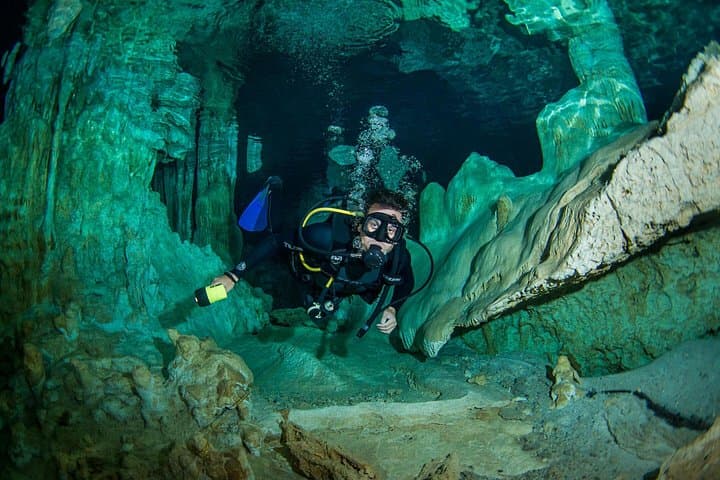


You climb down a wooden ladder into a cathedral of light—slashes of sun through jungle canopy turning the water to glassy turquoise. The air smells of damp limestone and leaves, and the first breath underwater is an odd, quiet astonishment: columns of rock loom above, stalactites reach like frozen fingers, and faint currents fold a silver veil where fresh water meets salt in a halocline.
You climb down a wooden ladder into a cathedral of light—slashes of sun through jungle canopy turning the water to glassy turquoise. The air smells of damp limestone and leaves, and the first breath underwater is an odd, quiet astonishment: columns of rock loom above, stalactites reach like frozen fingers, and faint currents fold a silver veil where fresh water meets salt in a halocline.
This two-tank cenote dive from Tulum pairs an open-air entrance at Casa Cenote with the cavern corridors of Dos Ojos. Both sites are part of the Yucatán’s vast karst system, a landscape carved by rainwater over millions of years into underground rivers and sinkholes. Cenotes were freshwater lifelines for the Maya and held ritual significance—many contain fossils and bone deposits that trace human and animal histories in the region.
Geology here is a slow, visible process: limestone dissolves into caves, columns form where stalactites and stalagmites meet, and the halocline—where fresh groundwater overlays denser salt water—creates a shimmering, surreal boundary that seems to move with your light. Biologically, these caverns host caves shrimp, blind crustaceans, and in daytime pockets, bats resting in dark recesses that rattle awake at dusk.
The tour meets at a small dive center in Tulum town (GPS provided), and includes round-trip transport to the sites, full scuba gear, 5mm wetsuits, dive lights, experienced instructors, and entrance fees. Expect about 5 hours total: briefing, surface intervals, two ~40-minute dives, and transit. Guides prioritize safety and stick to cavern limits—there’s permanent visual contact with natural light and easy exit points.
Practicalities: you must show current open-water certification and complete a health questionnaire. Diving is not recommended for pregnant travelers, people with significant cardiovascular issues, or recent fliers (avoid flying within 12 hours after diving). Dress for tropical weather—a rashguard over your suit makes surface time more comfortable, and biodegradable sunscreen protects fragile underwater ecosystems.
Timing matters: morning light accentuates the halocline and interior shafts at Dos Ojos; later in the day you’ll still see impressive formations but softer contrasts. Bring a dive computer and a fresh mask—equipment is provided, but personal fit matters underwater. Photography requires a steady, low-impact approach; remember that flash and fin kicks can disturb sediments and bat colonies.
This is an accessible yet unforgettable intro to cavern diving: technical enough to feel like a serious dive, but managed so the focus stays on the rock, the light, and the rare sensation of moving through a buried, living world beneath the jungle.