THE ADVENTURE COLLECTIVE® · Independent discovery and booking for outdoor travel

Explore cavern-cut passages and sunlit shafts on a guided two‑tank cenote dive near Playa del Carmen. Small groups and permanent guide lines make this an approachable cave-style experience for certified divers who prioritize safety and photography rules.
Explore cavern-cut passages and sunlit shafts on a guided two‑tank cenote dive near Playa del Carmen. Small groups and permanent guide lines make this an approachable cave-style experience for certified divers who prioritize safety and photography rules.
Wet stone and filtered light set the stage before your first breath underwater: a shaft of sun punctures the cenote ceiling, and a green-blue cathedral opens beneath you. Small groups move slowly along permanent guideline as stalactites and delicate flowstone loom like architecture carved over millennia.
Verified experiences and guided adventures in the surrounding area.
Operated by Scuba Mobile Dive Center · Playa del Carmen, Quintana Roo
Wet stone and filtered light set the stage before your first breath underwater: a shaft of sun punctures the cenote ceiling, and a green-blue cathedral opens beneath you. Small groups move slowly along permanent guideline as stalactites and delicate flowstone loom like architecture carved over millennia.
These cenotes are sinkholes carved into the Yucatán’s limestone by groundwater and time. Maya communities treated many cenotes as sacred freshwater sources; today divers follow established routes through caverns and large haloclines where fresh water meets denser seawater. Geology here is karst—porous rock riddled with tunnels—so visibility can be exceptional and depths moderate: typical guided cavern dives stay to about 15 m (50 ft) on permanent lines.
Expect two 40–50 minute dives separated by a 30–45 minute surface interval with snacks and water provided. Guides are full cave-qualified instructors who brief on line technique, light discipline and camera rules—some sites restrict or charge for photography. Small group size (max 4 divers per guide) keeps the experience focused and conserves the fragile formations.
Practical edge: bring your certification card, logbook and a primary mask you trust; practice neutral buoyancy before arrival; follow your guide’s line protocols and do not touch formations. Weather affects transport more than visibility—conditions are best outside peak hurricane season—and local operators emphasize rinsing gear and avoiding sunscreens that wash into freshwater systems.
A cenote dive is technical in mindset but accessible in skill: it rewards slow, attentive diving and a respect for a subterranean world that feels both ancient and immediate.
No—these are guided cavern dives using permanent lines and staying within daylight zones, but you must be at least Open Water certified and have recent diving experience.
Guided cenote cavern dives for this trip keep depths to about 15 m (50 ft), with typical bottom times of 40–50 minutes per dive.
Policies vary by cenote—some sites ban cameras, others charge a fee (commonly US$20–60); confirm with the operator before your trip.
Visibility is often excellent in cenotes due to minimal surface runoff; water is typically cooler than the Caribbean (bring a shorty wetsuit) and haloclines may create visual layers you’ll notice during the dive.
Scuba Mobile Dive Center operates guided outdoor trips and adventures with an emphasis on safety, stewardship, and memorable experiences.
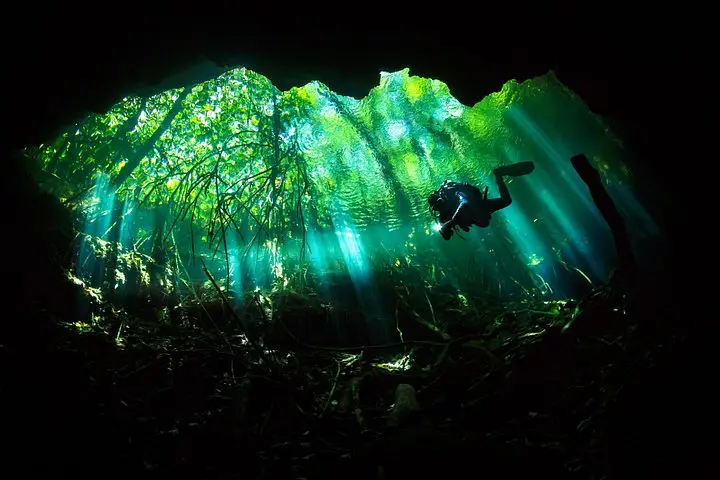
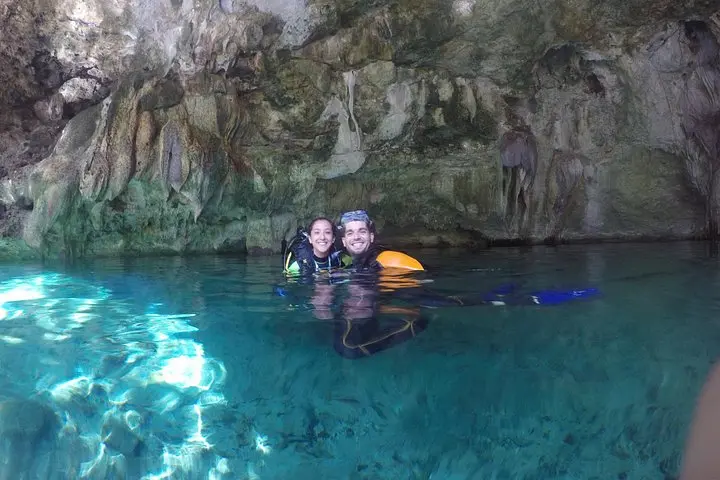
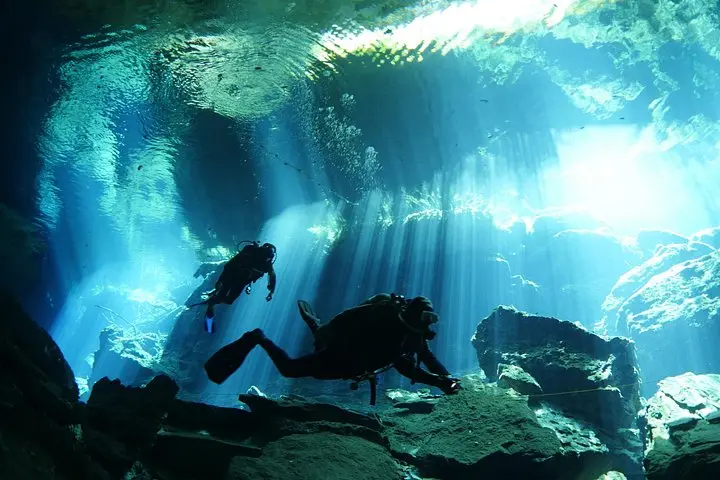
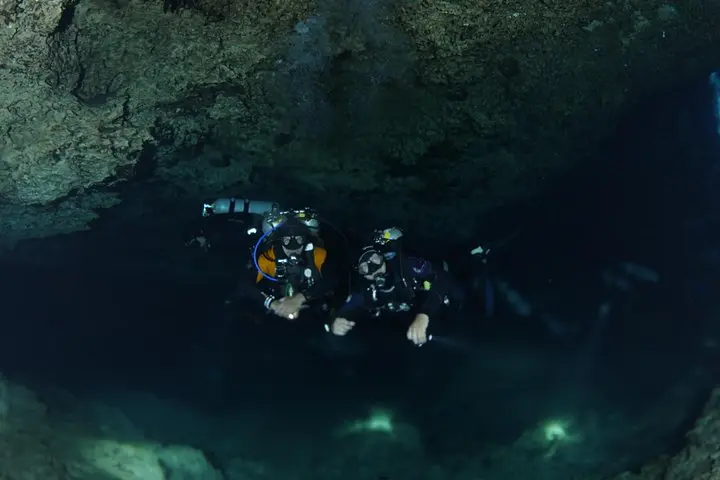
Wet stone and filtered light set the stage before your first breath underwater: a shaft of sun punctures the cenote ceiling, and a green-blue cathedral opens beneath you. Small groups move slowly along permanent guideline as stalactites and delicate flowstone loom like architecture carved over millennia.
Wet stone and filtered light set the stage before your first breath underwater: a shaft of sun punctures the cenote ceiling, and a green-blue cathedral opens beneath you. Small groups move slowly along permanent guideline as stalactites and delicate flowstone loom like architecture carved over millennia.
These cenotes are sinkholes carved into the Yucatán’s limestone by groundwater and time. Maya communities treated many cenotes as sacred freshwater sources; today divers follow established routes through caverns and large haloclines where fresh water meets denser seawater. Geology here is karst—porous rock riddled with tunnels—so visibility can be exceptional and depths moderate: typical guided cavern dives stay to about 15 m (50 ft) on permanent lines.
Expect two 40–50 minute dives separated by a 30–45 minute surface interval with snacks and water provided. Guides are full cave-qualified instructors who brief on line technique, light discipline and camera rules—some sites restrict or charge for photography. Small group size (max 4 divers per guide) keeps the experience focused and conserves the fragile formations.
Practical edge: bring your certification card, logbook and a primary mask you trust; practice neutral buoyancy before arrival; follow your guide’s line protocols and do not touch formations. Weather affects transport more than visibility—conditions are best outside peak hurricane season—and local operators emphasize rinsing gear and avoiding sunscreens that wash into freshwater systems.
A cenote dive is technical in mindset but accessible in skill: it rewards slow, attentive diving and a respect for a subterranean world that feels both ancient and immediate.