THE ADVENTURE COLLECTIVE® · Independent discovery and booking for outdoor travel

Spend a private day in central Bali chasing two contrasting falls — the playful tiers of Kanto Lampo and the secluded curtain of Tibumana — with stops at Barong dance performances, Goa Gajah and artisan villages. This eight-to-ten-hour loop balances cultural immersion with splash-ready swimming and straightforward hiking.
Spend a private day in central Bali chasing two contrasting falls — the playful tiers of Kanto Lampo and the secluded curtain of Tibumana — with stops at Barong dance performances, Goa Gajah and artisan villages. This eight-to-ten-hour loop balances cultural immersion with splash-ready swimming and straightforward hiking.
Morning light threads through palm fronds as the van pulls away from Ubud’s quieter lanes, and the first sound that intrudes is water — steady, insistent, already daring the day. On this private eight-to-ten-hour circuit, Bali’s central highlands reveal themselves in quick, layered scenes: a ceremonial courtyard where Barong and Keris battle the day’s shadows, a lacquered goldsmith’s bench in Celuk, the carved mouth of Goa Gajah, and then the sudden plunge of two different waterfalls, each with its own temperament.
Verified experiences and guided adventures in the surrounding area.
Operated by Bali Vacation Driver - private Day Tours · Ubud, Bali
Morning light threads through palm fronds as the van pulls away from Ubud’s quieter lanes, and the first sound that intrudes is water — steady, insistent, already daring the day. On this private eight-to-ten-hour circuit, Bali’s central highlands reveal themselves in quick, layered scenes: a ceremonial courtyard where Barong and Keris battle the day’s shadows, a lacquered goldsmith’s bench in Celuk, the carved mouth of Goa Gajah, and then the sudden plunge of two different waterfalls, each with its own temperament.
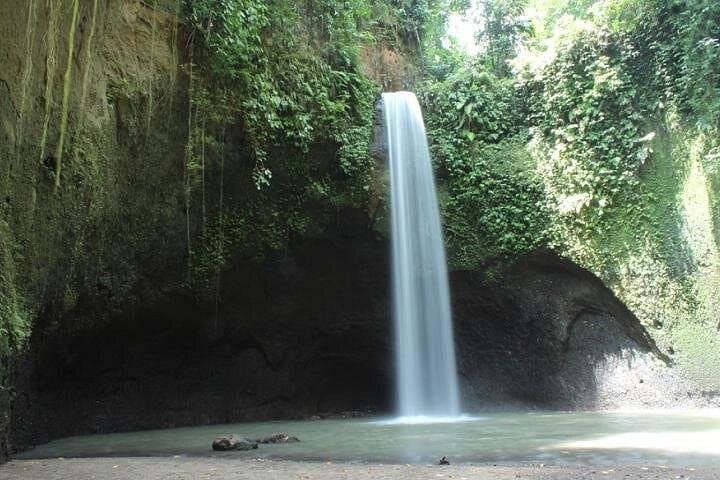
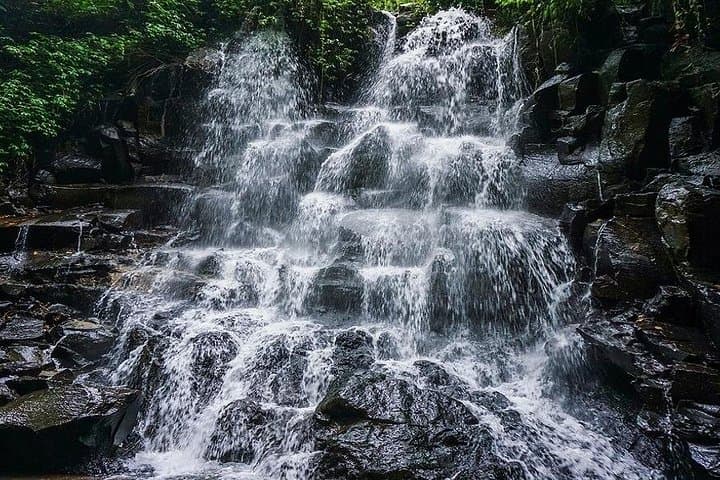
Kanto Lampo greets visitors like a laughing colleague; the stream steps down a series of ledges, encouraging you to climb in and feel the current. Tibumana is quieter, a curtain of water that drops into a green pool sheltered by a narrow gorge. Both falls were shaped by rivers slicing through volcanic bedrock, carrying ash and lava deposits downstream to build the terraces and gullies that define Gianyar and Bangli regencies. The area’s geology is still readable: dark andesite cliffs, river-sculpted basins, and the occasional limestone outcrop holding pockets of rice fields.
Cultural threads run close to the trail. The Barong and Keris dance — performed early in the day on this itinerary — dramatizes the island’s cosmology of balance: fight and reconciliation, danger and protection. Nearby villages in Celuk and Batuan maintain crafts and temple rites that have governed daily life for centuries; Goa Gajah’s 11th-century origins remind visitors that this landscape has been sacred long before it became picturesque.
Practically speaking, this is an accessible day: paths are short but steep in places, and some sections are wet and slick. Expect wading over river rocks and stepping on carved steps near temple platforms. Entrance fees and lunch are not included; bring cash, at least IDR 200,000 per person for food and small purchases. Swap sneakers for water shoes or sturdy sandals for the falls, and keep a dry bag for electronics — the mist travels. Guides will handle logistics and hotel pickup across the south, and the private-vehicle format means you’ll move at a comfortable pace.
Conservation here is tangible: local fees help maintain trails and toilets, and guides discourage cliff jumping and feeding wildlife. Respect temple protocols — a sarong is usually required — and leave no trace: the jungle recovers slowly under heavy foot traffic.
At day’s end the van eases back toward Ubud with damp towels and quieter voices. The twin falls remain active even as light fades: an elemental reminder that in Bali the next turn in the road is often the next story.
Yes, both falls have pools suitable for swimming, but supervise children, avoid strong currents after heavy rain, and heed local guidance on safe areas.
No — lunch and entrance fees are not included; plan to bring cash for a warung meal and any temple donations.
Yes — the tour offers hotel pickup across southern Bali and Ubud; confirm your pickup point at booking.
The provider advises this tour is not recommended for pregnant travelers or people with serious back or heart conditions due to vehicle transfers and slippery terrain.
Some temple areas require modest dress; guides often provide sarongs or can point you to where to rent one at the site.
Expect short drives of 20–60 minutes between cultural stops and waterfalls depending on traffic; the full itinerary runs 8–10 hours including stops.
Bali Vacation Driver - private Day Tours operates guided outdoor trips and adventures with an emphasis on safety, stewardship, and memorable experiences.
Morning light threads through palm fronds as the van pulls away from Ubud’s quieter lanes, and the first sound that intrudes is water — steady, insistent, already daring the day. On this private eight-to-ten-hour circuit, Bali’s central highlands reveal themselves in quick, layered scenes: a ceremonial courtyard where Barong and Keris battle the day’s shadows, a lacquered goldsmith’s bench in Celuk, the carved mouth of Goa Gajah, and then the sudden plunge of two different waterfalls, each with its own temperament.
Morning light threads through palm fronds as the van pulls away from Ubud’s quieter lanes, and the first sound that intrudes is water — steady, insistent, already daring the day. On this private eight-to-ten-hour circuit, Bali’s central highlands reveal themselves in quick, layered scenes: a ceremonial courtyard where Barong and Keris battle the day’s shadows, a lacquered goldsmith’s bench in Celuk, the carved mouth of Goa Gajah, and then the sudden plunge of two different waterfalls, each with its own temperament.
Kanto Lampo greets visitors like a laughing colleague; the stream steps down a series of ledges, encouraging you to climb in and feel the current. Tibumana is quieter, a curtain of water that drops into a green pool sheltered by a narrow gorge. Both falls were shaped by rivers slicing through volcanic bedrock, carrying ash and lava deposits downstream to build the terraces and gullies that define Gianyar and Bangli regencies. The area’s geology is still readable: dark andesite cliffs, river-sculpted basins, and the occasional limestone outcrop holding pockets of rice fields.
Cultural threads run close to the trail. The Barong and Keris dance — performed early in the day on this itinerary — dramatizes the island’s cosmology of balance: fight and reconciliation, danger and protection. Nearby villages in Celuk and Batuan maintain crafts and temple rites that have governed daily life for centuries; Goa Gajah’s 11th-century origins remind visitors that this landscape has been sacred long before it became picturesque.
Practically speaking, this is an accessible day: paths are short but steep in places, and some sections are wet and slick. Expect wading over river rocks and stepping on carved steps near temple platforms. Entrance fees and lunch are not included; bring cash, at least IDR 200,000 per person for food and small purchases. Swap sneakers for water shoes or sturdy sandals for the falls, and keep a dry bag for electronics — the mist travels. Guides will handle logistics and hotel pickup across the south, and the private-vehicle format means you’ll move at a comfortable pace.
Conservation here is tangible: local fees help maintain trails and toilets, and guides discourage cliff jumping and feeding wildlife. Respect temple protocols — a sarong is usually required — and leave no trace: the jungle recovers slowly under heavy foot traffic.
At day’s end the van eases back toward Ubud with damp towels and quieter voices. The twin falls remain active even as light fades: an elemental reminder that in Bali the next turn in the road is often the next story.