THE ADVENTURE COLLECTIVE® · Independent discovery and booking for outdoor travel

Follow a river through volcanic steps to four of the famed Tamarind Falls, stroll an arboretum of giant vines, and close the day at the sacred crater lake of Grand Bassin—an accessible, full-day look at Mauritius’s wild heart.
Follow a river through volcanic steps to four of the famed Tamarind Falls, stroll an arboretum of giant vines, and close the day at the sacred crater lake of Grand Bassin—an accessible, full-day look at Mauritius’s wild heart.
The first time you step off the minivan onto the trailhead the forest inhales around you — humid, green, alive. Water talks here: a braided stream calls from below and the distant cataracts of Tamarind Falls dare you to follow their sound. Over the next six to eight hours a local guide leads you through fern-shaded tracks, across slippery river stones, and up mossy switchbacks to four of the seven cascades that give the place its reputation.
Verified experiences and guided adventures in the surrounding area.
Operated by Mauritius Adventours · Curepipe, Plaines Wilhems
The first time you step off the minivan onto the trailhead the forest inhales around you — humid, green, alive. Water talks here: a braided stream calls from below and the distant cataracts of Tamarind Falls dare you to follow their sound. Over the next six to eight hours a local guide leads you through fern-shaded tracks, across slippery river stones, and up mossy switchbacks to four of the seven cascades that give the place its reputation.
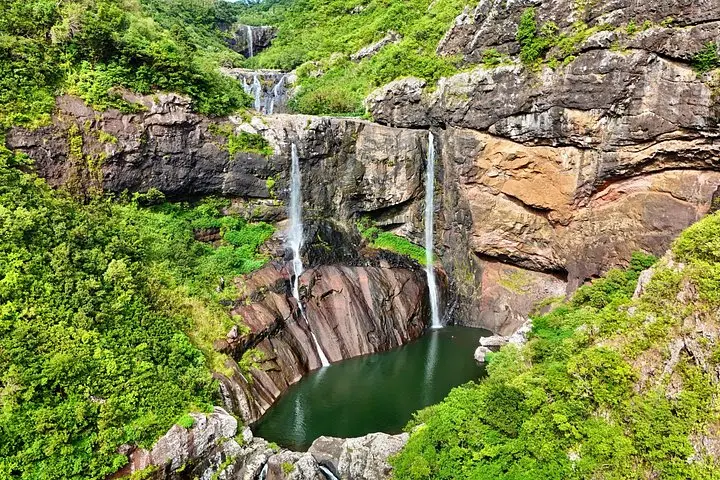
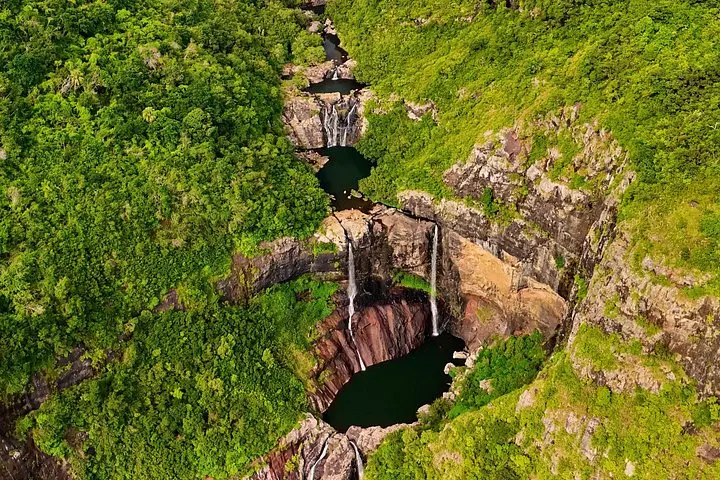
This route stitches together three distinct landscapes. The falls cut through basalt beds laid down by volcanic activity millions of years ago; erosion carved the stepped drops and deep plunge pools you’ll pass. The arboretum in the national forest is a different world—vines the size of trunks twist around ancient trees, evidence of the island’s unique evolutionary path when isolation let oddities flourish. The day finishes at Grand Bassin — a crater lake converted into a living shrine where towering Hindu deities overlook pilgrims and offer a quieter cultural counterpoint to the raw, wet drama of the waterfalls.
Mauritius’s central plateau has long been more than scenery. Grand Bassin (Ganga Talao) is a center for Maha Shivaratri pilgrimage, and the statues that rise from the crater rim are products of modern devotion grafted onto geologic time. Along the way you’ll encounter local flora — ebony, takamaka, and endemic palms — and potentially the island’s characteristic flying foxes wheeling at dusk.
Practicalities are straightforward but matter. The guided itinerary covers uneven terrain, short river crossings, and sections of loose volcanic rock; expect roughly 6–8 km of hiking cumulative, with intermittent climbs (est. total ascent ~250–450 m). Trails can be wet and slick; good grip and ankle support are important. Wear sturdy trail shoes, bring 1–2 liters of water (refill opportunities are limited), insect repellent, and a quick-dry layer for humid spells. The guide handles logistics and lunch, but carry a small daypack for camera, sunscreen, and a light rain shell.
Timing tip: start early to catch the cool morning light at the falls and avoid the heat at Grand Bassin. Respect the temple: remove hats or shoes if instructed, and treat offerings and shrines with deference.
For travelers who want a single-day immersion into Mauritius’s geology, biodiversity, and living culture, this loop delivers. It’s not extreme mountaineering, but it rewards steady pace and curiosity with wetlands, waterfalls, and a crater lake that holds both natural calm and human meaning.
The full guided day runs 6–8 hours with several short climbs and river crossings; it’s rated moderate and requires a steady pace and basic trail fitness.
Families are welcome, but this tour isn’t recommended for those with serious back, heart, or pregnancy restrictions; children should be able to handle uneven terrain.
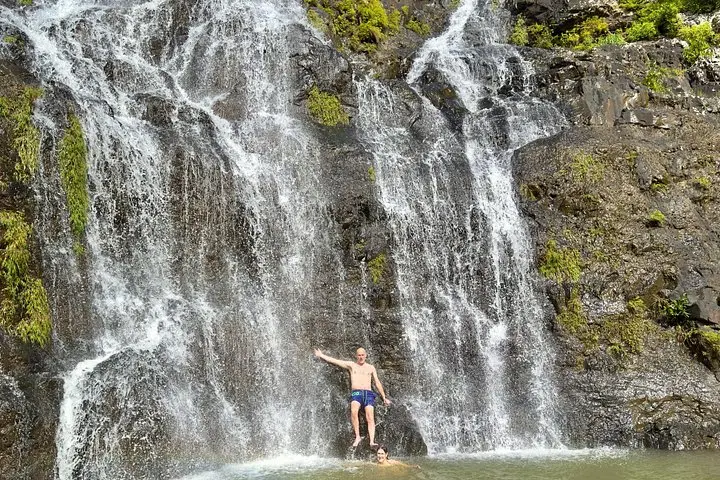
Swimming may be possible at some pools but always follow your guide’s advice — currents and water quality vary, and some areas are unsafe or culturally sensitive.
Grand Bassin is a sacred site—avoid loud behavior, ask before photographing worshippers, and follow any instructions about removing shoes or covering shoulders if requested.
Quick-dry, moisture-wicking clothing, sturdy closed-toe shoes, and a light rain layer are best; bring a hat and sunglasses for exposed sections.
Yes — the tour includes lunch and bottled water, but bring snacks and personal water if you prefer extras.
Mauritius Adventours operates guided outdoor trips and adventures with an emphasis on safety, stewardship, and memorable experiences.
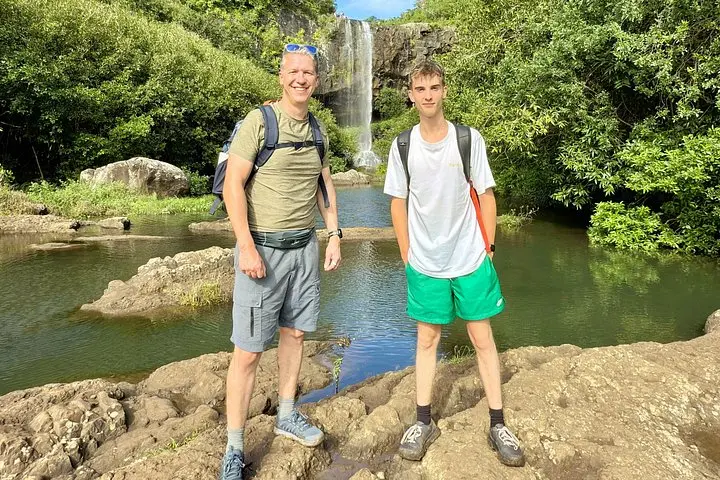
The first time you step off the minivan onto the trailhead the forest inhales around you — humid, green, alive. Water talks here: a braided stream calls from below and the distant cataracts of Tamarind Falls dare you to follow their sound. Over the next six to eight hours a local guide leads you through fern-shaded tracks, across slippery river stones, and up mossy switchbacks to four of the seven cascades that give the place its reputation.
The first time you step off the minivan onto the trailhead the forest inhales around you — humid, green, alive. Water talks here: a braided stream calls from below and the distant cataracts of Tamarind Falls dare you to follow their sound. Over the next six to eight hours a local guide leads you through fern-shaded tracks, across slippery river stones, and up mossy switchbacks to four of the seven cascades that give the place its reputation.
This route stitches together three distinct landscapes. The falls cut through basalt beds laid down by volcanic activity millions of years ago; erosion carved the stepped drops and deep plunge pools you’ll pass. The arboretum in the national forest is a different world—vines the size of trunks twist around ancient trees, evidence of the island’s unique evolutionary path when isolation let oddities flourish. The day finishes at Grand Bassin — a crater lake converted into a living shrine where towering Hindu deities overlook pilgrims and offer a quieter cultural counterpoint to the raw, wet drama of the waterfalls.
Mauritius’s central plateau has long been more than scenery. Grand Bassin (Ganga Talao) is a center for Maha Shivaratri pilgrimage, and the statues that rise from the crater rim are products of modern devotion grafted onto geologic time. Along the way you’ll encounter local flora — ebony, takamaka, and endemic palms — and potentially the island’s characteristic flying foxes wheeling at dusk.
Practicalities are straightforward but matter. The guided itinerary covers uneven terrain, short river crossings, and sections of loose volcanic rock; expect roughly 6–8 km of hiking cumulative, with intermittent climbs (est. total ascent ~250–450 m). Trails can be wet and slick; good grip and ankle support are important. Wear sturdy trail shoes, bring 1–2 liters of water (refill opportunities are limited), insect repellent, and a quick-dry layer for humid spells. The guide handles logistics and lunch, but carry a small daypack for camera, sunscreen, and a light rain shell.
Timing tip: start early to catch the cool morning light at the falls and avoid the heat at Grand Bassin. Respect the temple: remove hats or shoes if instructed, and treat offerings and shrines with deference.
For travelers who want a single-day immersion into Mauritius’s geology, biodiversity, and living culture, this loop delivers. It’s not extreme mountaineering, but it rewards steady pace and curiosity with wetlands, waterfalls, and a crater lake that holds both natural calm and human meaning.