THE ADVENTURE COLLECTIVE® · Independent discovery and booking for outdoor travel

Skip the crowds and ascend Cerro Paine on a private full-day hike to a 1,500 m summit with sweeping views of the Paine Massif and hidden lagoons. This long, exposed route trades the packed Base Torres trail for quieter ridgelines and panoramic rewards.
Skip the crowds and ascend Cerro Paine on a private full-day hike to a 1,500 m summit with sweeping views of the Paine Massif and hidden lagoons. This long, exposed route trades the packed Base Torres trail for quieter ridgelines and panoramic rewards.
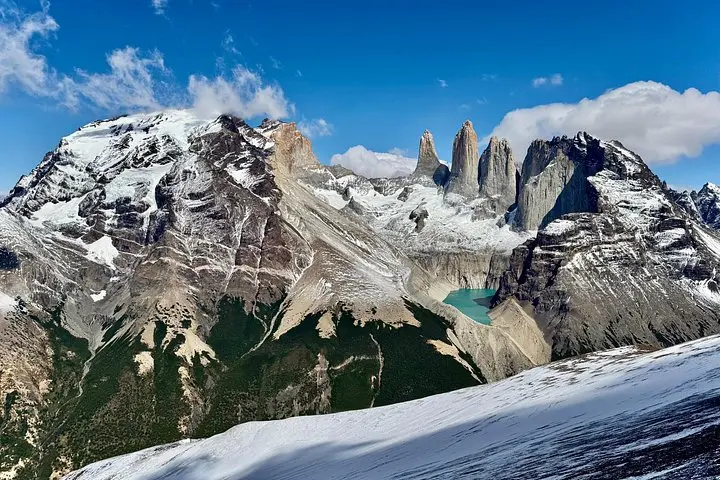
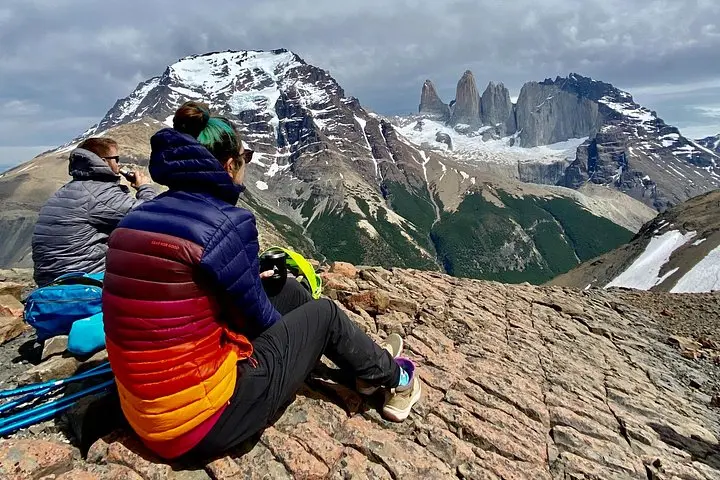
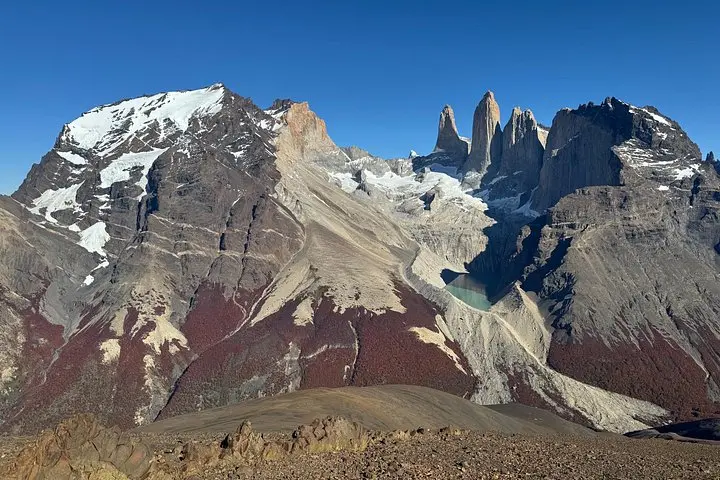
A cold wind works at your jacket as the van pulls off the gravel road and the massif fills the window — granite faces rising like stacked plates above wind-swept shrubland. Cerro Paine’s summit sits near 1,500 meters and this private, less-traveled route pushes you up to an elevated perch with unmatched views over the Paine Massif and the park’s scattered lagoons.
Verified experiences and guided adventures in the surrounding area.
Operated by Firn Adventures · Puerto Natales, Magallanes y la Antártica Chilena
A cold wind works at your jacket as the van pulls off the gravel road and the massif fills the window — granite faces rising like stacked plates above wind-swept shrubland. Cerro Paine’s summit sits near 1,500 meters and this private, less-traveled route pushes you up to an elevated perch with unmatched views over the Paine Massif and the park’s scattered lagoons.
The land here was moved through for millennia by the Aonikenk (Tehuelche) people; later European sheep ranching reshaped lines on the map. Geologically the massif is a compact of granite and sedimentary rock carved by glaciers, its cliffs telling of cold ages and sudden melt. Culture in nearby Puerto Natales still carries gaucho and Patagonian traditions; expect simple, hearty food before and after the hike.
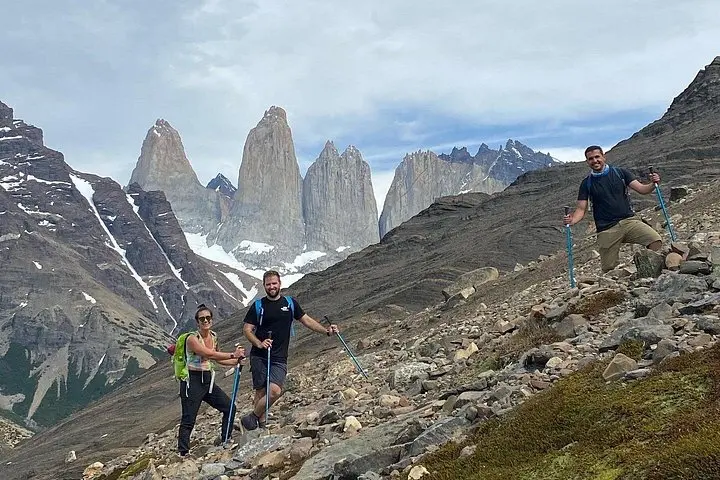
On trail you’ll trade the crowds of Base Torres for exposed ridgelines, wind-honed scrub, and turquoise glimpses of Laguna Azul and Lake Pehoé far below. The landscape pushes back — gusts steer your pace, and scree demands attention — but the summit rewards with a broad panorama of spires and ice-blue lakes.
Practical guidance: this is a long day (about 9–13 hours) with sustained climbing and rocky terrain. Start early, wear waterproof boots and layered clothing, bring 2–3 liters of water, and pack high-energy snacks. A guided private tour provides transport and basic refreshments; still carry a rain shell, sun protection, and a camera with spare battery. Expect changing weather, firm footing on final slopes, and fewer people than the classic route — a quieter lens on Torres del Paine’s core.
The tour runs about 9–13 hours and involves sustained climbing to ~1,500 m with uneven, rocky terrain; it’s considered challenging and requires good fitness.
Yes — private transportation is included from pickup points in Puerto Natales as part of the private tour service.
Trekking poles are listed as included in the tour inclusions; the operator typically provides coffee/tea and soda but plan to bring your own water and snacks for the full day.
Weather in Torres del Paine is highly variable; the operator may proceed in light adverse conditions but extreme winds or safety concerns can alter plans — bring waterproof gear and expect contingency adjustments.
Firn Adventures operates guided outdoor trips and adventures with an emphasis on safety, stewardship, and memorable experiences.
A cold wind works at your jacket as the van pulls off the gravel road and the massif fills the window — granite faces rising like stacked plates above wind-swept shrubland. Cerro Paine’s summit sits near 1,500 meters and this private, less-traveled route pushes you up to an elevated perch with unmatched views over the Paine Massif and the park’s scattered lagoons.
A cold wind works at your jacket as the van pulls off the gravel road and the massif fills the window — granite faces rising like stacked plates above wind-swept shrubland. Cerro Paine’s summit sits near 1,500 meters and this private, less-traveled route pushes you up to an elevated perch with unmatched views over the Paine Massif and the park’s scattered lagoons.
The land here was moved through for millennia by the Aonikenk (Tehuelche) people; later European sheep ranching reshaped lines on the map. Geologically the massif is a compact of granite and sedimentary rock carved by glaciers, its cliffs telling of cold ages and sudden melt. Culture in nearby Puerto Natales still carries gaucho and Patagonian traditions; expect simple, hearty food before and after the hike.
On trail you’ll trade the crowds of Base Torres for exposed ridgelines, wind-honed scrub, and turquoise glimpses of Laguna Azul and Lake Pehoé far below. The landscape pushes back — gusts steer your pace, and scree demands attention — but the summit rewards with a broad panorama of spires and ice-blue lakes.
Practical guidance: this is a long day (about 9–13 hours) with sustained climbing and rocky terrain. Start early, wear waterproof boots and layered clothing, bring 2–3 liters of water, and pack high-energy snacks. A guided private tour provides transport and basic refreshments; still carry a rain shell, sun protection, and a camera with spare battery. Expect changing weather, firm footing on final slopes, and fewer people than the classic route — a quieter lens on Torres del Paine’s core.