THE ADVENTURE COLLECTIVE® · Independent discovery and booking for outdoor travel

A private, full-day ascent to Cerro Pintor from La Parva that reaches roughly 4,200 meters—expect high-altitude hiking, mineral-colored slopes, and panoramic views of the Santiago basin. Early starts, steady pacing, and layered gear make this a demanding but accessible Andean day trek.
A private, full-day ascent to Cerro Pintor from La Parva that reaches roughly 4,200 meters—expect high-altitude hiking, mineral-colored slopes, and panoramic views of the Santiago basin. Early starts, steady pacing, and layered gear make this a demanding but accessible Andean day trek.
Morning light slices the ridge as your van climbs out of Santiago toward La Parva; thin air and red rock come into focus and the city shrinks behind you. By the time the trailhead opens at 2,800–3,000 meters, the Andes have already begun to set the day’s rhythm: slow breathing, steady steps, eyes on the switchbacks ahead.
Verified experiences and guided adventures in the surrounding area.
Operated by Puma Adventures · Santiago, Santiago Metropolitan Region
Morning light slices the ridge as your van climbs out of Santiago toward La Parva; thin air and red rock come into focus and the city shrinks behind you. By the time the trailhead opens at 2,800–3,000 meters, the Andes have already begun to set the day’s rhythm: slow breathing, steady steps, eyes on the switchbacks ahead.
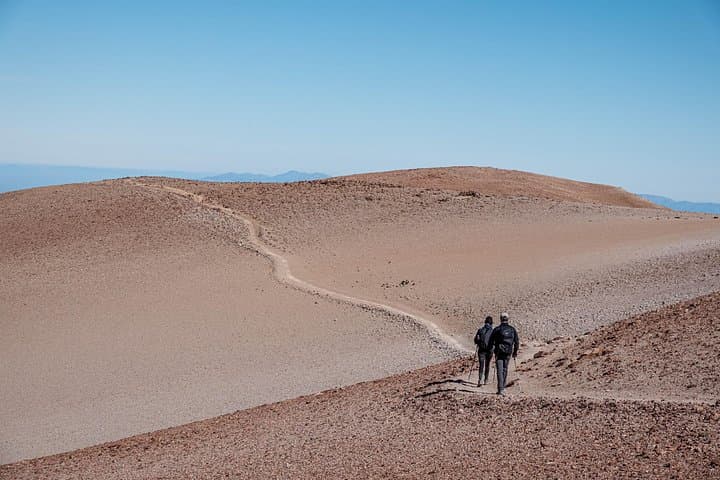
Cerro Pintor (around 4,180–4,200 m) is known for streaked mineral colors and wide, wind-scoured basins. The route follows seasonal melt channels to Laguna Piuquenes, then gains the final ~200 meters to the summit across rocky, often loose terrain. Geologically this sector records volcanic and sedimentary interactions that give the slopes their red and green hues; culturally the high Andes have been travel corridors for pre-Columbian peoples and remain sacred landscapes for many Chileans.
Expect aerobic effort more than technical climbing: thin air amplifies exertion and weather can shift rapidly from sun to wind and sleet. Guides often carry satellite comms and first-aid; your midday lunch arrives with sweeping views of Cerro El Plomo and the Santiago basin.
Practical guidance: start early (itinerary commonly runs 06:00–18:00), hydrate well the day before, and pace uphill to reduce acute altitude effects. Wear stiff-soled boots for scree and bring layered insulation for wind at the summit. The day is long but doable in a single push with moderate fitness and basic hiking experience—rewarded by panoramic, high-Andean vistas.
The route is non-technical but physically demanding due to altitude; moderate-to-good fitness and a steady pace are required.
Yes—spending a day in Santiago or at intermediate elevation before the hike reduces the risk of altitude sickness.
Private transportation, trekking sticks, a sandwich/snack lunch, satellite communication, first-aid, and photos are typically included.
Tours may be canceled for safety; providers often offer full refunds if canceled at least 24 hours in advance or if conditions deteriorate.
Puma Adventures operates guided outdoor trips and adventures with an emphasis on safety, stewardship, and memorable experiences.


Morning light slices the ridge as your van climbs out of Santiago toward La Parva; thin air and red rock come into focus and the city shrinks behind you. By the time the trailhead opens at 2,800–3,000 meters, the Andes have already begun to set the day’s rhythm: slow breathing, steady steps, eyes on the switchbacks ahead.
Morning light slices the ridge as your van climbs out of Santiago toward La Parva; thin air and red rock come into focus and the city shrinks behind you. By the time the trailhead opens at 2,800–3,000 meters, the Andes have already begun to set the day’s rhythm: slow breathing, steady steps, eyes on the switchbacks ahead.
Cerro Pintor (around 4,180–4,200 m) is known for streaked mineral colors and wide, wind-scoured basins. The route follows seasonal melt channels to Laguna Piuquenes, then gains the final ~200 meters to the summit across rocky, often loose terrain. Geologically this sector records volcanic and sedimentary interactions that give the slopes their red and green hues; culturally the high Andes have been travel corridors for pre-Columbian peoples and remain sacred landscapes for many Chileans.
Expect aerobic effort more than technical climbing: thin air amplifies exertion and weather can shift rapidly from sun to wind and sleet. Guides often carry satellite comms and first-aid; your midday lunch arrives with sweeping views of Cerro El Plomo and the Santiago basin.
Practical guidance: start early (itinerary commonly runs 06:00–18:00), hydrate well the day before, and pace uphill to reduce acute altitude effects. Wear stiff-soled boots for scree and bring layered insulation for wind at the summit. The day is long but doable in a single push with moderate fitness and basic hiking experience—rewarded by panoramic, high-Andean vistas.