THE ADVENTURE COLLECTIVE® · Independent discovery and booking for outdoor travel

Walk Český Krumlov’s cobbled streets with a guide who pairs archival photos with on-site storytelling. This two-hour private tour traces WWII events, Jewish history, and life under communism while passing the town’s second-largest castle.
Walk Český Krumlov’s cobbled streets with a guide who pairs archival photos with on-site storytelling. This two-hour private tour traces WWII events, Jewish history, and life under communism while passing the town’s second-largest castle.
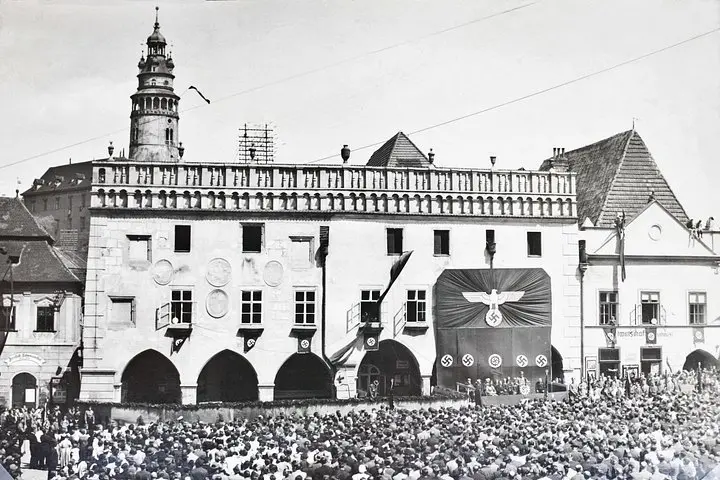
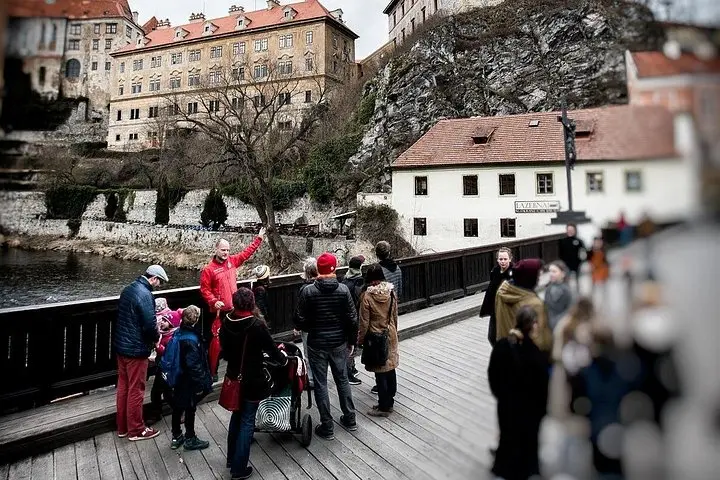
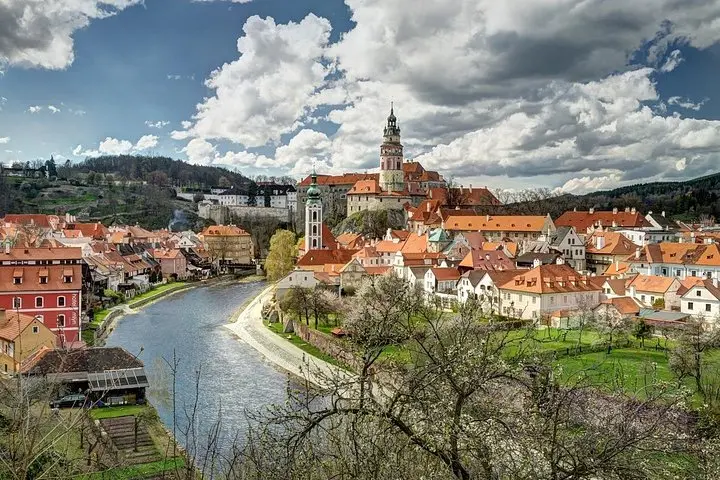
You step off the bridge into a narrow valley of copper roofs and stone facades; the Vltava pushes past the town like a patient witness. The cobbled lanes of Český Krumlov bend around the castle hill, where flaking plaster and carved portals keep the fingerprints of centuries. On this two-hour walk the past is tactile—black-and-white photographs held up against the present, streets that still remember Soviet tanks and the shadow of early Nazi visits.
Verified experiences and guided adventures in the surrounding area.
Operated by Wiseman Free Tour · Český Krumlov, South Bohemian Region
You step off the bridge into a narrow valley of copper roofs and stone facades; the Vltava pushes past the town like a patient witness. The cobbled lanes of Český Krumlov bend around the castle hill, where flaking plaster and carved portals keep the fingerprints of centuries. On this two-hour walk the past is tactile—black-and-white photographs held up against the present, streets that still remember Soviet tanks and the shadow of early Nazi visits.
The town’s castle complex, the second largest in the Czech Republic, dominates the skyline from a sandstone promontory carved by the river. In the 20th century Český Krumlov oscillated between imperial influence, Nazi occupation, and life under Czechoslovak communism; the local synagogue and wartime records trace the rise and fall of the Jewish community. Guides use period images to pinpoint where soldiers marched, where officials met, and where ordinary citizens adapted to regime change.
Practical notes: the route is entirely on paved streets and light inclines—suitable for most walkers and wheelchair accessible with assistance. Bring a light rain shell and sturdy shoes; mornings are quieter and offer cleaner views for the photographs. The tour is private, limited in size, and designed for close-up storytelling rather than museum stops, so prepare questions and an appetite for detailed local context. With focused narration and archival photos, the walk reframes familiar vistas as sites of 20th-century decisions that still shape the town today.
Yes—the operator notes wheelchair accessibility; some cobbled sections may be uneven, so assistance is helpful.
Yes—the guide uses black-and-white historical photographs to illustrate wartime and communist-era stories.
This is offered as a private tour with limited participants, providing an intimate experience focused on narration and images.
Confirm language and exact meeting details at booking; the tour typically meets in the main historical square or central landmark near public transit.
Wiseman Free Tour operates guided outdoor trips and adventures with an emphasis on safety, stewardship, and memorable experiences.
You step off the bridge into a narrow valley of copper roofs and stone facades; the Vltava pushes past the town like a patient witness. The cobbled lanes of Český Krumlov bend around the castle hill, where flaking plaster and carved portals keep the fingerprints of centuries. On this two-hour walk the past is tactile—black-and-white photographs held up against the present, streets that still remember Soviet tanks and the shadow of early Nazi visits.
You step off the bridge into a narrow valley of copper roofs and stone facades; the Vltava pushes past the town like a patient witness. The cobbled lanes of Český Krumlov bend around the castle hill, where flaking plaster and carved portals keep the fingerprints of centuries. On this two-hour walk the past is tactile—black-and-white photographs held up against the present, streets that still remember Soviet tanks and the shadow of early Nazi visits.
The town’s castle complex, the second largest in the Czech Republic, dominates the skyline from a sandstone promontory carved by the river. In the 20th century Český Krumlov oscillated between imperial influence, Nazi occupation, and life under Czechoslovak communism; the local synagogue and wartime records trace the rise and fall of the Jewish community. Guides use period images to pinpoint where soldiers marched, where officials met, and where ordinary citizens adapted to regime change.
Practical notes: the route is entirely on paved streets and light inclines—suitable for most walkers and wheelchair accessible with assistance. Bring a light rain shell and sturdy shoes; mornings are quieter and offer cleaner views for the photographs. The tour is private, limited in size, and designed for close-up storytelling rather than museum stops, so prepare questions and an appetite for detailed local context. With focused narration and archival photos, the walk reframes familiar vistas as sites of 20th-century decisions that still shape the town today.