THE ADVENTURE COLLECTIVE® · Independent discovery and booking for outdoor travel

An 8‑day expedition that links jungle rivers, Embera village stays and open-water paddling across Gatun and Alajuela Lakes — this trip pairs classic Panama Canal history with serious sea‑kayaking and whitewater sections.
An 8‑day expedition that links jungle rivers, Embera village stays and open-water paddling across Gatun and Alajuela Lakes — this trip pairs classic Panama Canal history with serious sea‑kayaking and whitewater sections.
Dawn breaks over mirrored water and the jungle answers — a choir of howler monkeys, the hiss of wind across Gatun Lake and the distant mechanical breathing of ships threading the Canal. You push off from a riverbank under palms, paddle through drowned forests and granite canyons, and watch the shoreline tilt between human engineering and raw tropical wilderness.
Verified experiences and guided adventures in the surrounding area.
Operated by Adventures Panama · Gamboa, Panamá Province
Dawn breaks over mirrored water and the jungle answers — a choir of howler monkeys, the hiss of wind across Gatun Lake and the distant mechanical breathing of ships threading the Canal. You push off from a riverbank under palms, paddle through drowned forests and granite canyons, and watch the shoreline tilt between human engineering and raw tropical wilderness.
This route traces the Chagres River from its upper tributaries through Alajuela (Madden) Lake and along Gatun Lake, passing Barro Colorado Island — a Smithsonian research landmark — and finishing at Fort San Lorenzo where Spanish colonial defenses met the Caribbean. Geologically the basin is shaped by uplifted granites and alluvial channels; hydrologically it became essential to the Panama Canal’s operation when dams created the reservoirs that feed the locks.
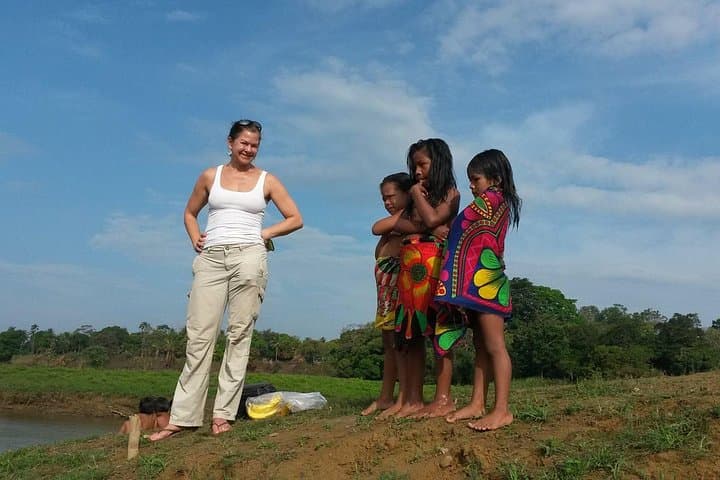
Culturally you’ll meet Embera communities whose river huts and canoes remain central to life along the Chagres; their hospitality and knowledge of local currents enrich navigation and campsites.
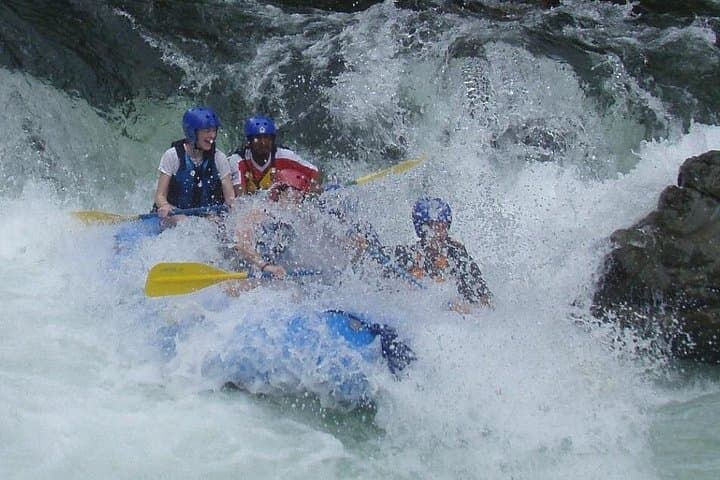
Expect a demanding, skill-focused trip: morning 4x4 approaches, multi-hour paddling across open water, Class II–III rafting stretches, and wilderness camping on islands. Weather is tropical — plan for sudden downpours during the rainy months and steady trade winds January–March that can make Gatun Lake choppy.
Practical edge: pack layered quick-dry clothing, protect electronics in dry bags, practice navigation and ferrying techniques, and arrive with solid open-water kayak experience. Guides will handle logistics and safety, but this itinerary rewards competent paddlers who like long days, wildlife sightings and a close look at how nature and one of the world’s great engineering works coexist.
Yes — the itinerary assumes solid sea‑kayak skills and comfort with open‑water crossings and basic self‑rescue; guides provide coaching but not beginner instruction.
Expect basic wilderness and village huts; organizers supply tents and communal cooking but this is not a luxury camping trip.
Most meals are included (8 breakfasts, 5 lunches, 4 dinners); guides provide water but bring a personal purifier for longer days.
River levels and wind dictate daily plans — rainy season raises flows and may change campsite locations; January–March winds can force itinerary adjustments on Gatun Lake.
Adventures Panama operates guided outdoor trips and adventures with an emphasis on safety, stewardship, and memorable experiences.
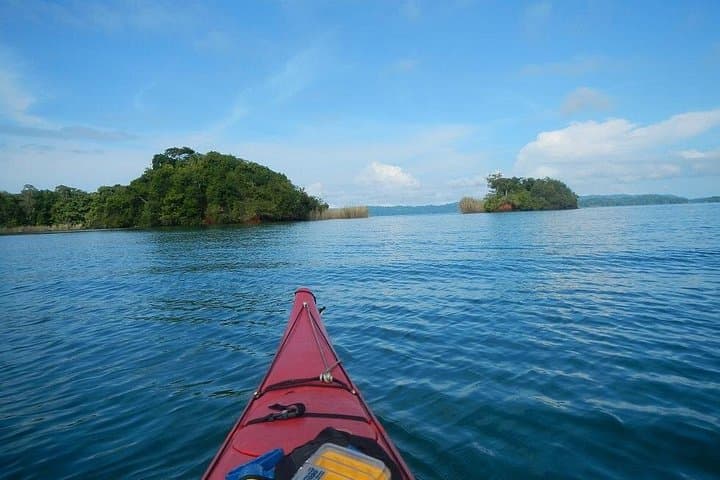

Dawn breaks over mirrored water and the jungle answers — a choir of howler monkeys, the hiss of wind across Gatun Lake and the distant mechanical breathing of ships threading the Canal. You push off from a riverbank under palms, paddle through drowned forests and granite canyons, and watch the shoreline tilt between human engineering and raw tropical wilderness.
Dawn breaks over mirrored water and the jungle answers — a choir of howler monkeys, the hiss of wind across Gatun Lake and the distant mechanical breathing of ships threading the Canal. You push off from a riverbank under palms, paddle through drowned forests and granite canyons, and watch the shoreline tilt between human engineering and raw tropical wilderness.
This route traces the Chagres River from its upper tributaries through Alajuela (Madden) Lake and along Gatun Lake, passing Barro Colorado Island — a Smithsonian research landmark — and finishing at Fort San Lorenzo where Spanish colonial defenses met the Caribbean. Geologically the basin is shaped by uplifted granites and alluvial channels; hydrologically it became essential to the Panama Canal’s operation when dams created the reservoirs that feed the locks.
Culturally you’ll meet Embera communities whose river huts and canoes remain central to life along the Chagres; their hospitality and knowledge of local currents enrich navigation and campsites.
Expect a demanding, skill-focused trip: morning 4x4 approaches, multi-hour paddling across open water, Class II–III rafting stretches, and wilderness camping on islands. Weather is tropical — plan for sudden downpours during the rainy months and steady trade winds January–March that can make Gatun Lake choppy.
Practical edge: pack layered quick-dry clothing, protect electronics in dry bags, practice navigation and ferrying techniques, and arrive with solid open-water kayak experience. Guides will handle logistics and safety, but this itinerary rewards competent paddlers who like long days, wildlife sightings and a close look at how nature and one of the world’s great engineering works coexist.