THE ADVENTURE COLLECTIVE® · Independent discovery and booking for outdoor travel

Navigate the narrow arteries of Old Delhi on a focused three-hour private walk through Chandni Chowk. Experience Jama Masjid, Khari Baoli spice stalls, havelis and age-old sweet shops with a local guide and private transfer.
Navigate the narrow arteries of Old Delhi on a focused three-hour private walk through Chandni Chowk. Experience Jama Masjid, Khari Baoli spice stalls, havelis and age-old sweet shops with a local guide and private transfer.
You step from an air-conditioned vehicle into a corridor of sound and scent—rickshaw bells, vendors calling, the warm, sweet swirl of frying jalebis. The lanes of Chandni Chowk press in close; shopfronts dedicated to one trade—silver, spices, bridal trim—lean toward the street as if arguing for your attention. The walk flows past the broad courtyard of Jama Masjid, where pigeons scatter like weather, and offers a hard, high view back toward the Red Fort.
Verified experiences and guided adventures in the surrounding area.
Operated by SITA World Tours · New Delhi, Delhi
You step from an air-conditioned vehicle into a corridor of sound and scent—rickshaw bells, vendors calling, the warm, sweet swirl of frying jalebis. The lanes of Chandni Chowk press in close; shopfronts dedicated to one trade—silver, spices, bridal trim—lean toward the street as if arguing for your attention. The walk flows past the broad courtyard of Jama Masjid, where pigeons scatter like weather, and offers a hard, high view back toward the Red Fort.
This route follows the spine of Shahjahanabad, the Mughal capital founded in the 17th century when Shah Jahan laid out dense market streets and grand monuments. The area’s layered history shows in havelis, gurdwaras, Jain and Hindu shrines packed within a few blocks. Khari Baoli remains Asia’s largest spice market—its sacks and barrels have shaped local trade for centuries.
Expect narrow cobblestone alleys, sudden open squares, and a steady hum of commerce; the tour includes a short rickshaw leg and ends back at Jama Masjid for a final panorama. Cultural cues matter: modest dress and quiet in shrines, ask before photographing worshippers, and try jalebis or a cup of chai at a busy stall.
Practical tips: wear closed, grippy shoes for uneven surfaces, carry small-denomination cash for purchases, and keep water handy—crowds slow progress. The guide and private transfer simplify logistics, but be ready to move slowly through popular nodes. This walk is ideal for travelers who want history, architecture, and street-food energy compressed into three focused hours.
Yes—round-trip private transfer and hotel pickup/drop-off are included in the tour price.
Expect heavy local and tourist foot traffic, especially near Jama Masjid and Khari Baoli; the tour moves at a moderate pace through busy streets.
No full meals are included; the itinerary includes stops where you can buy snacks such as jalebis and chai at your own expense.
No—many lanes are narrow with steps and uneven surfaces, so the tour is not suitable for wheelchairs or those with limited mobility.
SITA World Tours operates guided outdoor trips and adventures with an emphasis on safety, stewardship, and memorable experiences.
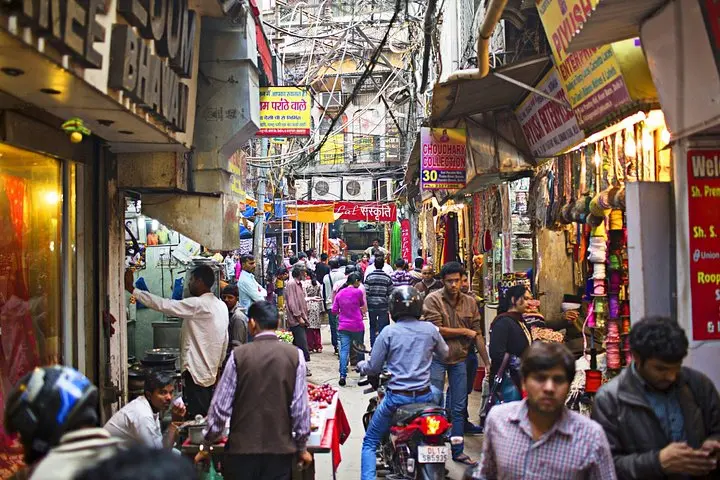
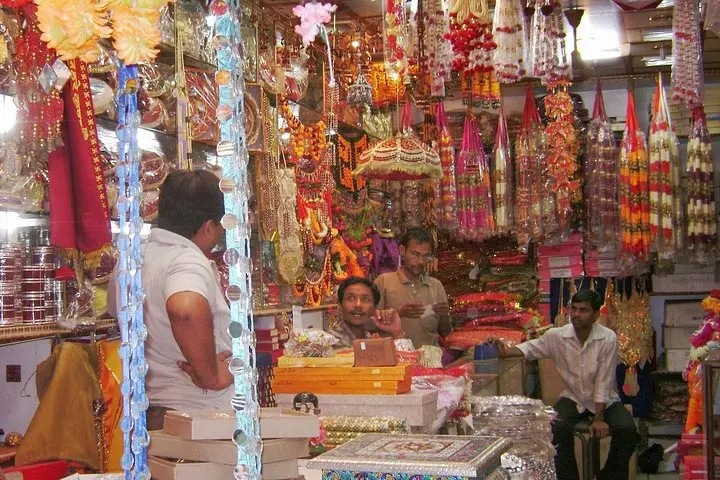
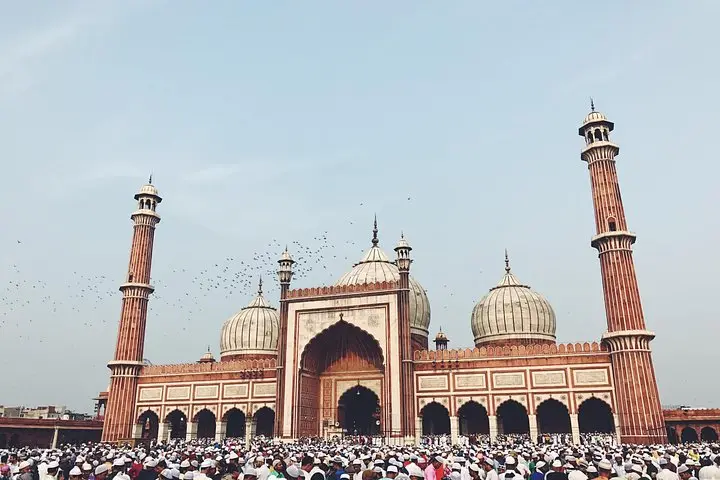

You step from an air-conditioned vehicle into a corridor of sound and scent—rickshaw bells, vendors calling, the warm, sweet swirl of frying jalebis. The lanes of Chandni Chowk press in close; shopfronts dedicated to one trade—silver, spices, bridal trim—lean toward the street as if arguing for your attention. The walk flows past the broad courtyard of Jama Masjid, where pigeons scatter like weather, and offers a hard, high view back toward the Red Fort.
You step from an air-conditioned vehicle into a corridor of sound and scent—rickshaw bells, vendors calling, the warm, sweet swirl of frying jalebis. The lanes of Chandni Chowk press in close; shopfronts dedicated to one trade—silver, spices, bridal trim—lean toward the street as if arguing for your attention. The walk flows past the broad courtyard of Jama Masjid, where pigeons scatter like weather, and offers a hard, high view back toward the Red Fort.
This route follows the spine of Shahjahanabad, the Mughal capital founded in the 17th century when Shah Jahan laid out dense market streets and grand monuments. The area’s layered history shows in havelis, gurdwaras, Jain and Hindu shrines packed within a few blocks. Khari Baoli remains Asia’s largest spice market—its sacks and barrels have shaped local trade for centuries.
Expect narrow cobblestone alleys, sudden open squares, and a steady hum of commerce; the tour includes a short rickshaw leg and ends back at Jama Masjid for a final panorama. Cultural cues matter: modest dress and quiet in shrines, ask before photographing worshippers, and try jalebis or a cup of chai at a busy stall.
Practical tips: wear closed, grippy shoes for uneven surfaces, carry small-denomination cash for purchases, and keep water handy—crowds slow progress. The guide and private transfer simplify logistics, but be ready to move slowly through popular nodes. This walk is ideal for travelers who want history, architecture, and street-food energy compressed into three focused hours.