THE ADVENTURE COLLECTIVE® · Independent discovery and booking for outdoor travel

Float up Chandragiri Hill in a modern gondola and step out onto some of the clearest Himalayan panoramas visible from Kathmandu. This one-day cable car tour pairs easy access with high rewards—temples, sweeping valley views, and a quick taste of Nepali mountain culture.
Float up Chandragiri Hill in a modern gondola and step out onto some of the clearest Himalayan panoramas visible from Kathmandu. This one-day cable car tour pairs easy access with high rewards—temples, sweeping valley views, and a quick taste of Nepali mountain culture.
The cable car rises like a quiet promise above Thankot, lifting you from the heat of Kathmandu’s rim into an air that feels immediately cleaner and thinner. From the glass of the gondola the valley shrinks and the ragged silhouette of the Himalaya sharpens—Annapurna, Langtang, Ganesh, and even distant Everest catching light like cut stone.
Verified experiences and guided adventures in the surrounding area.
Operated by Trekking Guide Team Adventure · Kathmandu, Bagmati Province
The cable car rises like a quiet promise above Thankot, lifting you from the heat of Kathmandu’s rim into an air that feels immediately cleaner and thinner. From the glass of the gondola the valley shrinks and the ragged silhouette of the Himalaya sharpens—Annapurna, Langtang, Ganesh, and even distant Everest catching light like cut stone.
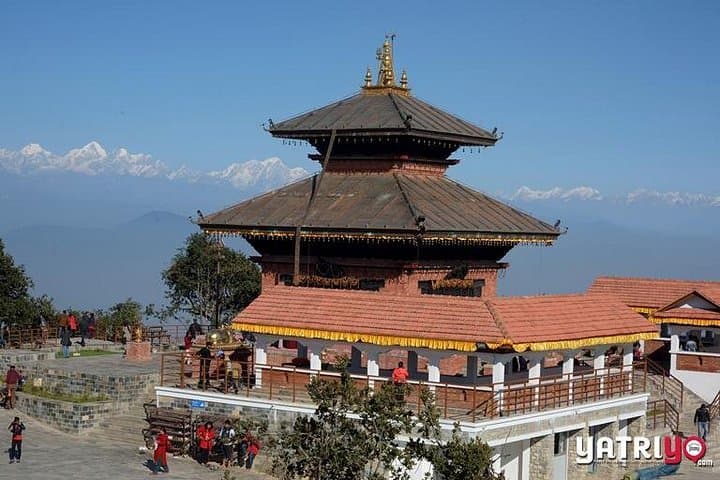
Chandragiri Hill sits at about 2,551 m and was long part of the trade and pilgrimage routes that threaded through Kulekhani and the Chandragiri Pass into the Kathmandu Valley. The summit hosts Bhaleshwor Mahadev temple, a site important to both Hindu and Buddhist traditions and linked in local memory to King Prithvi Narayan Shah’s 18th-century unification campaigns.
Geologically, Chandragiri is the lower, forested flank of the Himalayan uplift—steep slopes carved by seasonal monsoon run-off, with soils that support mixed oak, rhododendron, and scrub. Culture here is visible in temple rituals, small teahouses, and the local guide stories connecting landscape and legend. The ridge offers a near-complete sweep of Kathmandu Valley and high ranges, a compact vantage where both human history and tectonic drama read together.
Practical guidance: the organized day tour typically lasts 4–7 hours including transfers. The cable car provides most of the ascent, but expect short walks at the top over uneven paths and steps to viewpoints and the temple. Carry water, a light windproof layer, and sun protection; mornings are best for clearer mountain visibility. If you’re sensitive to altitude, move slowly at the summit and avoid heavy exertion. Respect temple customs, stay on trails, and pack out trash—this vantage point feels fragile until it’s cared for.
The gondola ascent takes roughly 8–10 minutes each way; overall visit time depends on transfers and how long you spend at viewpoints and the temple.
Yes; the cable car makes the hilltop accessible, but those with mobility issues should note there are steps at viewpoints and temple approaches.
Visibility depends on weather; mornings and post-frontal days offer the clearest panoramic views—monsoon months reduce clarity.
Basic teahouses and snack stalls operate near the viewing areas and temple; bring additional snacks or medications you may need.
Trekking Guide Team Adventure operates guided outdoor trips and adventures with an emphasis on safety, stewardship, and memorable experiences.
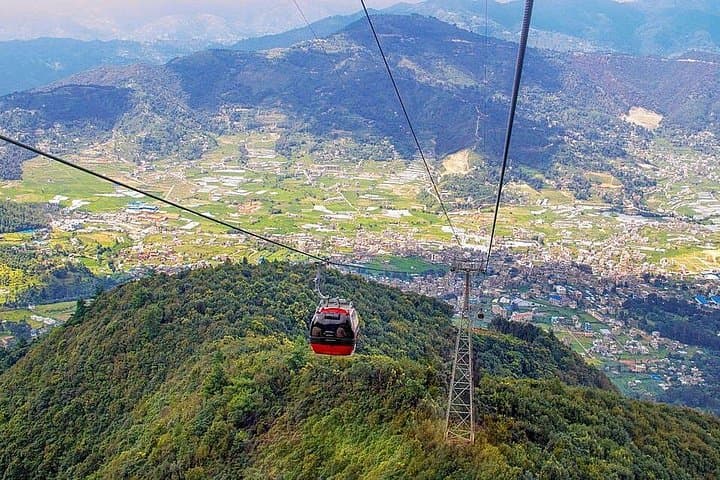
The cable car rises like a quiet promise above Thankot, lifting you from the heat of Kathmandu’s rim into an air that feels immediately cleaner and thinner. From the glass of the gondola the valley shrinks and the ragged silhouette of the Himalaya sharpens—Annapurna, Langtang, Ganesh, and even distant Everest catching light like cut stone.
The cable car rises like a quiet promise above Thankot, lifting you from the heat of Kathmandu’s rim into an air that feels immediately cleaner and thinner. From the glass of the gondola the valley shrinks and the ragged silhouette of the Himalaya sharpens—Annapurna, Langtang, Ganesh, and even distant Everest catching light like cut stone.
Chandragiri Hill sits at about 2,551 m and was long part of the trade and pilgrimage routes that threaded through Kulekhani and the Chandragiri Pass into the Kathmandu Valley. The summit hosts Bhaleshwor Mahadev temple, a site important to both Hindu and Buddhist traditions and linked in local memory to King Prithvi Narayan Shah’s 18th-century unification campaigns.
Geologically, Chandragiri is the lower, forested flank of the Himalayan uplift—steep slopes carved by seasonal monsoon run-off, with soils that support mixed oak, rhododendron, and scrub. Culture here is visible in temple rituals, small teahouses, and the local guide stories connecting landscape and legend. The ridge offers a near-complete sweep of Kathmandu Valley and high ranges, a compact vantage where both human history and tectonic drama read together.
Practical guidance: the organized day tour typically lasts 4–7 hours including transfers. The cable car provides most of the ascent, but expect short walks at the top over uneven paths and steps to viewpoints and the temple. Carry water, a light windproof layer, and sun protection; mornings are best for clearer mountain visibility. If you’re sensitive to altitude, move slowly at the summit and avoid heavy exertion. Respect temple customs, stay on trails, and pack out trash—this vantage point feels fragile until it’s cared for.