THE ADVENTURE COLLECTIVE® · Independent discovery and booking for outdoor travel

Go eye-to-eye with Rotorua’s Kaituna/Okere River on a guided white water sledging trip where you steer, surf, and carve your own line. Fast, fun, and surprisingly accessible, this is Rotorua adventure with cultural depth and real skills on moving water.
Go eye-to-eye with Rotorua’s Kaituna/Okere River on a guided white water sledging trip where you steer, surf, and carve your own line. Fast, fun, and surprisingly accessible, this is Rotorua adventure with cultural depth and real skills on moving water.
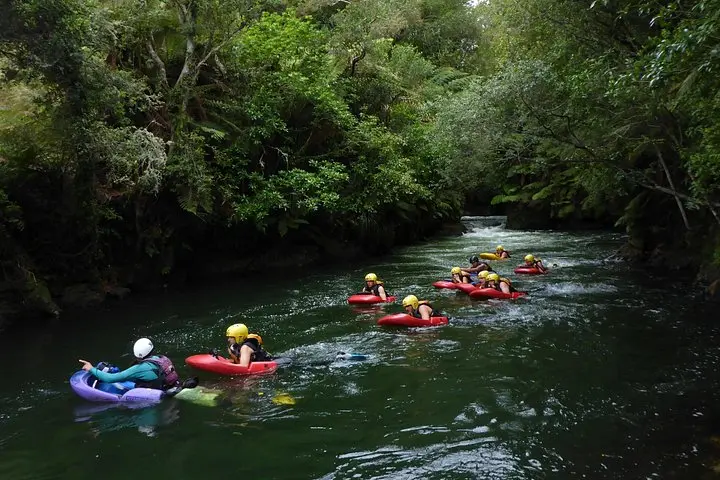
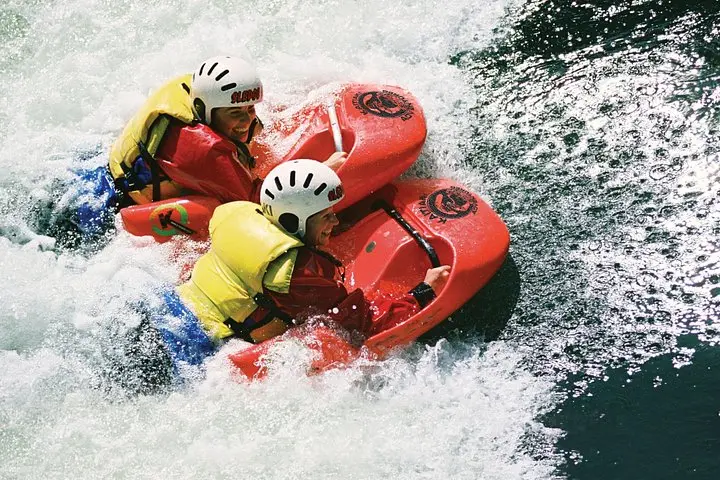
Mist hangs low over the Okere Awa as the river wakes, flexing around boulders and tugging at the banks of towering ponga ferns. You lie at eye level with the current, chest on a foam sled, fins cocked and ready. The water nudges first, then shouts—go—and you kick into a fast, green tongue that folds into a Class III wave train. Spray slaps your cheeks. The river pushes, you answer with your legs, and together you strike a rhythm that feels part swim, part sprint, all grin.
Verified experiences and guided adventures in the surrounding area.
Operated by Kaitiaki Adventures Aotearoa · Okere Falls, Bay of Plenty
Mist hangs low over the Okere Awa as the river wakes, flexing around boulders and tugging at the banks of towering ponga ferns. You lie at eye level with the current, chest on a foam sled, fins cocked and ready. The water nudges first, then shouts—go—and you kick into a fast, green tongue that folds into a Class III wave train. Spray slaps your cheeks. The river pushes, you answer with your legs, and together you strike a rhythm that feels part swim, part sprint, all grin.
On Kaitiaki Adventures’ white‑water sledging trip, you aren’t a passenger. Rotorua’s Kaituna/Okere River invites you to steer, surf, and carve across eddies while guides shadow the line, calling signals and setting safety. This is the same canyon that rafters know for its waterfalls, but sledgers work the lower Okere section—rollers, play holes, and slick eddy lines that test timing more than brute force. Expect roughly two hours door‑to‑door with about 50–60 minutes in the water; it’s enough to learn the dance without burning out the legs.
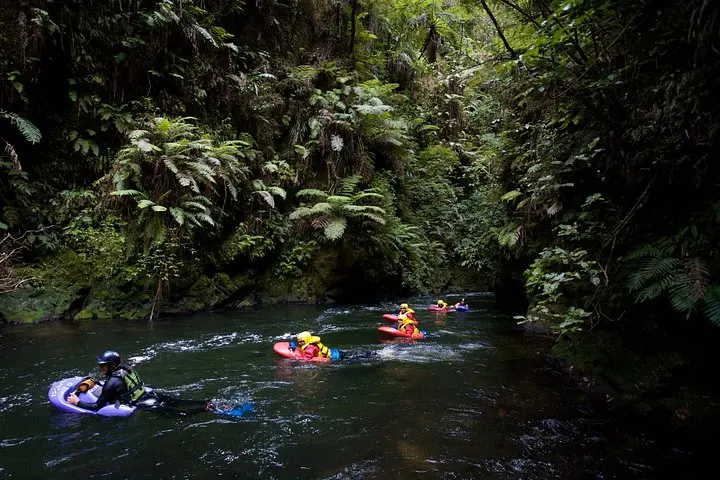
The gorge carries layers of story. Ngāti Pikiao have guardianship here; you’ll see carved pou and remnants of the early 1900s Okere Falls power station along the river walk. Volcanic soils from the Rotorua caldera feed thick bush that leans over the canyon, and trout idle in the softer seams while longfin eels slip through the dark. The river keeps its own pace—rising after rain, settling in fine weather—and the crew adjusts times and sections to match conditions.
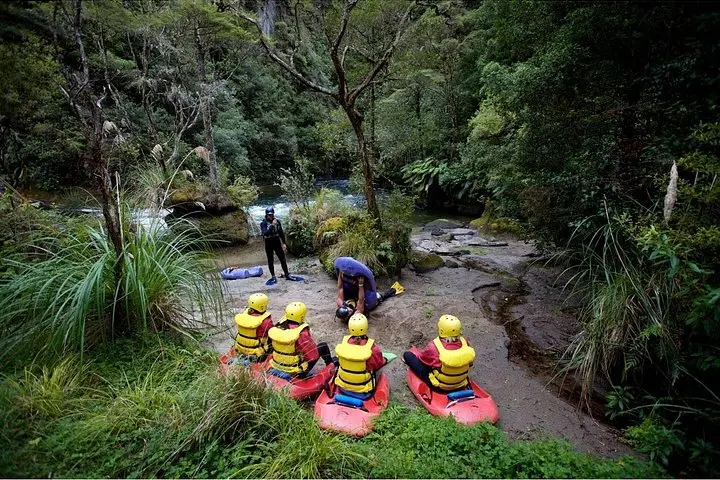
It’s an approachable hit of whitewater if you’re a confident swimmer. After a quick briefing on reading currents, hand signals, and how to punch a wave, you slide in. The sled lifts and planes; eddies hook like magnets; holes dare you to surf. Between features, the current catches its breath and lets you look up at tree ferns and the narrow gorge, steam from Rotorua’s geothermal fields drifting the horizon.
Practicalities are straightforward. All technical gear—wetsuit, fins, PFD, helmet—is provided, and shuttles from central Rotorua keep logistics simple. Wear swimwear, bring a towel, and expect to kick. The guides are sharp and supportive, quick with coaching if your legs fade or your line drifts. Trips run year‑round; summer brings warm swims and busier banks, while winter offers clear, cold water and quiet canyon walls—wetsuits do the heavy lifting.
Finish at Trout Pool, heart thumping and smile wide, and the river will flick one last playful splash, as if to say: see you next time.
No. Guides coach you on reading current, kicking technique, and safety before you enter the river.
It runs roughly Grade 3 (Class III) whitewater—fast and splashy with maneuvering through eddies and waves. You should be a confident swimmer.
Wetsuit, fins, life jacket, helmet, professional guides, and transport from central Rotorua are typically included.
Plan for about 50–60 minutes of active river time within a 2–2.5 hour round-trip experience.
Yes, but use a secure mount and tether. Loose items can be lost in waves; phones need a waterproof case and leash.
Trips may be rescheduled or canceled for safety during high flows or storms; operators monitor conditions and will advise options.
Kaitiaki Adventures Aotearoa operates guided outdoor trips and adventures with an emphasis on safety, stewardship, and memorable experiences.
Mist hangs low over the Okere Awa as the river wakes, flexing around boulders and tugging at the banks of towering ponga ferns. You lie at eye level with the current, chest on a foam sled, fins cocked and ready. The water nudges first, then shouts—go—and you kick into a fast, green tongue that folds into a Class III wave train. Spray slaps your cheeks. The river pushes, you answer with your legs, and together you strike a rhythm that feels part swim, part sprint, all grin.
Mist hangs low over the Okere Awa as the river wakes, flexing around boulders and tugging at the banks of towering ponga ferns. You lie at eye level with the current, chest on a foam sled, fins cocked and ready. The water nudges first, then shouts—go—and you kick into a fast, green tongue that folds into a Class III wave train. Spray slaps your cheeks. The river pushes, you answer with your legs, and together you strike a rhythm that feels part swim, part sprint, all grin.
On Kaitiaki Adventures’ white‑water sledging trip, you aren’t a passenger. Rotorua’s Kaituna/Okere River invites you to steer, surf, and carve across eddies while guides shadow the line, calling signals and setting safety. This is the same canyon that rafters know for its waterfalls, but sledgers work the lower Okere section—rollers, play holes, and slick eddy lines that test timing more than brute force. Expect roughly two hours door‑to‑door with about 50–60 minutes in the water; it’s enough to learn the dance without burning out the legs.
The gorge carries layers of story. Ngāti Pikiao have guardianship here; you’ll see carved pou and remnants of the early 1900s Okere Falls power station along the river walk. Volcanic soils from the Rotorua caldera feed thick bush that leans over the canyon, and trout idle in the softer seams while longfin eels slip through the dark. The river keeps its own pace—rising after rain, settling in fine weather—and the crew adjusts times and sections to match conditions.
It’s an approachable hit of whitewater if you’re a confident swimmer. After a quick briefing on reading currents, hand signals, and how to punch a wave, you slide in. The sled lifts and planes; eddies hook like magnets; holes dare you to surf. Between features, the current catches its breath and lets you look up at tree ferns and the narrow gorge, steam from Rotorua’s geothermal fields drifting the horizon.
Practicalities are straightforward. All technical gear—wetsuit, fins, PFD, helmet—is provided, and shuttles from central Rotorua keep logistics simple. Wear swimwear, bring a towel, and expect to kick. The guides are sharp and supportive, quick with coaching if your legs fade or your line drifts. Trips run year‑round; summer brings warm swims and busier banks, while winter offers clear, cold water and quiet canyon walls—wetsuits do the heavy lifting.
Finish at Trout Pool, heart thumping and smile wide, and the river will flick one last playful splash, as if to say: see you next time.