THE ADVENTURE COLLECTIVE® · Independent discovery and booking for outdoor travel

Walk two hours through Charleston’s compact historic district to see St. Michael’s steeple, South Battery mansions, the French Huguenot Church and preserved civic buildings. This guided tour combines architectural history with hands-on preservation stories and practical tips for urban exploration.
Walk two hours through Charleston’s compact historic district to see St. Michael’s steeple, South Battery mansions, the French Huguenot Church and preserved civic buildings. This guided tour combines architectural history with hands-on preservation stories and practical tips for urban exploration.
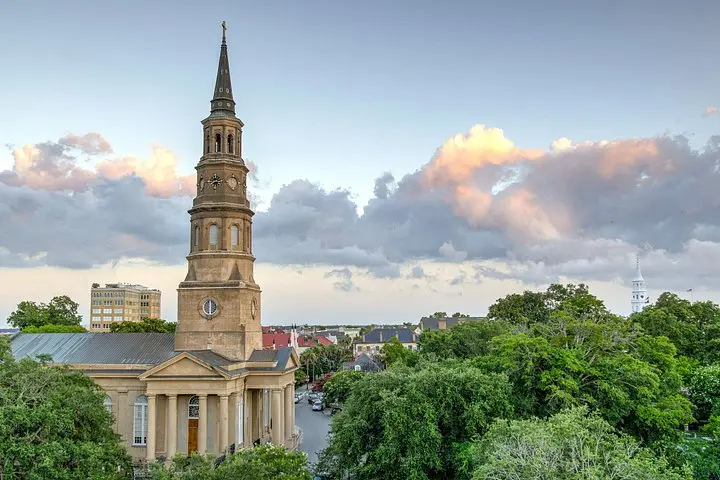
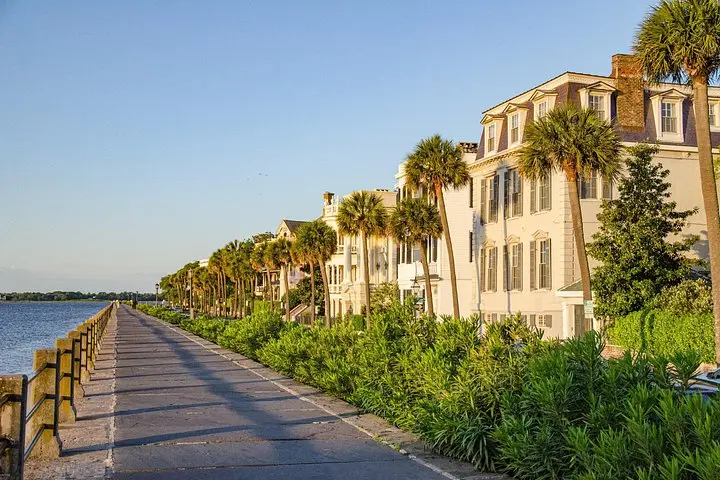
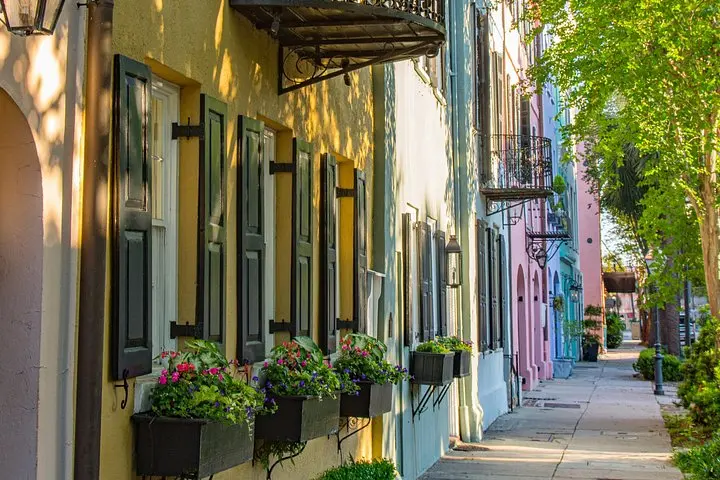
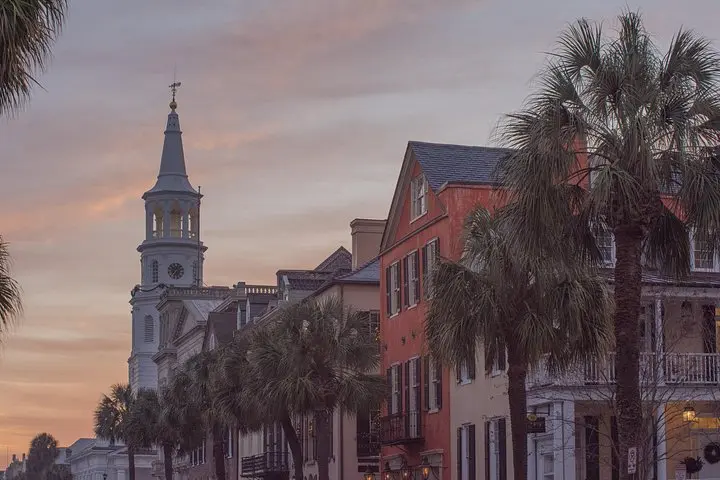
Morning light hits Vendue Range and the city exhales salt and history. You meet at The Griffon on the east end of Queen Street, and within minutes the cobbles and ironwork begin to speak: pewter-colored shutters, scalloped cornices, and piazzas angled to catch the bay breeze. The two-hour route threads St. Michael’s steeple, White Point Gardens and the South Battery seawall, the Russell House’s preserved façade, and the 1845 French Huguenot Church, each building a chapter of Charleston’s urban biography.
Verified experiences and guided adventures in the surrounding area.
Operated by See Charleston Tours · Charleston, South Carolina
Morning light hits Vendue Range and the city exhales salt and history. You meet at The Griffon on the east end of Queen Street, and within minutes the cobbles and ironwork begin to speak: pewter-colored shutters, scalloped cornices, and piazzas angled to catch the bay breeze. The two-hour route threads St. Michael’s steeple, White Point Gardens and the South Battery seawall, the Russell House’s preserved façade, and the 1845 French Huguenot Church, each building a chapter of Charleston’s urban biography.
Architecturally the walk spans Georgian symmetry to Greek Revival flourishes and antebellum ornament — brick bonded by hand, oyster-shell mortar, and cast iron that turned from craft to signature. Cultural layers show in Huguenot congregations, Gullah influences along the waterfront, and civic pride that established one of America’s earliest preservation movements. The harbor’s tidal breath teases the seawall; gulls wheel like punctuation marks on the skyline.
Practical guidance: the tour covers roughly 1.5–2 miles on paved streets with short steps and occasional ramps; it’s wheelchair and stroller accessible but expect two hours of standing and steady walking. Wear supportive shoes, carry water, and plan for sun or sudden coastal showers. Photographers will want a wide lens for façades and a telephoto for decorative ironwork. Finish at the Four Corners of Law, where municipal, state, federal and ecclesiastical histories intersect — an apt ending to a concentrated study of place, craft, and conservation.
The tour lasts about two hours and typically covers roughly 1.5–2 miles on paved city streets.
Yes — the itinerary is wheelchair and stroller accessible, though some historic sidewalks and curbs may require attention.
It departs from The Griffon at 18 Vendue Range (east end of Queen St.) and concludes at the Four Corners of Law.
No admissions are required; the tour is an exterior-focused walking guide to architecture and history.
See Charleston Tours operates guided outdoor trips and adventures with an emphasis on safety, stewardship, and memorable experiences.
Morning light hits Vendue Range and the city exhales salt and history. You meet at The Griffon on the east end of Queen Street, and within minutes the cobbles and ironwork begin to speak: pewter-colored shutters, scalloped cornices, and piazzas angled to catch the bay breeze. The two-hour route threads St. Michael’s steeple, White Point Gardens and the South Battery seawall, the Russell House’s preserved façade, and the 1845 French Huguenot Church, each building a chapter of Charleston’s urban biography.
Morning light hits Vendue Range and the city exhales salt and history. You meet at The Griffon on the east end of Queen Street, and within minutes the cobbles and ironwork begin to speak: pewter-colored shutters, scalloped cornices, and piazzas angled to catch the bay breeze. The two-hour route threads St. Michael’s steeple, White Point Gardens and the South Battery seawall, the Russell House’s preserved façade, and the 1845 French Huguenot Church, each building a chapter of Charleston’s urban biography.
Architecturally the walk spans Georgian symmetry to Greek Revival flourishes and antebellum ornament — brick bonded by hand, oyster-shell mortar, and cast iron that turned from craft to signature. Cultural layers show in Huguenot congregations, Gullah influences along the waterfront, and civic pride that established one of America’s earliest preservation movements. The harbor’s tidal breath teases the seawall; gulls wheel like punctuation marks on the skyline.
Practical guidance: the tour covers roughly 1.5–2 miles on paved streets with short steps and occasional ramps; it’s wheelchair and stroller accessible but expect two hours of standing and steady walking. Wear supportive shoes, carry water, and plan for sun or sudden coastal showers. Photographers will want a wide lens for façades and a telephoto for decorative ironwork. Finish at the Four Corners of Law, where municipal, state, federal and ecclesiastical histories intersect — an apt ending to a concentrated study of place, craft, and conservation.